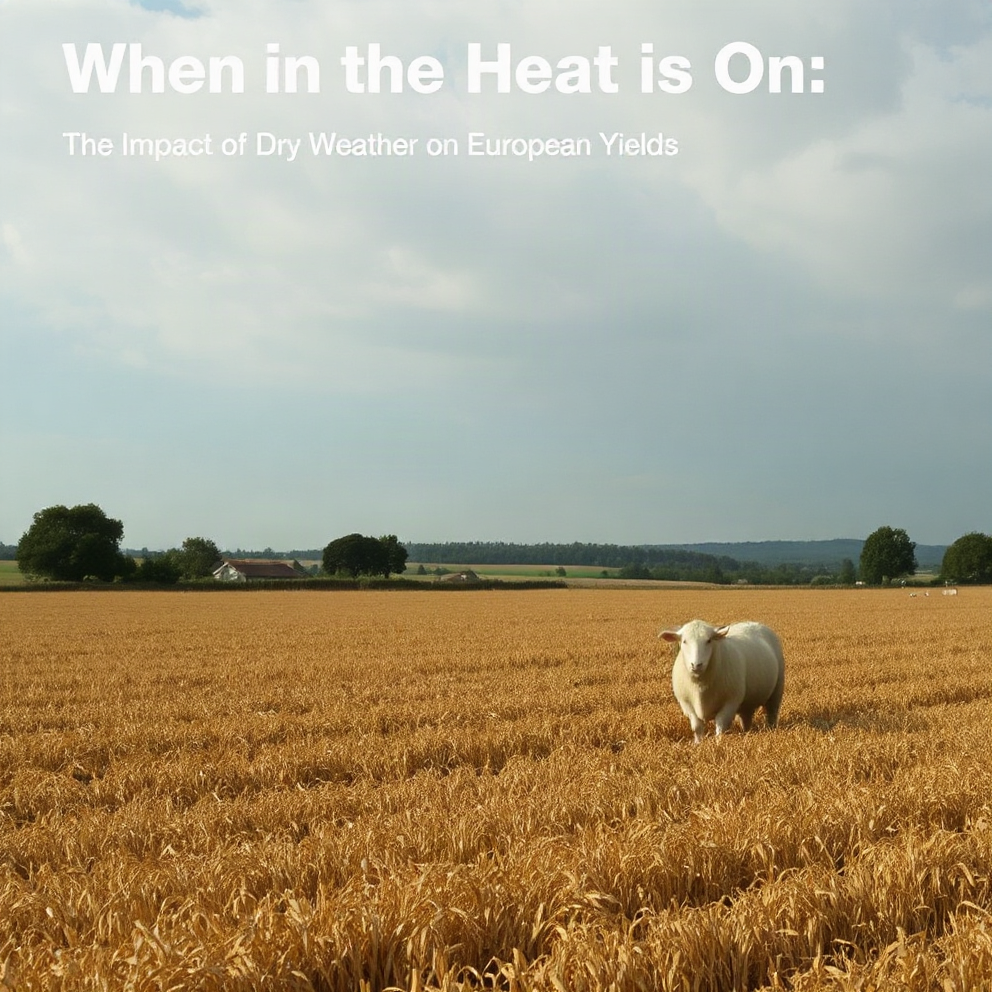
… Persistent heat and exceptional … impairing grain filling and accelerating senescence. Impacts range from moderate yield reductions to severe losses , with crop failure likely in the worst-affected regions….
Ah, summer in Europe! A time for sun-soaked vacations, outdoor picnics, and, oh yes, the looming threat of climate change making crops wither faster than your enthusiasm for a Monday morning. Recent reports indicate that this year’s exceptionally dry and hot weather has resulted in a significant drop in summer yields by up to 14%. But don’t worry, winter yields are expected to be in line with five-year averages, so at least we can look forward to the same old, same old—if you’re into that sort of thing.
Let’s break this down a bit. When you think of Europe, you might picture rolling vineyards in France, lush wheat fields in Germany, and olive groves in Italy. But picture this: those vineyards are parched, the wheat is wilting, and the olives are just plain confused. The intense heat and lack of rain have made it tough for farmers to produce the crops they rely on, which, spoiler alert, is not good news for anyone who enjoys eating.
Now, why should you care? Well, if you enjoy eating bread, drinking wine, or even just existing in a world where food is plentiful, these yield reductions might hit a little closer to home than you’d like. Reduced yields mean less supply, which can lead to increased prices. Yes, that’s right! Your beloved baguette might soon cost as much as your morning coffee. And if you’re a fan of gourmet olive oil, well, you might have to start considering cheaper alternatives—like, I don’t know, canola oil?
As for winter yields, they’re expected to be in line with the five-year averages, which is like saying, ‘Hey, at least we’re not getting worse!’ It’s a classic case of managing expectations. So, while summer might be throwing us a curveball, winter is just chilling in the background, promising to deliver the same mediocre results as before. Because who doesn’t love a good old-fashioned average?
Farmers are tough folks, though. They’ve been battling the elements for centuries, and they know a thing or two about adapting. Many are turning to more drought-resistant crops, employing innovative irrigation techniques, and even considering crop rotation plans that might save the day—or at least their livelihoods.
But let’s not kid ourselves; the situation is serious. Climate change isn’t just a buzzword tossed around at dinner parties. It’s affecting real people and their ability to grow food. So, while we might joke about the rising prices of our favorite foods, the underlying issue is no laughing matter.
In conclusion, as Europe sweats it out under the relentless sun, let’s take a moment to appreciate the farmers who are working hard to keep our plates full. And maybe, just maybe, we should plant a tree or two, conserve water, and support sustainable farming practices. Because if we don’t, we might find ourselves in a world where the only thing we can afford to eat is, well, air. And that, my friends, is one diet plan nobody wants to follow.
Inspired by: “Exceptionally dry and hot weather has reduced European summer yields by up to 14%, winter yields ex…” (r/climatechange)