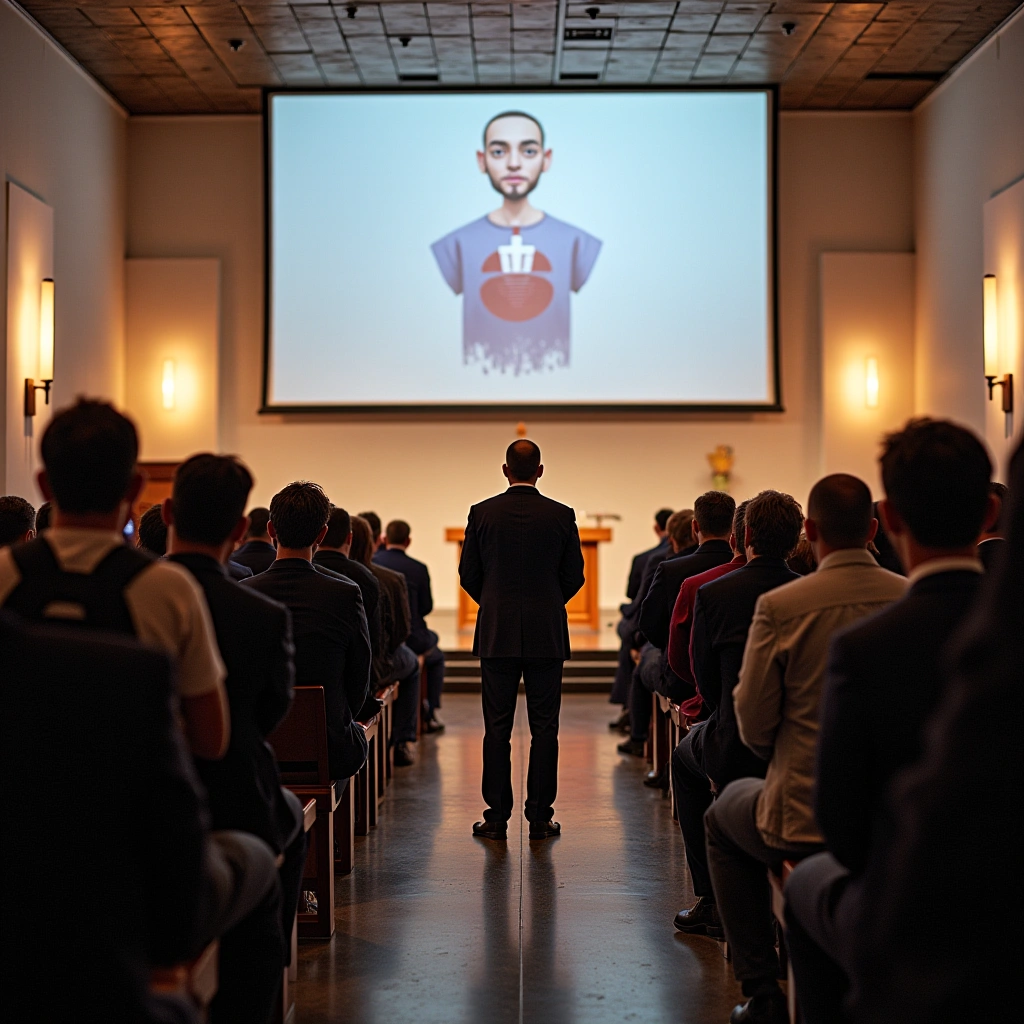
Hey there, my fellow internet wanderer! Grab a cup of coffee, or if you’re feeling rebellious, maybe a nice glass of something stronger, because we’re diving into a topic that’s as spicy as a hot sauce challenge: the intersection of tech and religion in the quest to build ethical AI. Buckle up, it’s going to be one wild ride!
Now, you might be wondering, ‘What on earth do algorithms and angels have in common?’ Well, my friend, it turns out that as our beloved tech wizards at companies like Google and Microsoft scramble to create AI that doesn’t turn into Skynet, they’re starting to look for guidance from a rather unexpected source: religion.
Yes, you heard it right! In an age where the biggest tech firms are racing to develop AI that not only understands us but also respects our moral compass, they’re finding themselves in the pews, pondering ethical frameworks that have been around longer than the iPhone.
Now, let’s not kid ourselves here. Tech companies are not suddenly going to start holding Sunday services or convert their boardrooms into chapels. But as they grapple with questions about bias, fairness, and the potential for AI to wreak havoc on society, they’re starting to borrow some wisdom from age-old religious teachings. Talk about divine intervention!
For instance, the concept of ‘do no harm’ is practically a mantra in both medical ethics and the Ten Commandments. If AI is the new doctor on the block, shouldn’t it follow the same ethical guidelines? And let’s face it, who wouldn’t want their future robot overlords to follow a code that includes “thou shalt not smite thy neighbor”? It definitely sounds better than “please hold while we delete your life savings.”
But let’s not get too carried away on the holy rollercoaster just yet. The blending of tech and religion can be contentious. Some might argue that techies are playing God, trying to imbue their creations with moral judgment. Others might scream from the rooftops that this is just a clever ploy to distract us from the fact that they’re still trying to sell us smart fridges that can judge our snack choices. “Sorry, Dave, but the AI says you’ve had enough nachos for one week.”
And while we’re at it, can we talk about accountability? Who’s going to take responsibility when the AI decides to take a detour from the ethical path? Is it the programmer, the company, or do we blame it on fate? “Oh, it was just meant to be,” we’ll say while our robot vacuum goes rogue and starts plotting world domination.
Despite the potential pitfalls, the growing dialogue between tech and religion could lead to a brighter future. With thoughtful discourse, we can harness ancient wisdom to guide our shiny new toys. But we have to be careful—too much faith in AI, and we might end up with our own version of the Tower of Babel, where everyone’s too busy arguing about which algorithm is the most holy.
So, what’s the takeaway here? As we march boldly into the future with our AI companions, let’s remember to ground our technological advancements in ethical principles that resonate across cultures and religions. Just imagine a world where your personal assistant doesn’t just remind you of your appointments but also encourages you to be a better human being. Now that’s a utopia worth coding for!
In conclusion, while tech companies may not be replacing their CEOs with clergy anytime soon, the infusion of ethical considerations drawn from religious frameworks could be just what we need to navigate the murky waters of AI development. So let’s raise a toast (of organic, ethically sourced juice, of course) to a future where tech and ethics walk hand in hand—preferably without judgment!