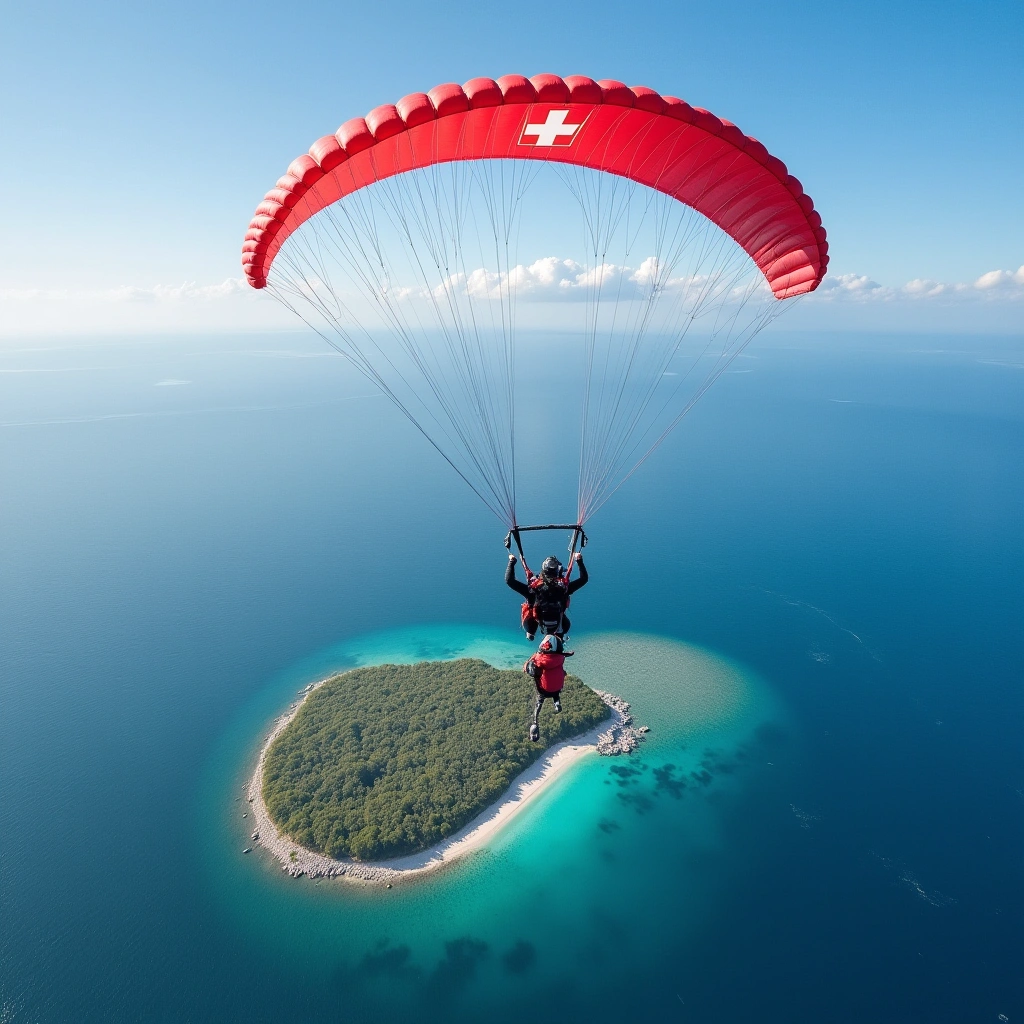
Picture this: a British Army medic, clad in tactical gear and a parachute, takes to the skies over the island of Tristan da Cunha – a place so remote it makes being lost in IKEA seem like a walk in the park. With only about 250 residents and more sheep than people, the island is the ultimate hidden gem for those who love isolation (and sheep). But today, our brave medic has a mission: to help a patient suspected of having hantavirus. Spoiler alert: it’s not a new dance move.
Now, before you start thinking this is just a scene from the next action blockbuster, let’s break down the reality of this situation. Hantavirus, for those who aren’t familiar, is a viral infection transmitted by rodents. So, if you’re planning a trip to an island where the most exciting activity is counting sheep, you might want to keep an eye out for those furry little critters. Remember: they’re not just cute; they can also be carriers of diseases.
So, why on earth would a medic jump out of a perfectly good airplane to land on an island that feels like the end of the world? Well, first off, kudos to him for his bravery! The British Army has a reputation for being a tad adventurous, and this is just another day in the life of a military medic. There’s no room for a “sorry, I can’t make it” when someone’s health is on the line, even if that someone lives a stone’s throw away from nowhere.
Imagine the scene: parachuting down to the island while trying to avoid a gust of wind that could send you straight into a flock of sheep. Talk about a rough landing! And once he’s on the ground, it’s not like he can just hop in an ambulance and zoom to the nearest hospital. Nope, he’s got to work with what he’s got, which, on Tristan da Cunha, is probably more like a first-aid kit and a lot of determination.
Once the medic arrives at the scene, he’ll likely assess the patient, who might be wondering if they’ve accidentally stumbled into a live-action video game. “Welcome to Tristan da Cunha, where your doctor might have just parachuted in!” The medic’s job is crucial because without timely treatment, hantavirus can lead to serious complications. So, it’s not just about being a cool parachuting hero; it’s about saving lives.
This scenario raises an interesting question: how do remote communities manage healthcare? Tristan da Cunha’s isolation means that the islanders have to be creative. They probably have a community-first aid team that’s like the Avengers, but instead of superpowers, they rely on good old-fashioned teamwork and a lot of tenacity.
In a world where we often take our healthcare for granted, the dedication of those who serve in remote areas is nothing short of heroic. So next time you complain about waiting in line at the doctor’s office, just remember – somewhere out there, a medic is parachuting onto an island just to save a life. And that’s pretty darn cool.
In conclusion, let’s raise a glass (of whatever you fancy) to our brave medic and the resilient people of Tristan da Cunha. May their stories inspire us all to appreciate both the healthcare we have and the extraordinary lengths some will go to ensure it reaches those in need, even if it means jumping out of a plane. Cheers!