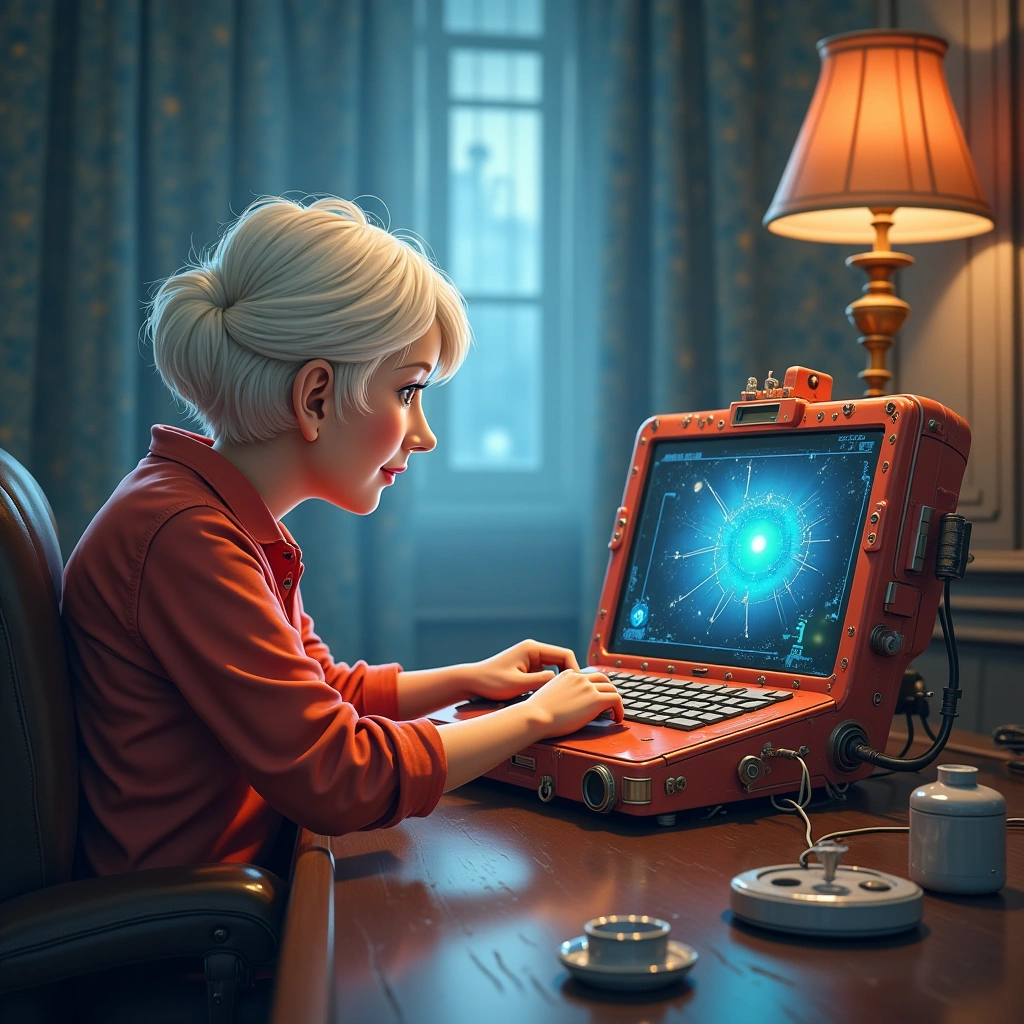
That’s not thinking, that’s just copying,” she retorted, her voice laced with disdain. “And what good is a machine that just copies?” · I pressed on, eager to share my newfound knowledge. “Well, they can write articles, translate languages, and even create art!” · Her eyes widened in disbelief. “Art? You mean, like, paint pictures?” · “Yes! And compose music! Imagine, a machine writing a symphony!” … Grandma recoiled as if I had suggested sacrilege.
Ah, the age-old tradition of sending your art to family members—especially the ones who raised you, like your grandma. You’d think that after all those years of being told how talented you are, she would recognize your creative genius immediately. But, alas, modern technology and generational gaps can play a hilarious trick on even the most well-intentioned exchanges.
Picture this: you’ve poured your heart and soul into a digital artwork. You’ve spent hours tweaking every pixel, adjusting colors, and ensuring that your masterpiece is nothing short of spectacular. You finally hit ‘send’ and eagerly await your grandma’s reaction, fully expecting her to be over the moon and perhaps even frame it. Instead, you get a response that feels like a slap in the face: “Is this from artificial intelligence?”
Now, let’s take a moment to appreciate the sheer irony of this situation. Here you are, a proud creator, and your grandma thinks your labor of love is the product of a soulless algorithm. It’s almost as if she’s saying, “Oh, sweetie, that’s nice, but I’d prefer my art made by a robot, thank you very much!” I mean, who knew Grandma was such a fan of the Matrix?
This scenario, which was recently shared on Reddit, is not just mildly infuriating; it’s a perfect snapshot of the generational divide in understanding technology and art. For many older folks, the term ‘digital art’ might still conjure up images of poorly drawn stick figures on a Windows Paint program from the ‘90s. So, when faced with something that looks genuinely good, their immediate thought is that it must be the work of some advanced AI program. And honestly, who can blame them? With the rapid rise of AI-generated content, it’s easy to see why they might jump to that conclusion.
But let’s face it: if your grandma thinks your digital artwork is AI-generated, it might be time to rethink your artistic strategy. Maybe you need to add a human touch—like a couple of cat ears or a whimsical unicorn. At least then, she might understand that, yes, a real human (with feelings and everything) made it, and not just some fancy computer.
What’s important here is the lesson we can take from this experience. It’s not just about art; it’s about communication and understanding. We live in a world where technology evolves at an alarming rate, and sometimes, we forget that not everyone is on the same page. So, the next time you create something you’re proud of, maybe add a little note: “No AI was harmed in the making of this masterpiece!”
In the end, it’s all about bridging the gap between generations. Who knows? Maybe next time you’ll send her a piece that she recognizes as your own, or at least she’ll ask you if it’s from a robot with a little more enthusiasm. Until then, keep creating, keep sending, and remember: to Grandma, you might just be the next Picasso—or a really good AI impersonator.
Inspired by: “I sent my Grandma Digital Art I made (WHICH SHE ASKED ME TO DO) and she genuinely asked me if it wa…” (r/mildlyinfuriating)