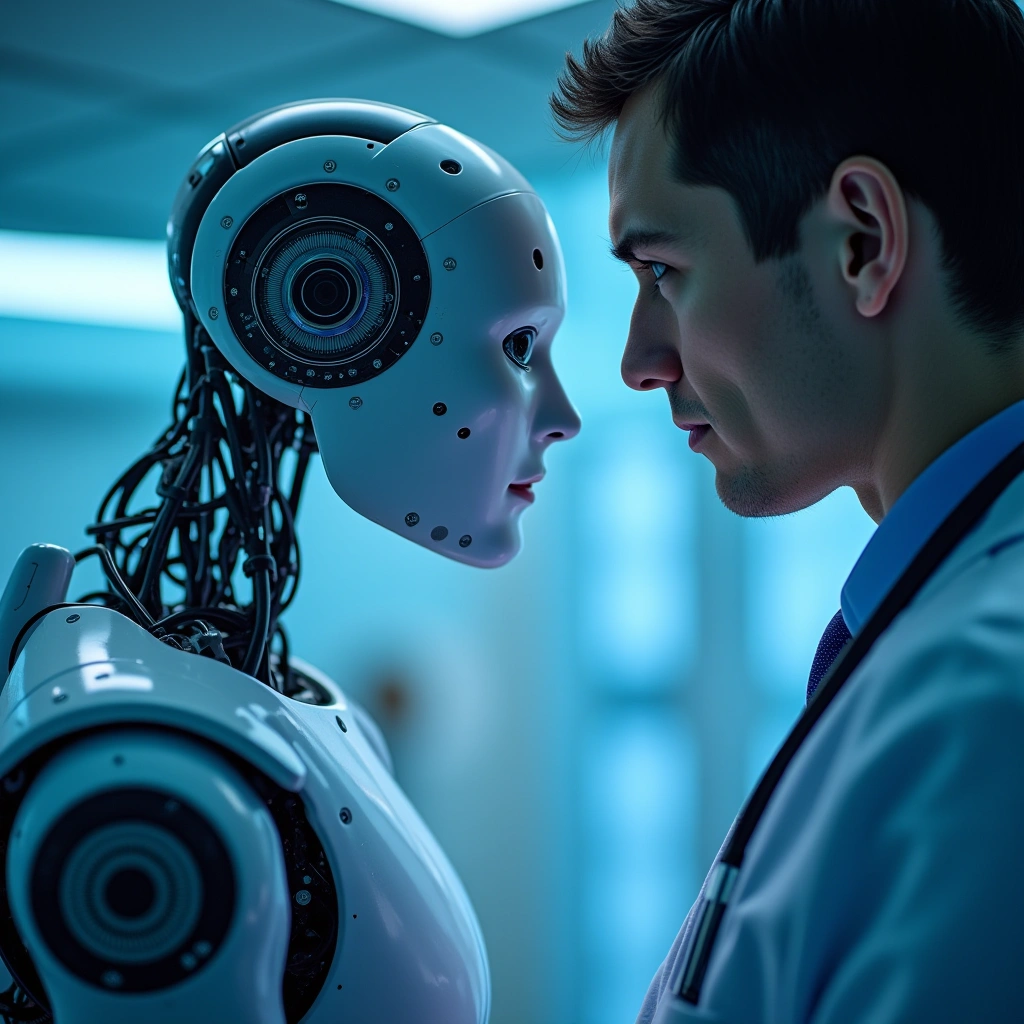
So, let’s talk about the latest buzz in the medical community: a Harvard study has revealed that AI models are performing better than physicians when it comes to emergency room diagnoses. Yup, you heard that right! Machines are possibly saving lives while your doctor is still trying to figure out how to spell “stethoscope.”
Now, before you start picturing robots in white coats, let’s unpack this. The study involved AI algorithms that were trained on vast datasets of medical records, symptoms, and outcomes. Think of it as giving a super-brainy intern infinite coffee and access to every medical textbook ever written. The result? These AI models can crunch numbers and spot patterns quicker than your doctor can say, “Let me consult my medical degree.”
But wait! Before you send your doctor on a permanent vacation, let’s consider a few things. First off, it’s not like AI is ready to take over the ER just yet. This is about diagnosis, not bedside manner. You know, the whole “Hey, you’re going to be okay” thing that humans do so well. A robot might just hand you a pamphlet and say, “Good luck with that!”
Moreover, while AI can analyze symptoms and predict outcomes with impressive accuracy, it still lacks the intuition and empathy that come from years of human experience. Can a machine really understand that your headache might be due to stress from your in-laws’ visit or an actual medical condition? I mean, good luck trying to program that into a robot!
And here’s where it gets even spicier: the implications of this study could shake the very foundations of the medical profession. If AI continues to prove its superiority in diagnosis, we might see a future where doctors spend less time with patients and more time managing algorithms. Just imagine your next appointment – you walk in, the doctor looks at a screen, and says, “Based on the data, you need to stop binge-watching reality TV.” Not quite the same as having a heart-to-heart, right?
Now, let’s not throw out our stethoscopes just yet. The study highlights how AI can serve as a powerful tool in the hands of healthcare professionals rather than a replacement. Physicians could use AI as a second opinion—like having a really smart friend who always agrees with you. “Yeah, Dr. Robot, I think it’s the flu too!”
So, what does this all mean for the average Joe or Jane? Well, it means we might be heading toward a future where technology and human touch work hand-in-hand. Just imagine a world where your doctor can spend more time actually talking to you instead of flipping through charts. Sounds dreamy, right? Until then, let’s keep an eye on these AI developments and hope they don’t start demanding their own coffee breaks!
In conclusion, while this Harvard study is definitely a wake-up call for the medical field, it’s also a reminder that there’s no substitute for human connection. So, here’s to our doctors—may they embrace technology while still looking us in the eye as they diagnose our ailments!