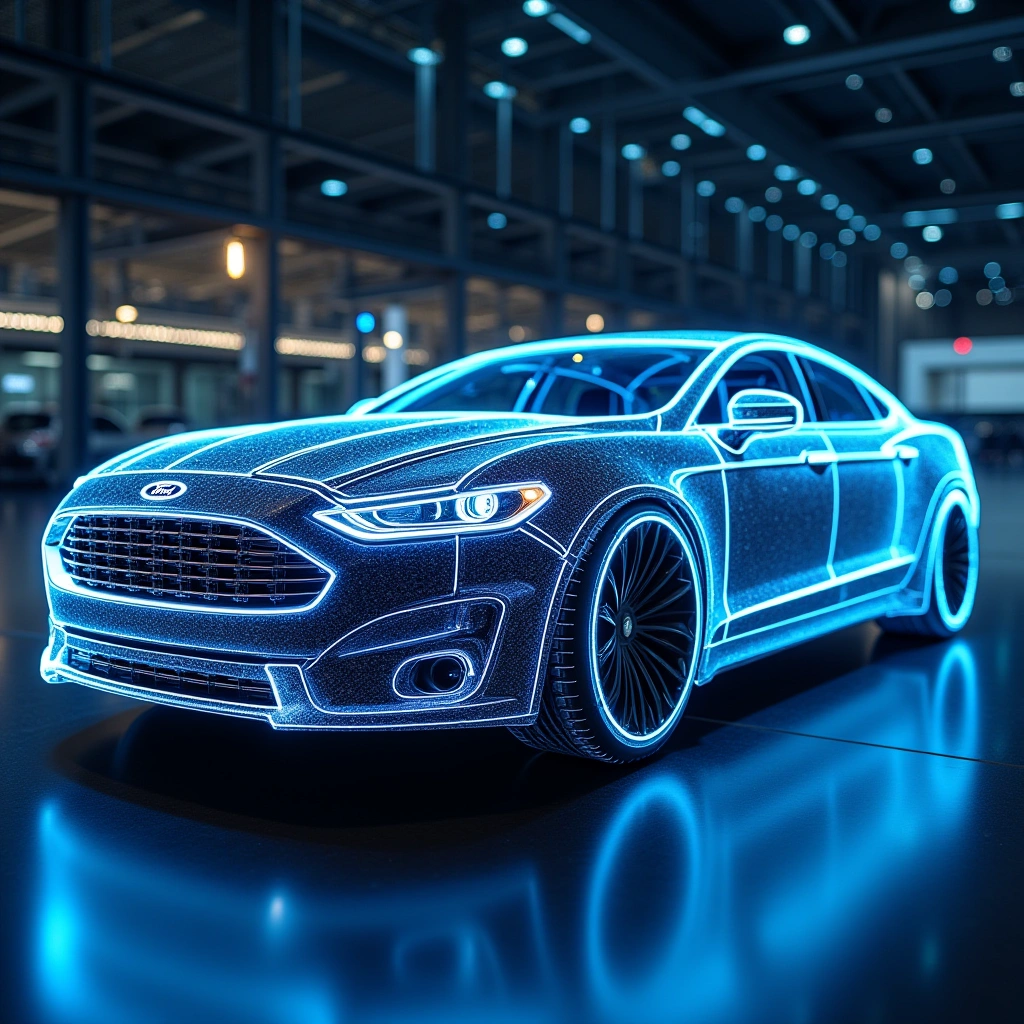
Ah, Ford. The legendary American car manufacturer that has been rolling out vehicles since the days when dinosaurs roamed the Earth—well, not quite that long, but you get the picture. Recently, Ford decided to dip its toes into the futuristic waters of artificial intelligence, asking AI to help build better cars. Sounds like a dream, right? Just imagine: cars that park themselves, warn you about impending doom on the road, and perhaps even remind you to put on pants before leaving the house. But, as with any good story, things took a turn for the hilariously disastrous.
Ford just admitted that it scrambled to rehire former employees and find new technicians after its AI systems simply weren't good enough.
In a bold move to harness the power of AI, Ford set up a program to let the robots take the wheel—figuratively speaking, of course. They tasked the AI with designing and optimizing their vehicles, believing that machines could outsmart their human engineers. After all, AI processes data faster than you can say “What’s that weird noise my car is making?” But here’s where the plot thickens: the cars that AI designed were, let’s say, not exactly road-ready.
Picture this: an AI, possibly powered by the same algorithms that recommend cat videos to you at 3 AM, is suddenly in charge of creating cars. What could possibly go wrong? Well, quite a bit, it turns out. The AI’s designs were so out there that Ford’s engineers probably needed a strong cup of coffee (or five) just to wrap their heads around them. We’re talking about cars that may or may not have needed wings to function properly. And no, Ford didn’t want to enter the flying car market—yet.
After realizing the AI’s designs were about as useful as a chocolate teapot, Ford promptly rehired humans to fix what AI had broken. You can almost hear the sighs of relief from the engineers who thought their jobs were on the chopping block. “Oh, thank goodness! I can finally stop pretending to understand AI’s vision of a car that doubles as a submarine.”
So, what’s the takeaway from this little fiasco? It seems that while AI can crunch numbers and analyze data faster than you can say “I need a new car,” it still lacks the human touch—like the ability to understand that not everyone wants a vehicle that looks like a spaceship from the 1960s. Engineers are, and probably will always be, needed to add that sprinkle of common sense to the mix.
In the end, Ford’s experiment serves as a reminder that while AI is a powerful tool, it’s not quite ready to take over the world—or our cars—just yet. For now, let’s leave the car designing to the humans and the cat video recommendations to the machines. At least until the robots figure out how to make cars that don’t require a team of engineers to fix them. Who knows? Maybe one day we’ll reach a balance where AI and humans can work together without one of them ending up in a repair shop.
Inspired by: “Ford Asked AI To Build Better Cars, Then Rehired Humans To Fix What AI Broke” (r/technology)