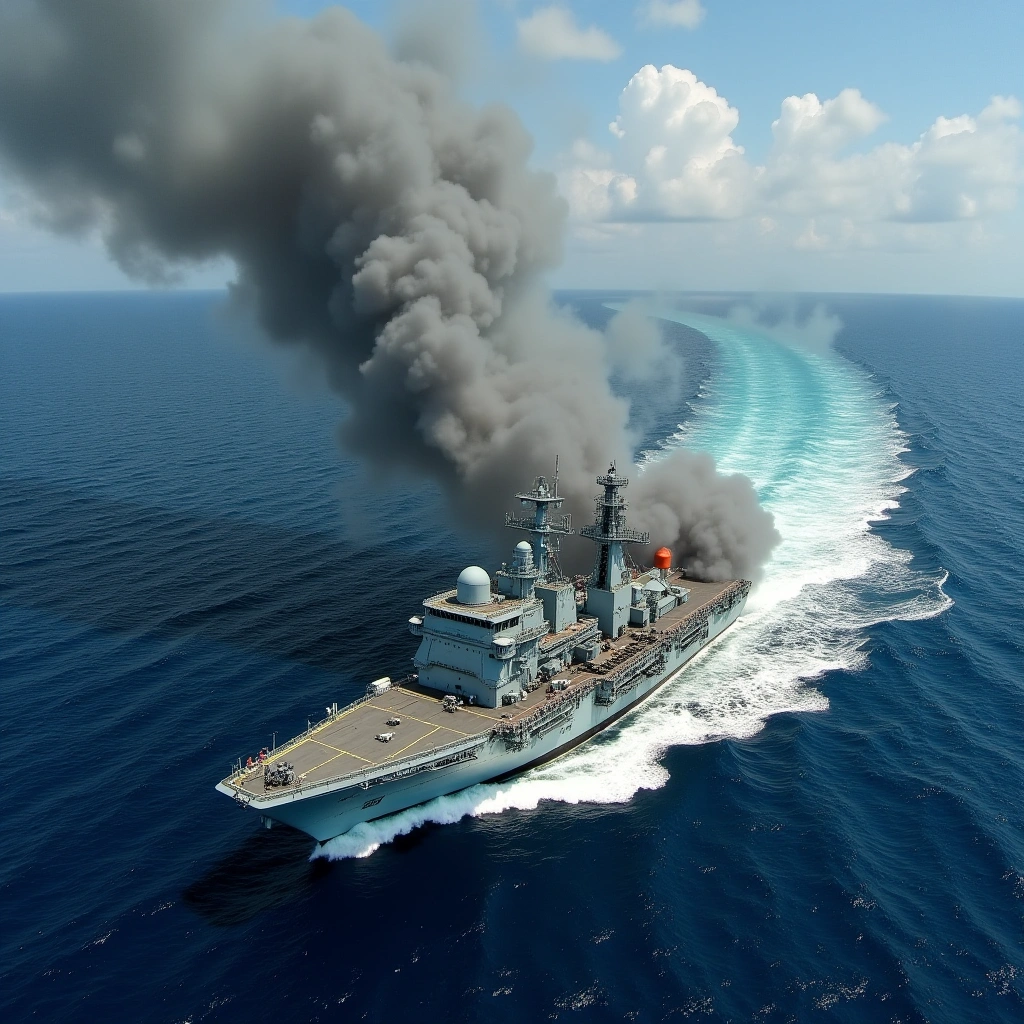
The United States military began executing airstrikes on vessels in the Caribbean Sea in September 2025, described by the administration of President Donald Trump as part of an effort to fight the flow of illicit drugs from Latin America to the US. In October, the strikes expanded to include …
Ah, the Caribbean. Known for its pristine beaches, vibrant cultures, and… the U.S. military conducting strikes on drug-trafficking vessels? Yep, you read that right. This past Saturday, the U.S. military announced that they killed four individuals in a strike against a vessel they allege was knee-deep in narco-trafficking activities. Let’s dive into this tropical drama, shall we?
According to the U.S. Southern Command, the strike was backed by what they refer to as “confirmed intelligence” regarding the vessel’s involvement in the drug trade. Now, I don’t know about you, but when I hear the term “confirmed intelligence,” I picture a bunch of agents in sunglasses, huddled around a table, discussing the best taco joints in the area—but apparently, they’re more interested in busting drug traffickers.
This strike is just one part of a broader campaign that the Trump administration kicked off last year, aiming to take down what they’ve dubbed “narco-terrorists.” Because if there’s one thing that sounds more intimidating than a drug dealer, it’s a drug dealer with a terrorist label. It’s like calling your annoying neighbor a “home invasion artist” instead of just a “loud guy who doesn’t know how to mow his lawn.”
But here’s where it gets a little hairy. Just ten days before this latest strike, the military also took out three people in another operation in the Caribbean. That brings the total count to over 220 people since this campaign began. Yes, you heard that correctly—220. At this rate, they might as well set up a frequent flyer program for those involved in these strikes.
Now, before you start thinking that the military is just out there playing whack-a-mole with boats, it’s important to mention that this has raised some eyebrows. Human rights groups have been quick to label these operations as “extrajudicial killings.” In simpler terms, that means they think the military is taking the law into their own hands, and not in a good way. It’s kind of like your neighbor deciding to take matters into their own hands when your dog barks too much—nobody wants that.
The narrative around these strikes is complex, to say the least. On one hand, you have the U.S. government portraying these actions as necessary steps to combat the dire drug crisis affecting many communities. On the other hand, critics are raising concerns about the legality and morality of such strikes, especially when they result in civilian casualties or target individuals without due process.
In the end, while tropical cocktails and sunbathing may be what most people associate with the Caribbean, it seems the U.S. military is more focused on eliminating drug trafficking networks. So, if you’re planning a vacation there anytime soon, just remember: it might be wise to steer clear of any suspicious-looking boats. You never know when a high-stakes game of naval chess might break out.
So, what’s next? Will the U.S. military continue its Caribbean crusade? Will they start handing out business cards with their strike statistics? Only time will tell, but for now, it seems like the Caribbean is not just a paradise for tourists, but also a battleground in a war that shows no signs of slowing down.
Inspired by: “Caribbean: US military says a strike killed four as government’s crackdown on ‘narco-terrorists’ co…” (r/World)