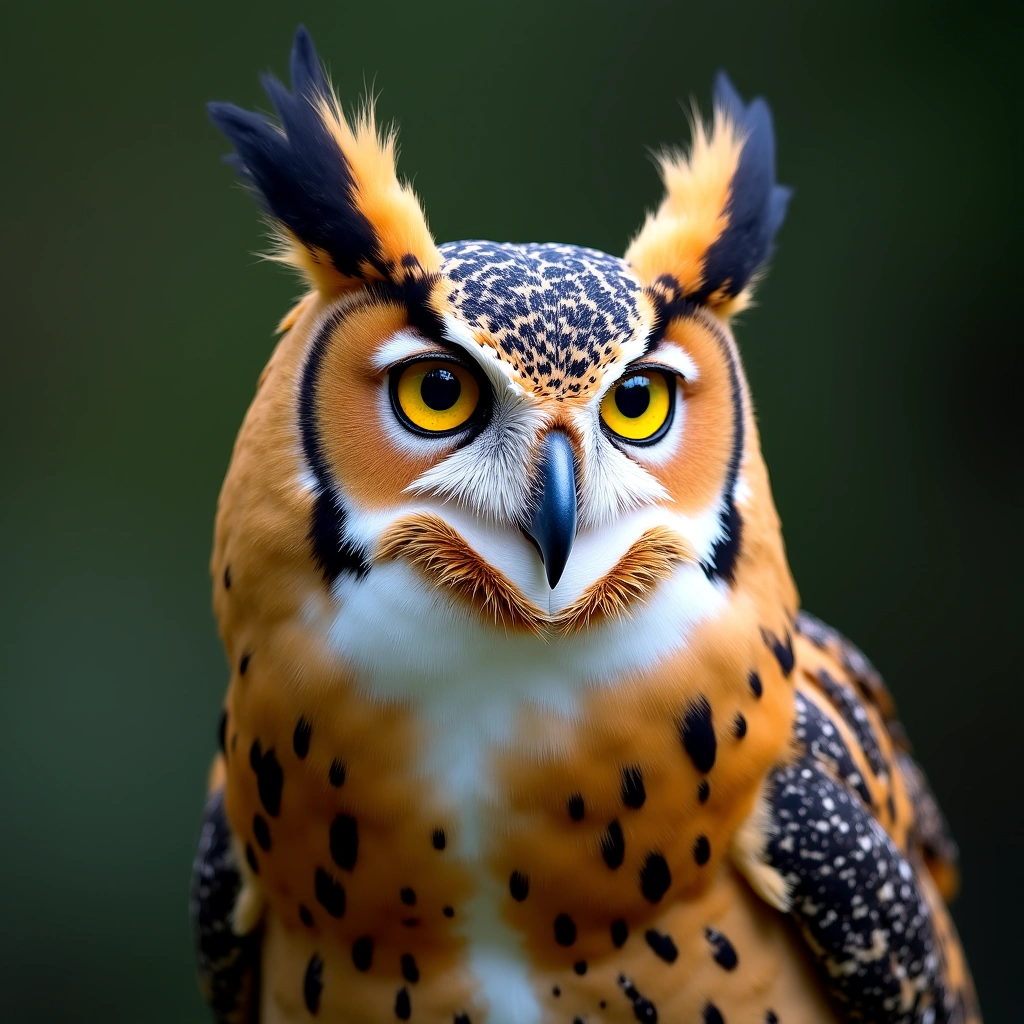
Alright, my fellow nature enthusiasts and wildlife watchers, gather ’round because we’re about to dive into a topic that is as mysterious as it is fascinating: owl camouflage! Yes, you heard it right! Those adorable, big-eyed creatures are not just cute; they’re also masters of disguise!
Imagine you’re wandering through a forest, minding your own business, when suddenly you spot an owl. No, not the one from Harry Potter (though that would be cool too). I’m talking about the real deal. Now, stop right there! Did you even recognize it as an owl? If not, congratulations! You’ve just fallen victim to the ultimate game of hide-and-seek!
The Art of Blending In
Owls are like the James Bonds of the bird world. They can blend into their surroundings so well that you might just mistake them for a dull piece of bark or a mossy rock. Their feathers are designed with intricate patterns that mimic tree bark, leaves, and even the shadows cast by branches. Talk about being fashion-forward in the wild!
If you’ve ever seen that viral video of an owl perched on a branch, only to realize it’s practically invisible until someone points it out, you know what I mean. It’s like watching a magician pull a rabbit out of a hat, except the rabbit is an owl, and you’re left questioning your eyesight.
Why Camouflage?
Now, you might be wondering, why do these feathered ninjas need to blend in so well? Well, dear reader, it’s all about survival! Owls are nocturnal hunters, which means they like to do their dirty work under the cover of darkness. By camouflaging themselves, they can ambush their prey without raising suspicion. Who knew owls were such sneaky little devils?
Imagine being a mouse, minding your business, when suddenly, the very tree you thought was just a tree suddenly transforms into a fierce predator! Talk about a plot twist!
Camouflage in Different Species
But wait, there’s more! Not all owls are created equal when it comes to camouflage. Take the Great Horned Owl, for instance. Its plumage is a patchwork of browns and grays, making it look like it just walked out of a thrift store. Meanwhile, the Barn Owl sports a more ghostly appearance with white and tawny feathers, which might not blend in as well during the day but works wonders in moonlit hunts.
The Science Behind the Magic
Now, if we want to get a bit nerdy (and you know I love a good nerd-out), let’s talk about the science behind this incredible camouflage. It’s not just random luck; it’s evolutionary genius! Owls have developed these feather patterns over millions of years to adapt to their environments. This means that if you think you’re just looking at a fluffy pillow in a tree, you might actually be witnessing the culmination of eons of evolution. Mind blown, right?
Conclusion: Nature’s Masterclass in Disguise
In conclusion, next time you’re wandering through the woods and think you see an owl, take a closer look. You might just find that nature’s little trickster has pulled a fast one on you. So let’s give a round of applause to these feathered ninjas of the night. They deserve it for keeping us on our toes!
And remember, folks, the next time you’re playing hide-and-seek with your friends, channel your inner owl. Just don’t take it too literally and end up hiding in a tree for hours. Trust me; that won’t end well.
Now go forth and spread the word about the incredible camouflage of owls, and let’s keep that owl appreciation going strong!