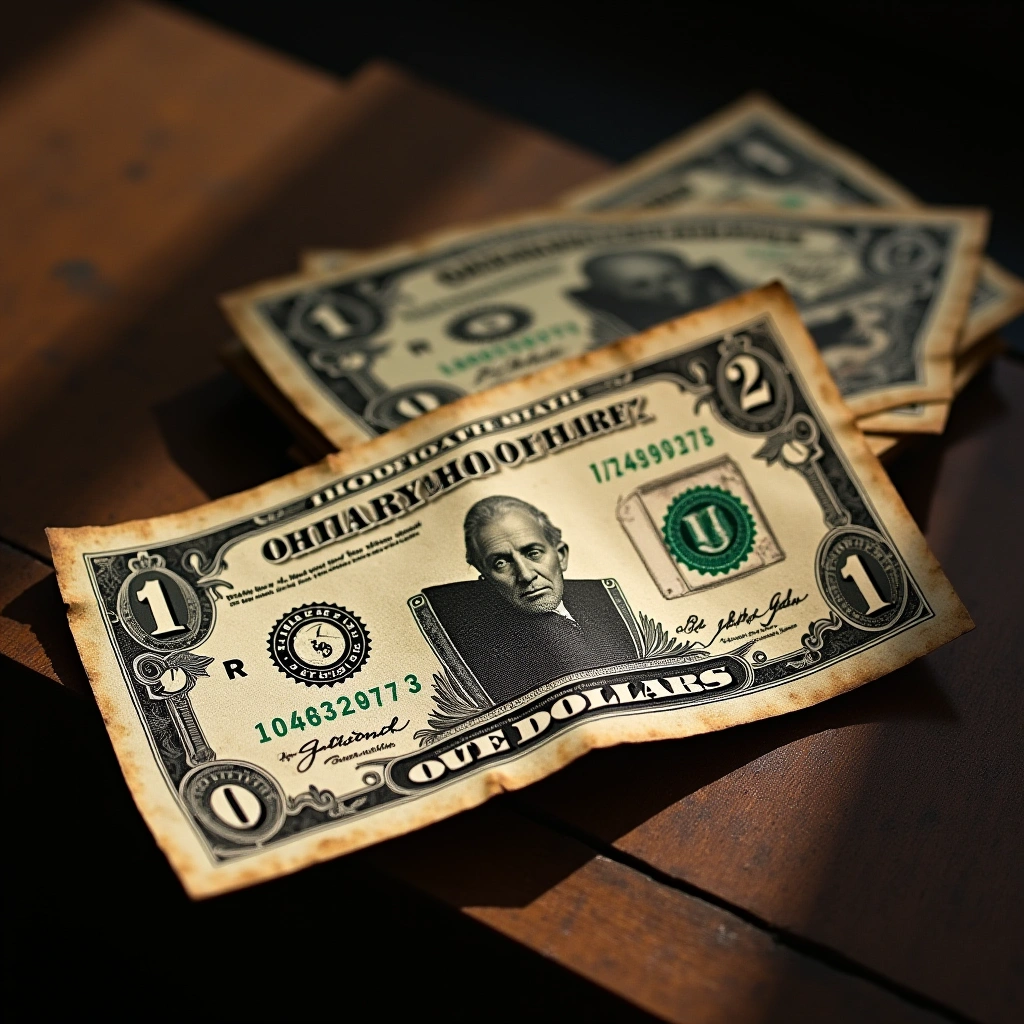
Ahoy, fellow history buffs and treasure hunters! Today, we’re setting sail on a journey back in time to one of the most infamous maritime disasters in history—the sinking of the Titanic. But hold on to your life jackets, because we’re not just talking about icebergs and lifeboats; we’re diving into the intriguing discovery of currency notes recovered from the depths of the Atlantic. Yes, you heard that right—money that went down with the ship!
Related reading: Unearthing History
First, let’s paint a picture of the Titanic. You know, the unsinkable ship that, spoiler alert, sank on its maiden voyage. It was the Titanic’s last hurrah in April 1912, a time when people wore bowler hats and women donned elegant gowns. Fast forward over a century, and it’s now a legendary shipwreck, and guess what? It’s also a treasure trove of artifacts, including some cold hard cash.
Now, you might be wondering, how does money end up at the bottom of the ocean? Well, when the Titanic met its icy fate, many passengers had their wallets filled with cash. There were no credit cards or Venmo back then, so folks had to carry their funds in good old-fashioned bills. Imagine the horror of watching your hard-earned cash sink into the abyss—talk about a bad investment!
In the years following the Titanic’s discovery, numerous expeditions have fetched various items from the wreck, including jewelry, personal belongings, and yes, currency notes. These bills, primarily from the early 20th century, offer a peek into the past—literally money that has seen some serious drama!
But here’s where it gets even more interesting. The recovered currency notes can be worth a small fortune today. I mean, who wouldn’t want to own a piece of history that’s literally been through the depths of despair? Collectors and historians alike drool over the chance to hold a bill that once belonged to a first-class passenger (or someone who was just really bad at saving). Some of those notes have been auctioned for thousands of dollars. So if you’ve got a Titanic bill lying around, congratulations! You might just be richer than you thought—assuming it’s not a soggy mess.
So, what do these currency notes tell us? For starters, they reflect the economic climate of the early 1900s, a time when things were looking up before the crash of 1929. They represent the dreams and aspirations of those aboard the Titanic, dreams that, tragically, never saw the light of day. It’s a poignant reminder of how fragile life can be.
Now, let’s get a bit controversial—some might argue that recovering items from shipwrecks is akin to grave robbing. After all, the Titanic is a resting place for many souls who lost their lives in that fateful night. Others, however, see it as a way to preserve history and educate future generations. So, the next time you’re in a heated debate with your friends over a bottle of wine, bring up the Titanic currency. It’s sure to spark some lively discussions!
In conclusion, the story of currency notes recovered from the Titanic is more than just about money; it’s about history, tragedy, and the human experience. So next time you find a crumpled bill in your pocket, just remember: it could be a lot more valuable if it had a dramatic backstory! Until next time, keep searching for treasures—who knows what history is waiting for you just beneath the surface!
Inspired by: “Currency notes recovered from the Titanic” (r/interestingasfuck)