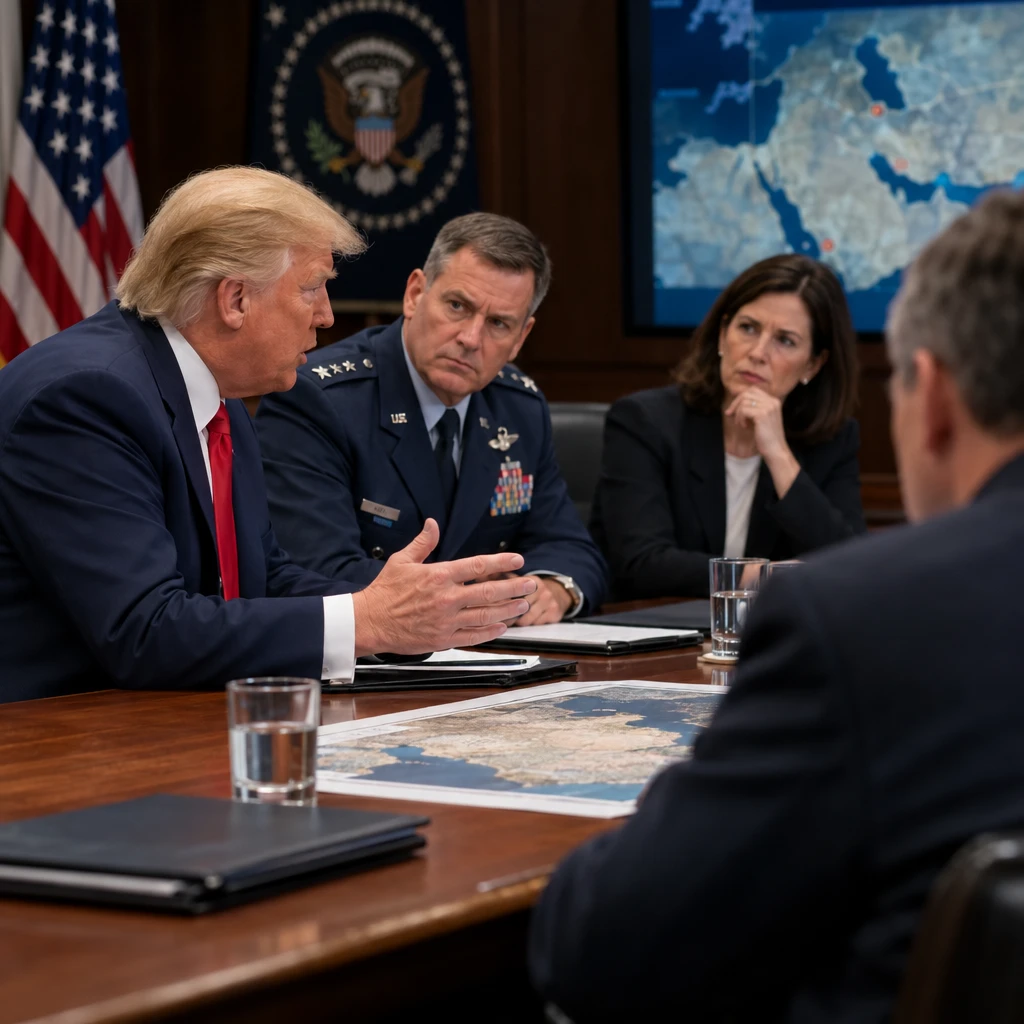
Trump administration officials are debating whether the U.S. military should target senior Iranian leaders in an effort to eliminate hardliners within the regime , NBC News reported Tuesday, citing a U.S.
Every so often a headline lands that makes you put your coffee down and reread it. This week’s came from NBC News, which reported that officials in the Trump administration are debating whether the US military should target senior Iranian leaders as a way to bring an end to the conflict. The war has now dragged on for nine months, so you can understand why people inside the government are looking for a way out, even if the options on the table are the kind nobody enjoys discussing over lunch.
According to the reporting, the debate is happening within both the administration and the military. The arguments on each side are fairly easy to follow, even if the choices are not. Supporters of the idea reportedly believe that a high-profile strike on top Iranian figures could demonstrate American capabilities and create an opening to wrap things up. The logic goes something like this: show you can hit the people at the top, and the other side might suddenly become very interested in a deal.
The skeptics see it differently. Their concern is that such a move could harden Iran’s position rather than soften it. When a government’s leadership is attacked, it does not tend to respond by sending a friendly note asking to talk things over. It tends to dig in, and that makes future negotiations even harder to pull off. In other words, a strike designed to create leverage could end up removing the very room for diplomacy it was supposed to create.
It is worth pausing on how strange it is that both camps are essentially arguing about the same goal, which is ending the war, while reaching opposite conclusions about the best route there. That is not unusual in wartime policymaking, but it does make the internal conversation sound a lot like two people agreeing they want to get out of a burning building and then fighting over which door to use.
The story also got picked up widely, with coverage appearing in outlets including the Jerusalem Post, Political Wire, Seeking Alpha, Anadolu Agency, Middle East Monitor, and Mediaite. When that many publications run with the same report, it usually means the underlying news is significant, and that readers around the world are paying close attention to what happens next. Reports of internal debate are not the same as official decisions, though, and it is important to keep that distinction in mind. Officials can argue for a course of action without it ever being taken.
Still, the fact that targeting senior leadership is even on the table tells you something about where the conflict stands. Options that sound extreme tend to surface when other approaches have stalled, and the nine-month timeline suggests that the usual tools have not produced a quick resolution. Whether this idea gains traction or fades away, it reflects a hard reality: no path forward looks clean, and every option carries risks that could reach well beyond the battlefield.
For now, the situation remains a debate rather than a decision. The coming weeks will reveal whether the administration leans toward force as a tool for ending the war or toward the diplomacy that skeptics say is harder to reach once the rhetoric escalates. Either way, it is a reminder that the most consequential choices in a conflict often start as quiet arguments in rooms most of us will never see.
Inspired by: “Trump Administration Officials Debating Targeting Iranian Leaders in Bid to End War: Report” (r/World)