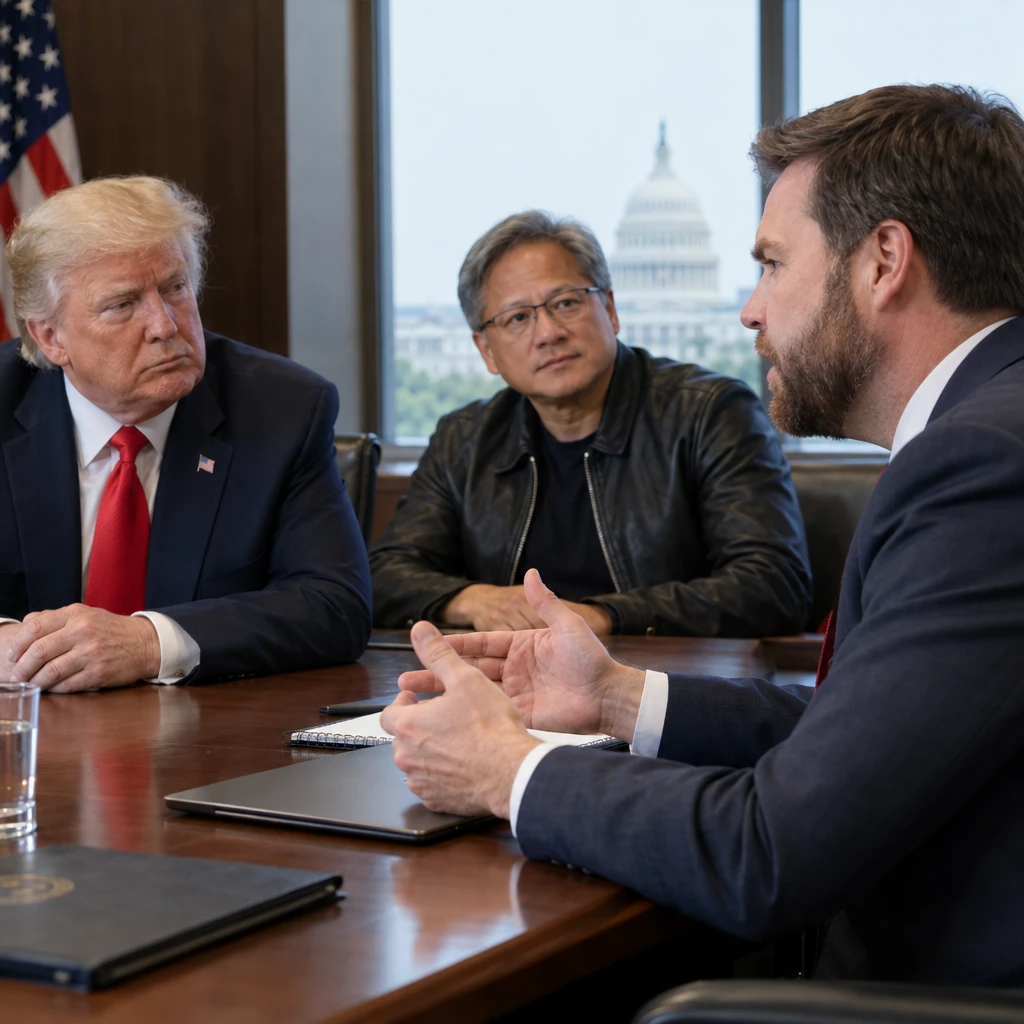
Huang over the weekend and helped the Nvidia board get the assurances it needed that the Trump administration did not believe that Mr. Huang himself posed a national security risk .
Every so often a story lands that sounds like it was written for a corporate thriller, and this one fits the bill. According to multiple reports, President Donald Trump asked Vice President JD Vance to step in on a delicate matter: getting Nvidia’s board to bring back former CEO Jensen Huang. Vance is said to have spent part of a weekend making the case to the board. The message he reportedly delivered was pretty direct. The U.S. government does not consider Huang a national security risk.
If you have ever wondered what a vice president does on a weekend, now you have an answer. Apparently, it includes acting as a go-between for one of the most valuable tech companies in the world. Not bad for a Saturday.
Why does a national security question even come up here? Nvidia makes the chips that power a huge share of today’s artificial intelligence work, and that puts the company squarely in the middle of government interest. Chips are not just products on a shelf anymore. They are tied to economic competition, defense, and the broader race to lead in AI. So when a board is weighing whether a leader is acceptable, the government’s view of that leader can matter a lot. Reports say the effort followed consultations with Attorney General Todd Blanche and others, which suggests this was not a casual phone call but a coordinated push.
The interesting part is the phrasing. Sources describe Vance as an emissary, a word that sounds like something out of a diplomatic novel. In this case, the job was to ease concerns. That tells you the board had questions, and the White House wanted to address them before any decision was made. In plain English, someone needed to reassure people that bringing Huang back would not raise red flags with Washington.
Now, a note of caution. Most of what we know comes from sources speaking anonymously, and the reporting here is still developing. The details are being pieced together by several outlets, including The Wall Street Journal, the Associated Press, and others, and each one is working from people who are not named. That is standard in this kind of story, but it also means the picture can shift. Anyone who says they know exactly how this will end is either very well connected or just guessing.
What the reports do make clear is that the government is paying close attention to Nvidia’s leadership. A company this important does not change its top executive in a vacuum, and the idea that the White House would weigh in on the question says a lot about how central the chip industry has become to national policy. It is a little strange to see a corporate governance question treated like a matter for the vice president, but that is where we are.
For readers, the takeaway is less about one boardroom and more about the bigger picture. Technology and government are increasingly tangled together, and leadership decisions at companies like Nvidia can carry political weight. Whether Huang ends up back in charge or not, this episode shows how closely Washington is watching the people who run the firms building the future.
So keep an eye on this one. The reporting is still unfolding, and if the story has taught us anything, it is that the most dramatic chapters often happen behind closed doors, usually on a weekend.
Inspired by: “Trump Asked Vance to Help Get Jensen Huang Reinstated” (r/Tech)