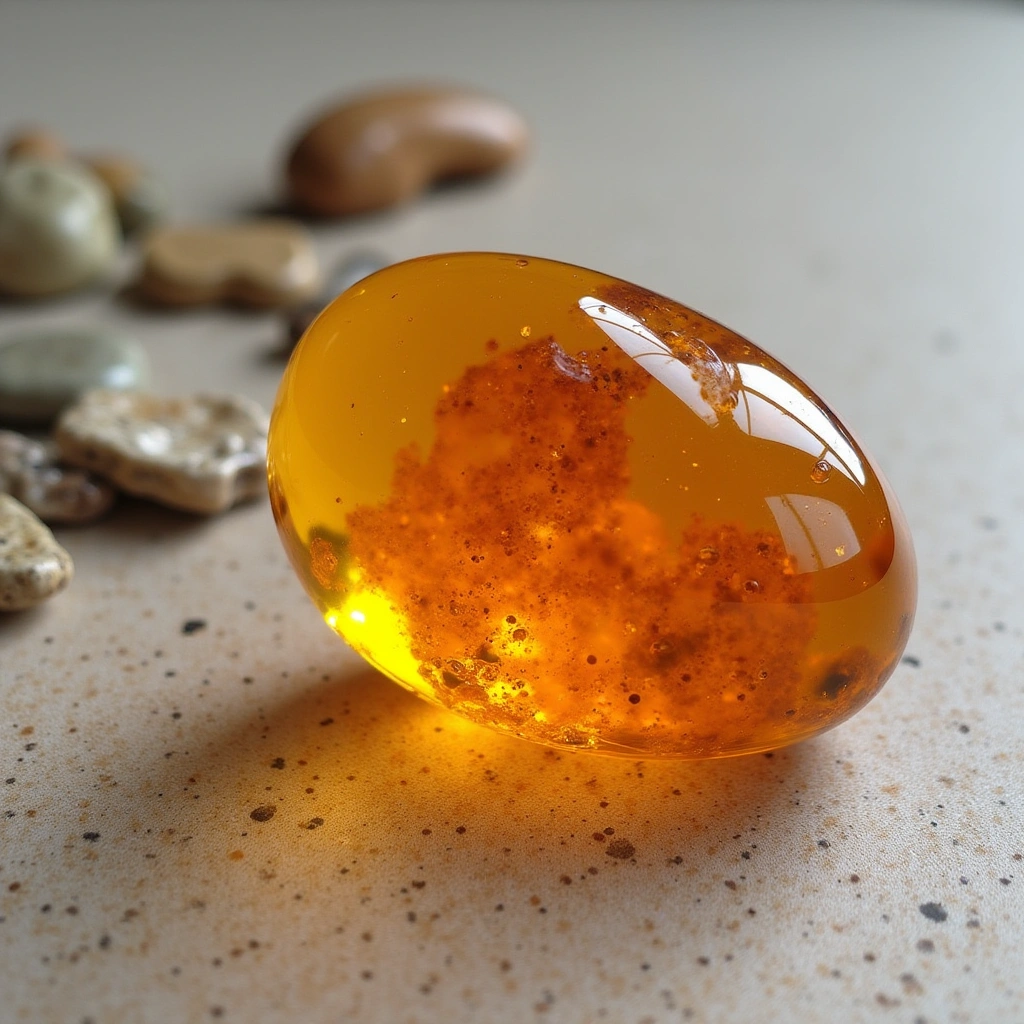
Hey there, fellow treasure hunters! Have you ever strolled along a beach, picking up random objects and thinking, “Hey, this could be something special!”? Well, let me tell you about a recent adventure that’ll make you rethink what you consider junk!
So, there I was, minding my own business, when I stumbled upon a piece of amber that looked like the sun had decided to take a vacation on the sand. You know, that warm, golden glow that makes you feel like you’ve just found a piece of the universe? Next thing I knew, I was channeling my inner archaeologist and thinking about how to turn this beauty into something magnificent!
Now, let’s talk about the Thuja tree in my garden. If you’ve never seen a Thuja, it’s like the hipster of the tree world—always looking good, but a little misunderstood. These trees are not just great for your backyard aesthetic; they can also be transformed into stunning artistic pieces. So, naturally, I thought, why not combine these two finds using an ancient technique called lost wax casting? Oh, the possibilities!
Now, what is this lost wax casting I speak of? Well, it’s a method so old that even your great-great-grandparents would shake their heads in disbelief at how cool it is. Essentially, it involves creating a model out of wax, covering it in a heat-resistant material, melting the wax away, and then pouring metal into the mold. Voila! You’ve got yourself a piece of art that could rival anything found in a fancy gallery—except you made it from beach finds and garden scraps. Talk about turning trash into treasure!
Here’s where it gets juicy: the amber. Picture this: a radiant piece of amber, embedded with tiny prehistoric insects, transformed into a pendant that tells a story older than your last relationship. And the Thuja? Oh boy, the grain of that wood, combined with the natural resin, creates a finish that’s smoother than a jazz saxophonist on a Saturday night. You can almost hear it whispering, “Use me!”
So, I gathered my tools, which consisted of a little patience, some wax, and a questionable YouTube tutorial. The process was messy, but hey, who doesn’t love a little chaos? After a few trial and error moments (let’s just say, my kitchen looked like a craft store exploded), I managed to create a mold that would make Michelangelo proud.
Fast forward to the moment of truth: pouring the metal. This is where you hold your breath, cross your fingers, and hope you didn’t just ruin your precious finds. But when I cracked open that mold, I was greeted with a shiny, breathtaking piece that looked like it belonged in a royal treasury. I might have even done a little happy dance—don’t judge!
So, what’s the takeaway here? Next time you find something that looks like it’s meant for the trash bin, remember that with a little creativity and the ancient art of lost wax casting, you could turn it into a masterpiece. Who knows? You might just end up with a new hobby that puts your Pinterest board to shame!
Now, go forth, my crafty friends! Hit those beaches, explore your gardens, and remember: one person’s trash is another person’s treasure, especially when you add a little wax and a whole lot of love!