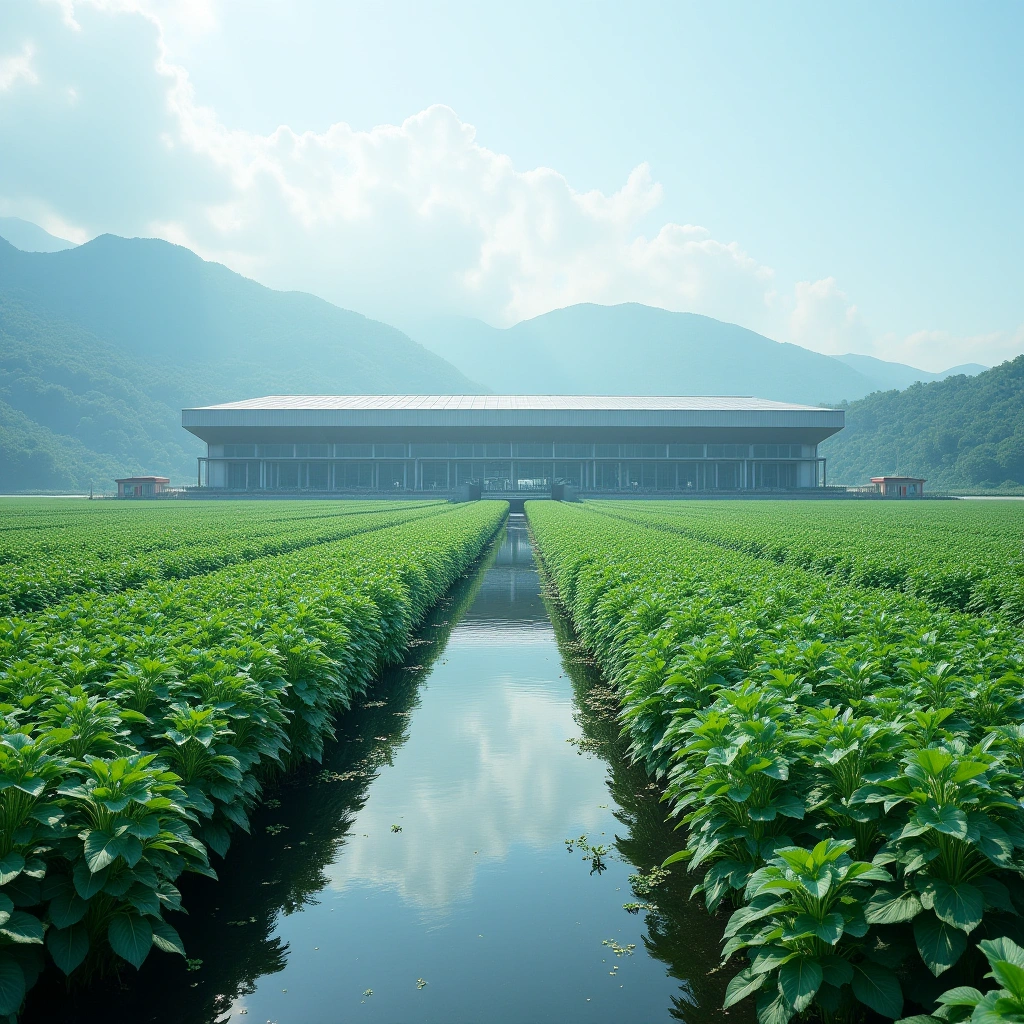
So, let’s talk about something that’s been making quite the splash—literally. TSMC, or Taiwan Semiconductor Manufacturing Company for those not in the know (and if you aren’t, where have you been?), is setting up shop in Japan. Sounds great, right? Jobs, innovation, and all that jazz. But hold on to your hats, because there’s a catch: this plant has a water demand that could make even the biggest desert dwellers raise an eyebrow.
Japan Advanced Semiconductor Manufacturing, a joint venture between TSMC, Sony Semiconductor Solutions, Toyota Motors and Toyota-affiliated car parts maker Denso, held the grand opening of its first factory, located in the town of Kikuyo, in February. It will become fully operational by the end of this year. Kimio Katsuya, secretary-general of the Kumamoto Groundwater Foundation, says efforts are underway to encourage more farmers to fill post-harvest rice paddies with water to protect the prefecture's groundwater.
Now, you might be wondering why a chip manufacturing plant needs so much water. I mean, aren’t chips made in a lab with a sprinkle of fairy dust? Well, not quite. The semiconductor manufacturing process is surprisingly water-intensive. Water is used to cool the machines, rinse the silicon wafers, and even in the chemical processes involved. So, when you’re cranking out chips at a massive scale (which, spoiler alert, TSMC is), you’re going to need a lot of H2O.
Here’s where it gets tricky. Local farmers in Japan are starting to feel a bit parched. With the plant’s insatiable thirst for water, concerns are rising about how this will affect local agriculture. Farmers are like, “Hey, we’re trying to grow rice and vegetables here, not chips!” And who can blame them? They’ve got crops to tend to, families to feed, and let’s be honest, a rice bowl that’s just waiting to be filled.
Now, I can already hear the TSMC supporters chiming in, “But these chips are essential for technology!” And yes, that’s true. We all love our gadgets, and without semiconductors, our smartphones would just be glorified paperweights. But at what cost? Balancing the needs of a booming tech industry with the sustainability of local agriculture is a bit like trying to balance a spoon on your nose—challenging and likely to end in disaster.
Japan has been grappling with water scarcity issues for years, and the last thing they need is a giant semiconductor factory swooping in and guzzling up their precious resources. It’s like inviting a friend over for dinner and then watching them eat all your food while you’re left with a few sad carrots. Not cool, TSMC. Not cool.
So, what’s the solution? Well, it might be time for TSMC to get a little creative. They could invest in water recycling technologies or even explore alternative water sources. After all, if they can create chips that power our smartphones, surely they can find a way to use water more efficiently, right?
In the end, it’s all about finding a balance. We need semiconductors for our tech-driven lives, but we also need farmers to keep our bellies full. Let’s hope that TSMC and local authorities can come together to ensure that the only thing getting drained here is the competition for the best chip designs, not the local water supply.
So grab your water bottles, folks, because this is going to be a bumpy ride on the road to sustainability. And who knows? Maybe we can turn this water war into a collaboration that benefits both tech and agriculture. Now, wouldn’t that be a plot twist worthy of a Hollywood movie?
Inspired by: “TSMC plant’s massive water demand in Japan raises sustainability concerns for local farmers” (r/technology)