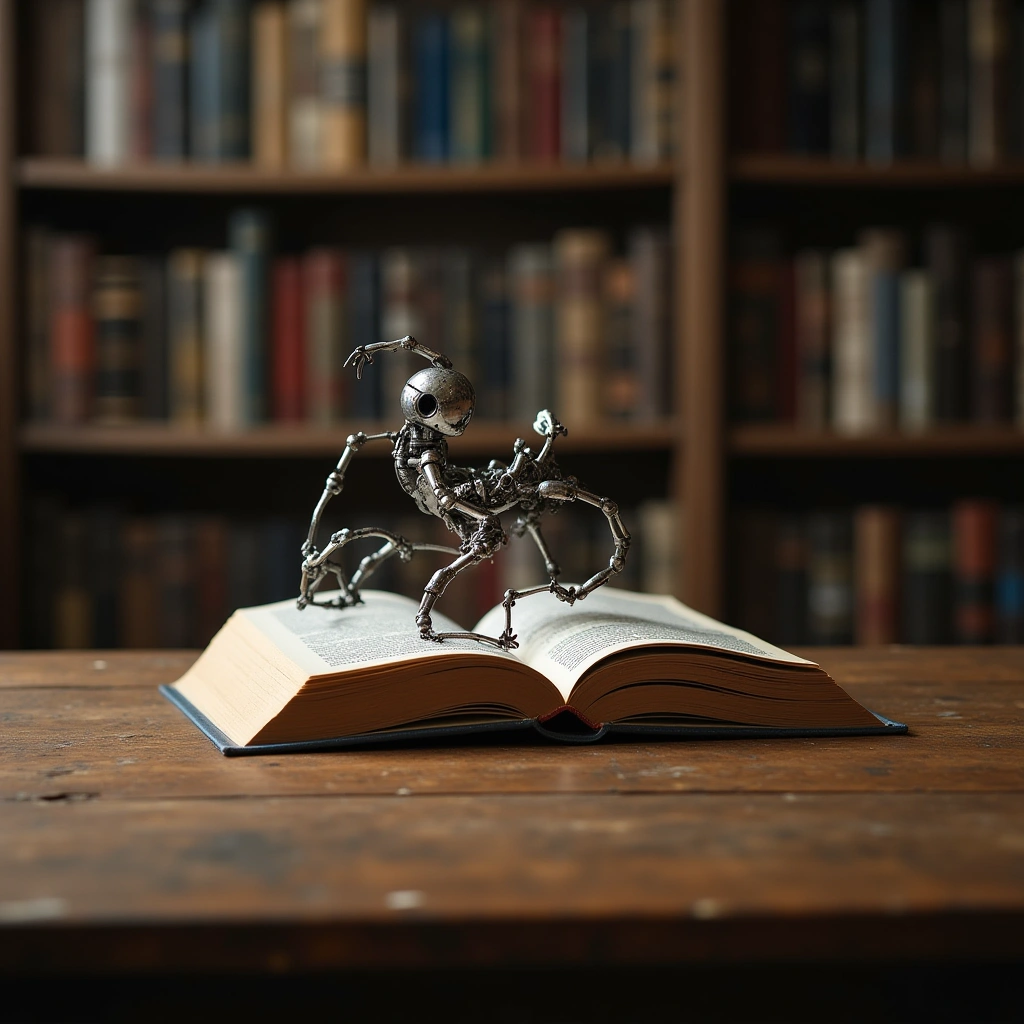
If you thought the most dangerous thing about Artificial Intelligence was its uncanny ability to write your college essays or generate cat memes, think again. It turns out that there’s a darker side to our beloved AI, and it involves the destruction of rare books. Yes, you heard that right! It’s not just your average horror story; it’s the plot twist that has Australian booksellers clutching their pearls and reaching for the smelling salts.
AI companies like Anthropic are bulk-purchasing millions of rare, pre-2022 physical books to use as clean training data, subsequently slicing their spines and pulping the originals after high-speed scanning. This "destructive scanning" practice was legally sanctioned under US fair use doctrine because eliminating the physical copy prevents dual circulation, though it has sparked global outrage among booksellers and historians who view the loss of unique cultural heritage as irreversible.
Recently, a group of Australian booksellers raised the alarm over what they describe as the ‘horrific’ destruction of rare titles. Imagine a world where your favorite dusty old book is not just gathering dust on a shelf, but is being fed into the insatiable maw of AI algorithms. It’s like watching your childhood toys being tossed into a bonfire because they’re “no longer useful.” Just ouch.
So, what’s the deal? Well, as AI continues to evolve, it needs training data to function effectively. This often means that vast amounts of text are required to teach these machines how to understand human language. Unfortunately, some tech companies are looking at rare and valuable books as a source for this data. And that’s where the real tragedy lies.
Books that have survived wars, floods, and the test of time are now being ripped apart in the name of progress. It’s like a scene from a dystopian novel, where the very essence of culture and history is being sacrificed on the altar of technology. The irony is not lost on those who cherish literature. Here we are, in the age of information, and somehow we’re choosing to obliterate our literary heritage.
Booksellers are understandably upset. They argue that these rare titles are more than just objects; they are pieces of history, art, and culture. Each book has a story to tell, and it’s not just the story written within its pages. It’s about the journey it has taken, the readers it has touched, and the knowledge it has preserved. But hey, who needs history when you can have an AI that can spit out a mediocre poem in under a second?
And let’s not forget the irony of it all. We’re creating machines that can generate content at lightning speed, yet we’re willing to erase the very foundations on which this content is built. It’s like trying to bake a cake without flour; you might end up with something, but it’s not going to be pretty.
In a world where digital media reigns supreme, the value of physical books seems to be diminishing faster than your motivation to hit the gym after a long day. But let’s be real—there’s something special about holding a book in your hands, flipping through its pages, and even getting a whiff of that old book smell (you know what I’m talking about). It’s an experience that a screen just can’t replicate.
So, what can we do to save our rare books from the clutches of AI? Well, for starters, we can support independent bookstores and advocate for the preservation of literary heritage. We can also raise awareness about the importance of protecting these treasures. Because if we don’t, we might just wake up one day in a world where the only books we have left are the ones that were written by algorithms. And trust me, nobody wants to read that.
In conclusion, as we march bravely into the future with our AI companions, let’s not forget the past. Let’s cherish the rare books that have stood the test of time and ensure that they don’t become collateral damage in the quest for technological advancement. After all, we’re not just feeding AI; we’re feeding our minds, and that’s something worth preserving.
Inspired by: “‘More than just objects’: Australian booksellers raise alarm over ‘horrific’ destruction of rare ti…” (r/technology)