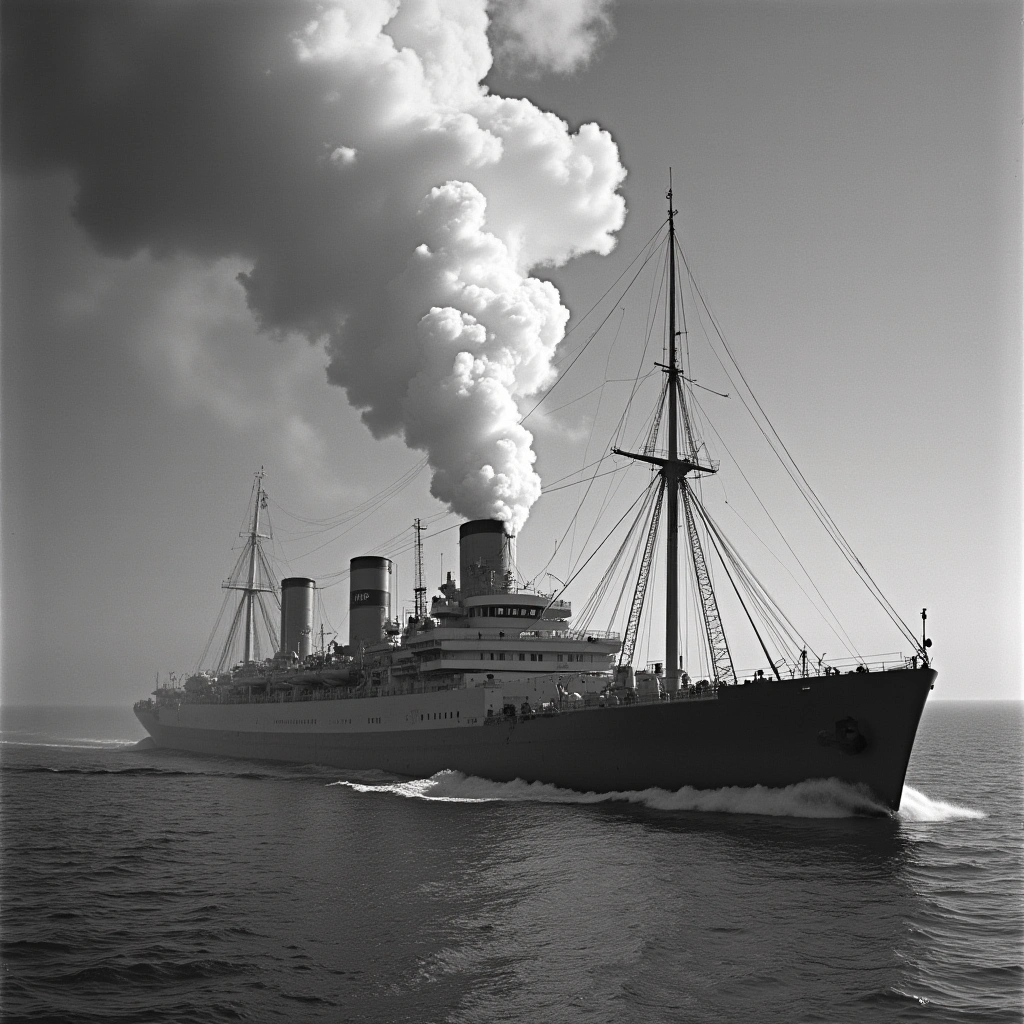
Ah, 1923! A year when flapper dresses were all the rage, jazz was just getting its groove on, and some mad scientists decided that hiding ships with a cloud of toxic gas was a brilliant idea. Yes, you heard that right! Today, we’re diving into the bizarre world of titanium tetrachloride and its surprisingly hazardous smoky escapades.
First things first, titanium tetrachloride sounds like something straight out of a sci-fi movie, doesn’t it? Picture it: A plane soaring through the sky like a majestic eagle, but instead of dropping bombs, it’s raining down a curtain of dense white smoke. Forget about the weather; this was the original “smoke and mirrors” show—but with a twist of hydrochloric acid and titanium oxychloride thrown in for good measure!
Now, why on Earth would anyone think that dropping this chemical concoction from the sky was a good idea? The answer lies in the military mindset of the time. The idea was to create a smokescreen to obscure ships from enemy sight—because nothing says “stealth” like a cloud of corrosive chemicals. Picture sailors on deck, trying to enjoy their morning coffee, only to find themselves engulfed in a fog that could double as a scene from a horror movie. Talk about a rough day on the high seas!
But here’s where it gets even juicier: the resulting smoke wasn’t just a harmless vapor. Nope! It was a delightful cocktail of hydrochloric acid and titanium oxychloride, which sounds like something you’d find in a villain’s lair rather than a military strategy. Hydrochloric acid, to put it bluntly, is not the kind of thing you want floating around in the air you breathe. Imagine the sailors’ expressions when they realized they weren’t just hiding from enemy ships; they were also getting a face full of corrosive mist!
And let’s not forget about the environmental impact of this chemical cloud. It’s like the universe was saying, “Oh, you want to hide a ship? Here, take this toxic concoction and see how that works out for you!” Who knew that military ingenuity could come with such a hefty side of environmental disaster?
So, what can we learn from this wild 1923 escapade? Well, it turns out that sometimes, the most elaborate plans can lead to some seriously questionable outcomes. While the idea of using titanium tetrachloride to hide ships might have seemed revolutionary at the time, it’s a prime example of how science can sometimes go off the rails. Or, in this case, off the plane!
In conclusion, next time you’re out on the water, just be thankful that the only clouds you have to worry about are the fluffy ones that bring rain—not those ominous, toxic ones. And let’s raise a glass (with a lid on it) to the brave souls of 1923 who were just trying to make the world a safer place, one acid-filled cloud at a time. Cheers!