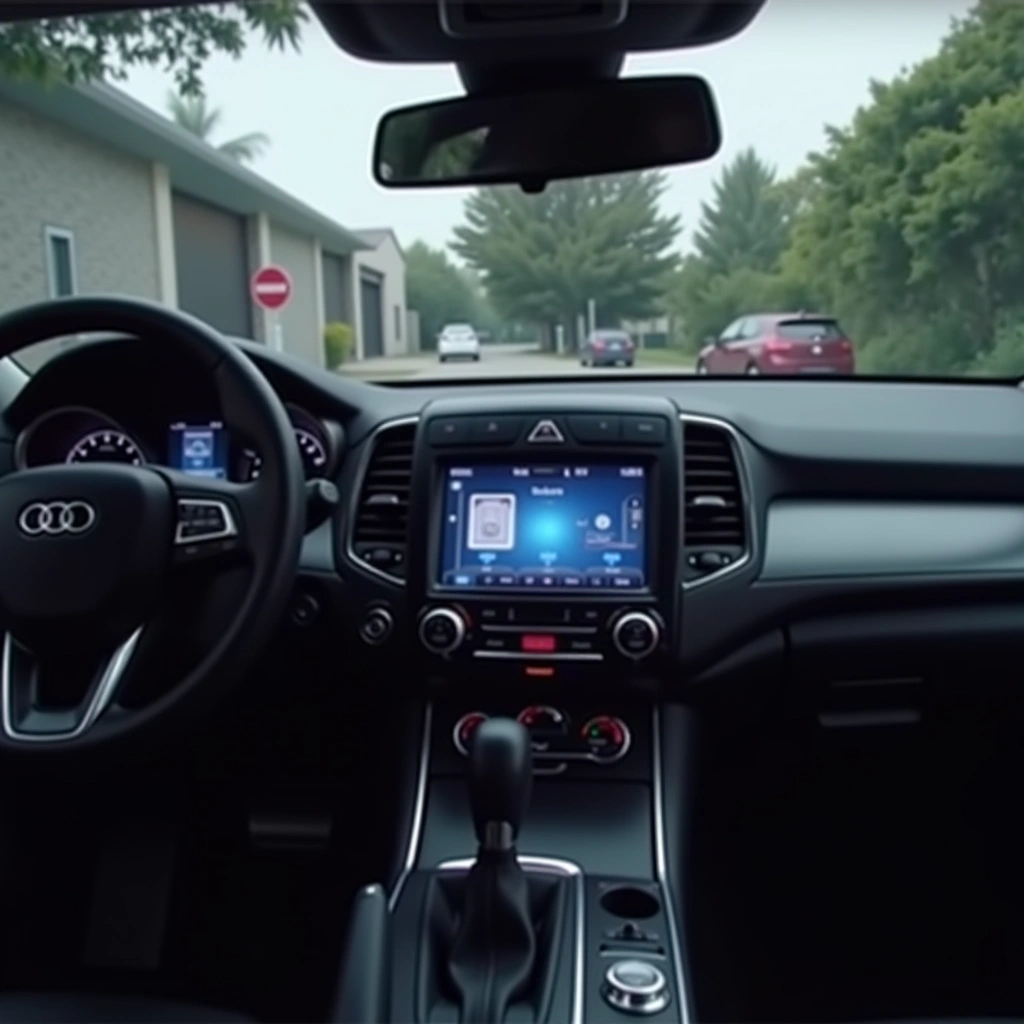
If you’ve recently bought a new car, you might have noticed that the dashboard looks less like a cockpit and more like a tech convention. Gone are the days of simple dials and buttons. Instead, we’re now greeted with sprawling touchscreens that require a degree in computer science to navigate. Welcome to the “screenification” of cars, where every function is just a tap away—if you can find it, that is.
These do-it-all touch screens, the nerve centers of many new cars, have sparked a backlash because of their size, as well as the clunky interfaces that may take eyes off the road.
Now, while the allure of a futuristic dashboard might be enticing, it comes with a hefty price tag: a growing number of recalls. Yes, you heard it right. Those shiny screens that promise to enhance your driving experience are inadvertently creating a whole new set of problems. Who knew that trying to turn on your heated seats would require a software update?
Let’s break it down. The auto industry has decided that we, the drivers, are in desperate need of more screens. Need to adjust your air conditioning? Tap a screen. Want to change your music? Tap a screen. Need to find out why your car is making that ungodly noise? Well, you better hope your car’s software is up to date—because if it isn’t, good luck with that.
As these vehicles become more reliant on technology, the risk of software glitches rises exponentially. Think about it: if your car’s operating system crashes, do you pull over and reboot it like you would your computer? Spoiler alert: that’s not how it works. Instead, you could find yourself in a situation where your car is as responsive as a teenager at dinner—completely unhelpful.
The irony here is that while these screens are designed to make our lives easier, they’re actually complicating things. A recent study showed that more than half of vehicle recalls in the past few years have been due to software issues. That’s right, folks—your car is getting recalled for a problem that can’t even be fixed with a wrench. It’s like getting a call from your mechanic to tell you your car is in the shop because it needs a software update. I mean, what’s next? Do we have to start charging our vehicles like our smartphones?
And let’s not forget the impact on drivers. With so much happening on those screens, it’s like trying to navigate a spaceship while flying through a meteor shower. Distracted driving has never been more of a concern, and manufacturers are adding to the chaos with every new feature. So, while you’re trying to figure out how to turn on the GPS, your car could very well be plotting its escape from you.
In a world where we already have too many distractions, the last thing we need is our cars turning into tech gadgets that require constant monitoring and updates. It’s like our vehicles have become that friend who always wants to be the center of attention—constantly demanding updates and attention, while we just want to get from point A to point B without a meltdown.
So, what’s the solution? Perhaps it’s time for car manufacturers to take a step back and reassess the balance between technology and practicality. Maybe we don’t need our cars to be miniature computers. Or, at the very least, can we get a manual that doesn’t read like a tech support script?
In conclusion, while the screenification of cars may seem like a step into the future, it’s starting to feel more like a step into chaos. Let’s hope that as the industry moves forward, they remember that sometimes, less is more. Because right now, it feels like we’re all just one software glitch away from being stranded on the side of the road, frantically trying to figure out how to reboot our vehicles. Here’s to hoping our cars can keep their cool, even if we can’t.
Inspired by: “The Screenification Of Cars Is Creating A New Problem: Sweeping Recalls” (r/technology)