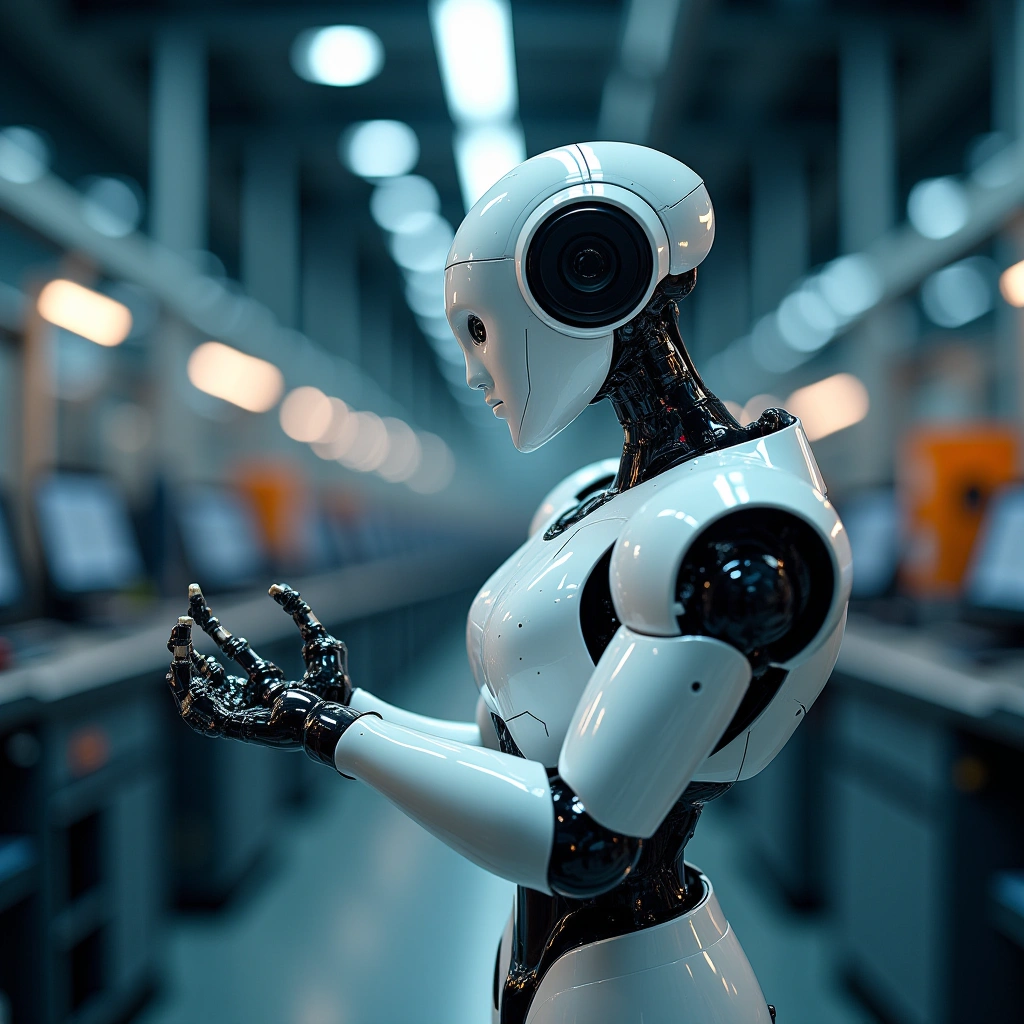
In a world where technology is advancing faster than a cat chasing a laser pointer, it seems that factories are taking a leap into the future—by strapping cameras to their workers. Yes, you heard that right. It’s not some weird sci-fi movie plot; it’s happening right now. Let’s dive into this curious trend of attaching cameras to human beings in the name of efficiency and, of course, to make way for our future robot overlords.
Factories are equipping workers with head-mounted cameras to capture terabytes of human motion data, which is used to train vision-language-action AI models to mimic tasks for humanoid robots. This practice allows low-paid laborers to inadvertently train their own replacements, as neural networks ingest footage to predict and replicate the precise body movements needed for assembly line work. The ultimate goal for tech firms is a one-size-fits-all robot capable of plugging into any assembly line, though such machines are not yet viable replacements for human workers.
First off, let’s talk about the elephant in the room—why cameras? Well, it turns out that factories are trying to gather data. Lots and lots of data. By monitoring workers with cameras, companies can analyze productivity levels, safety practices, and even how well their employees are performing tasks. You know, just a casual observation of your every move, like your mom used to do when you were sneaking cookies from the jar.
But wait, there’s more! The ultimate goal of all this surveillance isn’t just to gather data for a corporate scrapbook. No, the bigwigs in the factory world are eyeing robots as the new workforce. With cameras capturing all the nitty-gritty details of human labor, factories hope to create a blueprint for how robots can take over these tasks. So, if you thought your job was safe, think again! Your future colleagues might just have shiny metal bodies and a penchant for doing everything better than you.
Now, let’s be real for a second. There’s something slightly unsettling about being watched constantly. I mean, who wants to feel like their every move is being scrutinized by a camera? It’s like being on a reality show where the prize is becoming obsolete. And let’s not forget about the privacy concerns. Are we really okay with our employers having a front-row seat to our work habits, or worse, our lunch breaks? Because I can assure you that nobody wants footage of them struggling to open a snack bag.
However, the factories argue that this is all in the name of progress and safety. By analyzing the footage, they can identify unsafe practices and reduce accidents. Sure, that sounds great, but what happens when the robots come in and take over? Will they also be programmed to bring us coffee and tell us we’re doing a good job, or will it just be a cold, hard reality of efficiency?
And let’s not forget the irony here. We’re using cameras to observe workers to eventually replace them with machines. It’s like watching a nature documentary where the narrator explains how the predator stalks its prey, except in this case, the predator is a robot, and the prey is your job.
In conclusion, the trend of attaching cameras to workers is a double-edged sword. On one hand, it can lead to improved safety and efficiency, which is great for the factories and their bottom line. On the other hand, it raises serious questions about privacy and job security. So, the next time you find yourself in a factory, just remember: you might be under surveillance, but at least you’re not alone. Your future robot colleagues are probably watching you too, taking notes for when they finally take over. Cheers to progress!
Inspired by: “Factories Attach Cameras to Workers, in Hopes of Replacing Them With Robots” (r/technology)