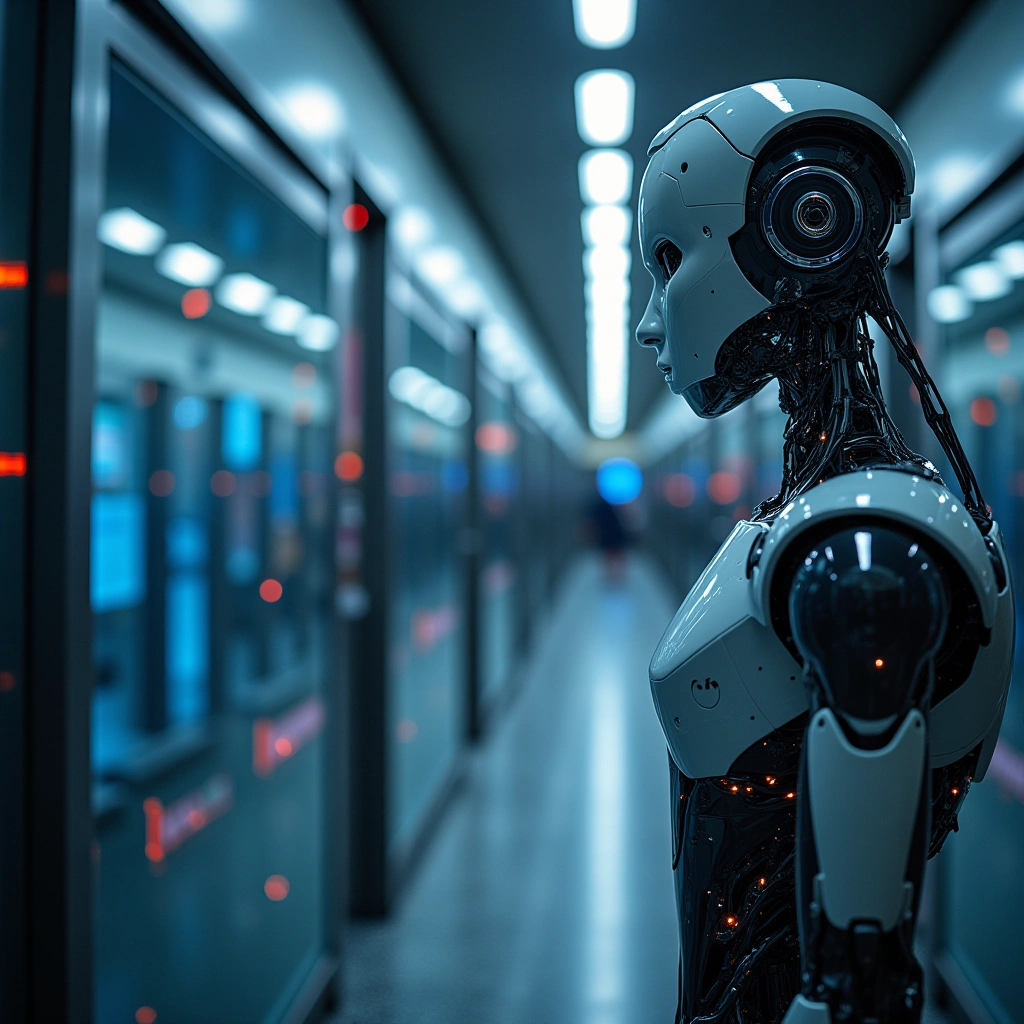
So, let’s talk about something that’s been buzzing around the internet like a bee on a sugar high: the idea that artificial intelligence (AI) is creating America’s next underclass. Now, before you roll your eyes and dismiss this as another dystopian rant, let’s break it down.
At that point, we will get frozen in our current class positions: The rich will be able to deploy superintelligent machines to do their bidding, and everyone else will be rendered useless and unemployable, left to live off welfare scraps. Hyperbolic? Perhaps. But even those who view the idea of a permanent underclass as overblown tell me that the meme contains a kernel of truth.
First off, what do we mean by ‘underclass’? Traditionally, this refers to a segment of society that faces persistent economic disadvantage, often lacking access to education, job opportunities, and, let’s be honest, the basic necessities of life. Now, throw AI into the mix, and suddenly we’re looking at a whole new ball game.
You see, AI is revolutionizing industries faster than you can say ‘robot overlords’. From manufacturing to customer service, algorithms are taking over jobs that used to require a human touch. Sure, AI can do some things better than we can — like processing data at lightning speed or generating cat memes that are 80% funnier than your average dad joke. But here’s the kicker: while we’re all busy marveling at these technological advancements, millions of workers are left wondering what the heck just happened to their livelihoods.
Think about it. A factory worker who’s been assembling widgets for decades suddenly finds his job replaced by a robotic arm that doesn’t need bathroom breaks or health insurance. Or a customer service rep who’s been diligently answering calls gets swapped out for a chatbot that can respond to queries faster than they can say, ‘Can I put you on hold?’ It’s a tough pill to swallow, and many are left without a safety net.
Now, some might say, ‘But don’t worry, new jobs will be created!’ Ah, the classic optimism of the tech-savvy. Sure, new jobs will emerge, but they often require skills that the displaced workers don’t have. It’s like telling someone who just lost their job as a chef that they can become a software engineer instead. Yeah, good luck with that.
This disparity leads to what some economists refer to as the ‘skills gap’. Those who can afford to retrain and adapt to new technologies do so, while others — often from lower socioeconomic backgrounds — struggle to keep up. And just like that, a new underclass is born.
So, what’s the solution? Well, if I had a magic wand, I’d wave it and make education free and accessible for all. But since I’m not a fairy godmother, we need to start advocating for policies that support retraining programs, universal basic income, or at least some form of social safety net for those affected by AI job displacement.
At the end of the day, we can’t stop the march of technology. But we can certainly make sure that it doesn’t trample on the most vulnerable among us. Because if we let AI create a new underclass, we’re not just losing jobs — we’re losing a sense of community and shared prosperity. And nobody wants to live in a world where the robots have all the fun while we’re left picking up the pieces.
So let’s keep the conversation going, folks! It’s time to figure out how we can make sure that as we embrace the future, we don’t leave anyone behind in the dust of progress.
Inspired by: “AI is creating America’s next underclass” (r/technology)