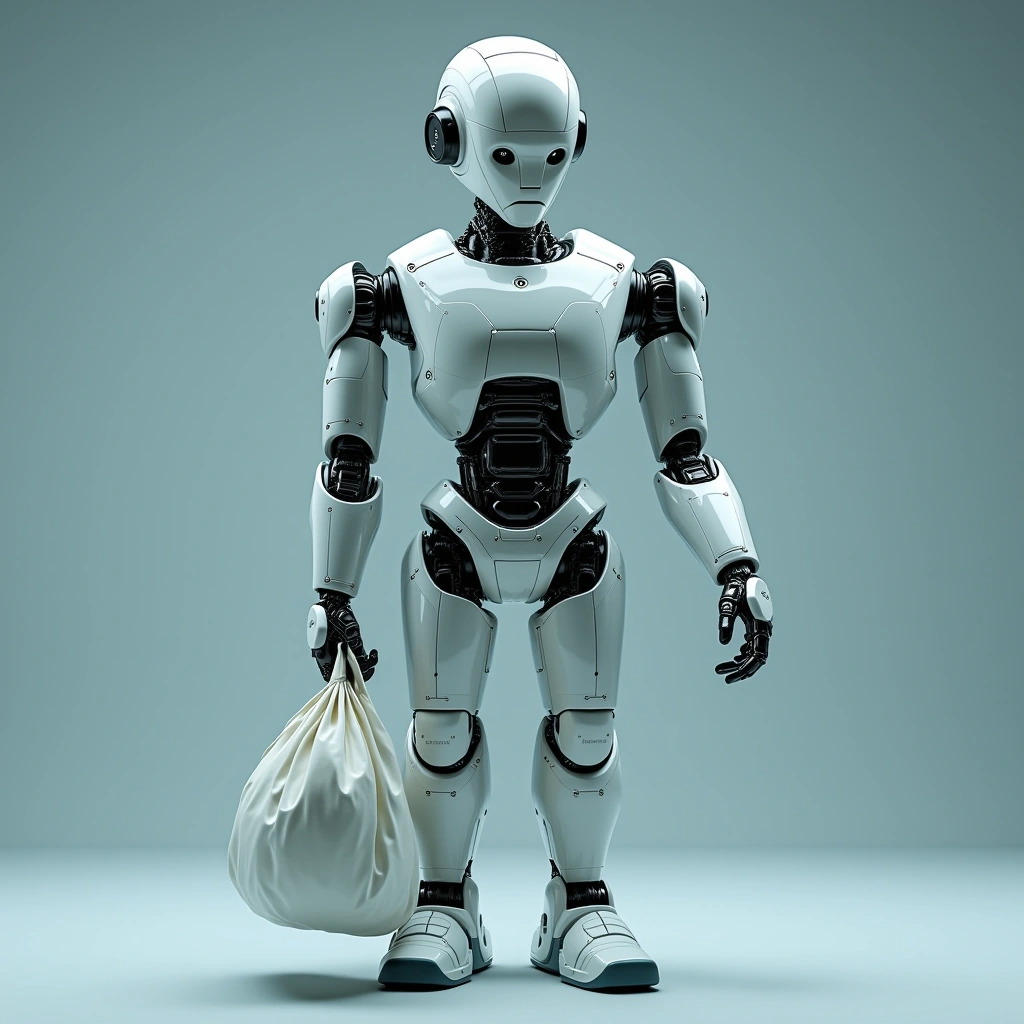
So, let’s talk about the elephant—or should I say, the robot—in the room. China is all about that robot life. We’re not talking about the cute, beeping R2-D2 types, but rather the heavy-duty, assembly-line-crushing machines that are taking over industries faster than you can say “automation.” But while robots are busy flexing their metal muscles, there’s a growing concern about the human workforce that’s being left behind. Spoiler alert: it’s not pretty.
Manufacturing and Retail: Already experiencing significant job losses due to automation, with robots indispensable in manufacturing. White-Collar Professions: White-collar jobs, like law and finance, are increasingly at risk as software automation advances. Service Sector: Potential for automation to disrupt service sectors like fast food and customer service, with new forms of automation emerging.
The headline reads like a dystopian novel: ‘They Don’t Need People.’ Yes, you heard it right. The very machines designed to make our lives easier are also making our jobs disappear. It’s like that time you let your dog watch cartoons, and now he thinks he can talk. In China, this robotic revolution is transforming the manufacturing landscape, but at what cost?
Let’s break it down. The push for automation isn’t just a trend; it’s a full-blown movement aimed at increasing productivity and reducing labor costs. Companies are investing billions in robotics, and while that sounds like a great way to boost the economy (and keep shareholders happy), it also means that thousands of workers are being left out in the cold.
Imagine being a factory worker, waking up every day, only to find that your job has been handed over to a shiny new robot named “Flexi-Bot 3000.” Not only does Flexi-Bot not need coffee breaks or health insurance, but it also doesn’t complain about the morning commute. So, it’s no wonder that businesses are choosing robots over people. But, um, what happens to those displaced workers?
Here’s where things get a bit sticky. As robots take over, many of these workers are finding themselves without jobs or the means to support their families. Some are trying to adapt by learning new skills, but let’s be real—how many of us are really excited about going back to school at our age? It’s not like we can just slap on a virtual reality headset and become a coding genius overnight.
Now, don’t get me wrong, I’m all for technological advancement. I mean, who wouldn’t want a robot to do the dishes? But the reality is that this rapid shift toward automation is leaving a significant portion of the population feeling abandoned. It’s like being at a party where the DJ suddenly decides to switch from dance music to classical. You’re left standing there, unsure if you should still be dancing or just awkwardly sipping your drink while contemplating life choices.
The Chinese government is aware of the backlash and is trying to counteract the negative effects of this robot revolution by promoting retraining programs. But let’s be honest, retraining is like putting a Band-Aid on a broken leg. Sure, it helps a little, but it’s not exactly a long-term solution. Additionally, the competition is fierce; not everyone can just waltz into a tech job without a solid background.
So, what’s next? Will we see a world where robots are doing all the jobs, and humans are left to ponder the meaning of life while sipping overpriced coffee? Maybe. Or perhaps we’ll find a way to coexist with our robotic friends. It’s a bit of a mixed bag right now.
In conclusion, while China is charging ahead with its robot army, we need to keep an eye on the human casualties of this technological war. It’s all fun and games until someone loses their job to a robot with a better resume. So, let’s hope we find a balance between innovation and human employment—because, let’s face it, no one wants to live in a world where our only companions are machines that don’t even know how to appreciate a good meme.
Inspired by: “‘They Don’t Need People’: The Workers Left Behind by China’s Robot Drive” (r/technology)