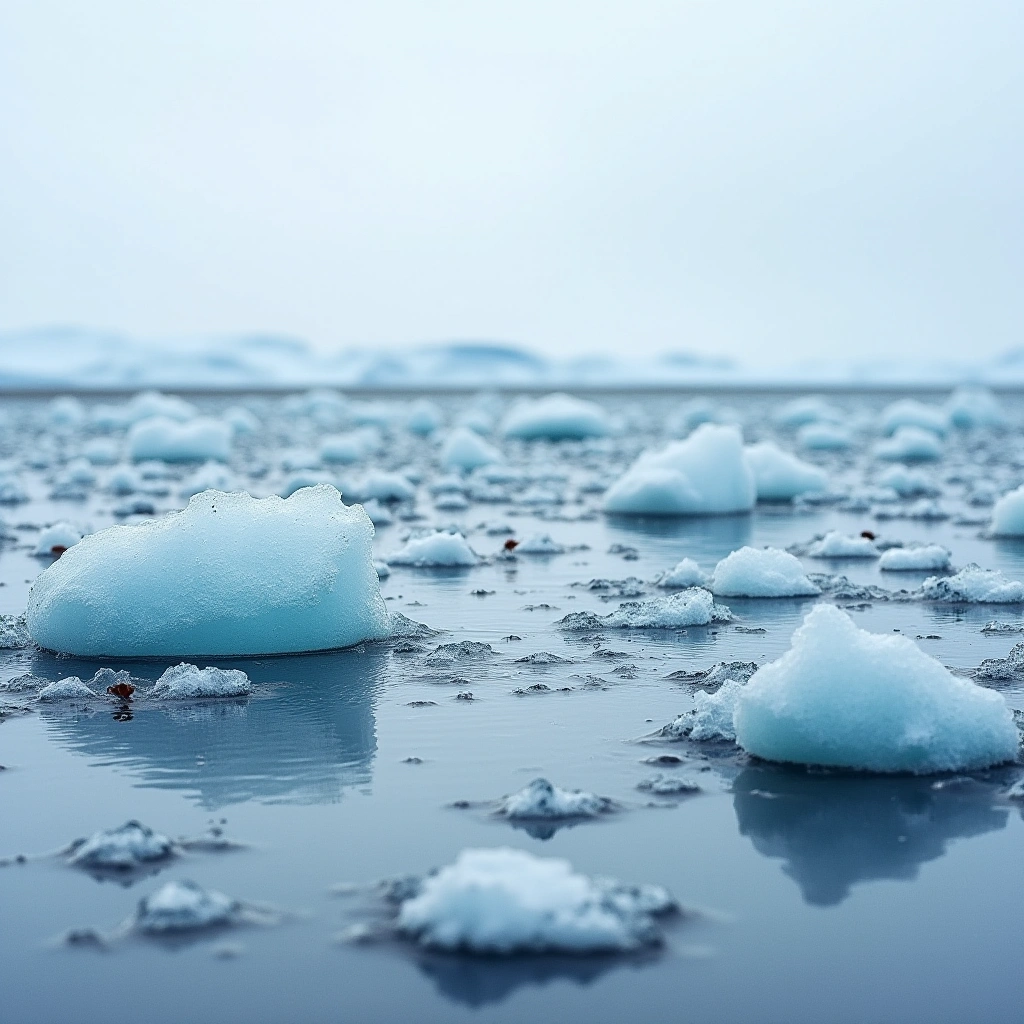
Current climate models often underestimate the magnitude and rate of carbon release from thawing permafrost , leading to uncertainties in future climate projections. Several factors contribute to this underestimation:
So, it looks like we have another study telling us that the climate crisis is, well, a bit more complicated than we thought. Shocking, right? According to a new study that’s making waves (or maybe just ripples, depending on how you feel about climate news), the feedback mechanisms from permafrost and other sources are not getting the attention they deserve. And by ‘not getting enough attention,’ I mean they’re about to crash the climate party in a big way, possibly adding an extra 0.2 to 0.4 degrees Celsius of heating by 2100.
Let’s break that down. First, permafrost is like Earth’s frozen sponge, holding onto a vast amount of carbon that’s been tucked away for ages. When it thaws, which it inevitably will because, you know, global warming, all that carbon gets released into the atmosphere. And surprise, surprise, that carbon is like the party crasher who shows up uninvited and starts hogging the karaoke machine—except instead of singing off-key, it’s warming the planet.
Now, if you’re thinking, “Oh great, just what we need, more warming,” you’re not alone. The study highlights that previous models of climate change might have underestimated this feedback loop. So, the next time someone tells you that climate change is under control, just nod and smile, but maybe also roll your eyes a little. Because it seems like we’re in a bit of a pickle.
The researchers behind this study pointed out that many climate models didn’t fully account for these feedback mechanisms. It’s like doing your taxes but forgetting to include half of your income—suddenly, you owe a lot more than you thought. And considering that we’re already dealing with rising sea levels, extreme weather events, and the general chaos of climate change, the last thing we need is more surprises.
So, what does this mean for us regular folks? Well, if you’re planning on visiting the beach in 2100, you might want to check your local real estate listings for waterfront properties—because they might be underwater by then. Or if you’re hoping for a nice winter vacation in the Arctic, better book your tickets soon; those icy landscapes might be less icy and more… well, watery.
But let’s not just throw our hands in the air and give up. This study, while alarming, can also serve as a wake-up call. It underscores the importance of taking climate change seriously, investing in renewable energy, and maybe even listening to those scientists who have been trying to warn us for years (thanks, guys!).
In conclusion, as we continue to grapple with climate change, let’s keep our eyes peeled for these feedback loops that might just be the wild cards in our climate predictions. Because if there’s one thing we’ve learned from this whole situation, it’s that ignoring the problem doesn’t make it go away. Let’s hope we can figure this out before we’re all living in a giant sauna.
So, buckle up, folks. The climate ride is about to get a bit bumpier, and we need to be prepared—preferably with some sunscreen and a good pair of floaties.
Inspired by: “New study claims climate feedback from permafrost and other sources underrepresented, suggests this…” (r/climatechange)