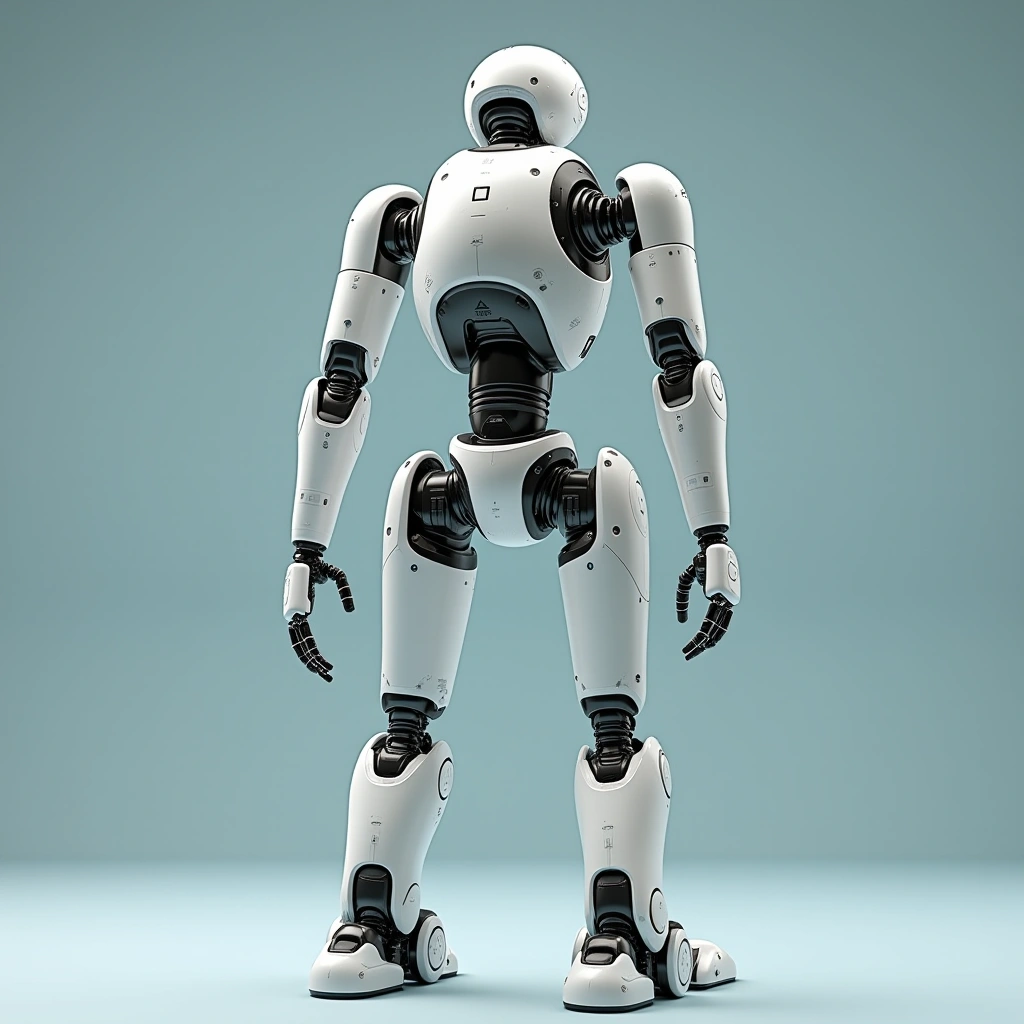
Ah, China, the land of pagodas, pandas, and apparently, a massive grip on the robot market. You might be scratching your head thinking, “Hold on, they control 90% of the robot market and their robots can’t even walk?” Yes, my friend, it’s a twisted tale filled with irony, and we’re here to unravel it.
Let’s break down the statistics first. According to various reports (because what’s a good story without some numbers?), China has cornered a whopping 90% of the global robot market. That’s like being the only kid at a birthday party who brought cake while everyone else showed up with just a card. But here’s the kicker: most of these robots are about as mobile as a rock in a sock. They can perform tasks with surgical precision, but don’t expect them to do the cha-cha anytime soon.
So, what gives? How can a country dominate a market yet produce machines that can’t even manage a simple stroll? Well, it turns out that most of these robots are designed for industrial use. Think assembly lines, manufacturing plants, and the occasional robot that can flip a burger faster than you can say “flame-grilled.” They’re the muscle behind the scenes, doing heavy lifting while their human counterparts take coffee breaks and scroll through TikTok.
But here’s where it gets juicy. The walking robots—those adorable, clumsy little creations you see in sci-fi movies—are still in their toddler phase. Despite all the advancements in AI and robotics, making a robot walk without looking like it’s auditioning for a role in a slapstick comedy is still a challenge. It’s almost like trying to teach a cat to fetch; it’s just not happening!
Picture this: a factory filled with robots who can’t walk, yet they are the backbone of China’s booming manufacturing industry. They’re like the brawny sidekick who can’t find their way out of a paper bag. Sure, they can lift heavy stuff, but if you need someone to carry your groceries up a flight of stairs, you might want to stick with a human.
Now, let’s not dismiss the innovation that has led to this 90% control. Chinese companies have invested billions in robotics technology, resulting in highly efficient, specialized machines. While they might not be going for a leisurely stroll in the park, they’re whizzing around factories at lightning speed, assembling products faster than you can say “robot revolution.”
And here’s where it gets a bit controversial: is it really a problem that these robots can’t walk? The industrial sector is booming, and as long as they’re doing their job well, who cares if they trip over their own feet? In fact, it’s almost comforting to know that the robots aren’t plotting their grand escape while you’re busy at work. Just imagine a world where robots could walk out of factories, form unions, and demand better working conditions. Yikes!
In conclusion, while China may control 90% of the robot market, the reality is far more amusing than it is ominous. They’ve got the numbers, the manufacturing power, and the ability to make robots that can perform tasks with mind-boggling efficiency. Just don’t ask them to walk to the water cooler.
So, the next time you hear someone rave about China’s robotic prowess, chuckle quietly to yourself, thinking about all those perfectly still robots, waiting patiently for a world where they can finally strut their stuff. Until then, let’s just enjoy the show—because who doesn’t love a good comedy?