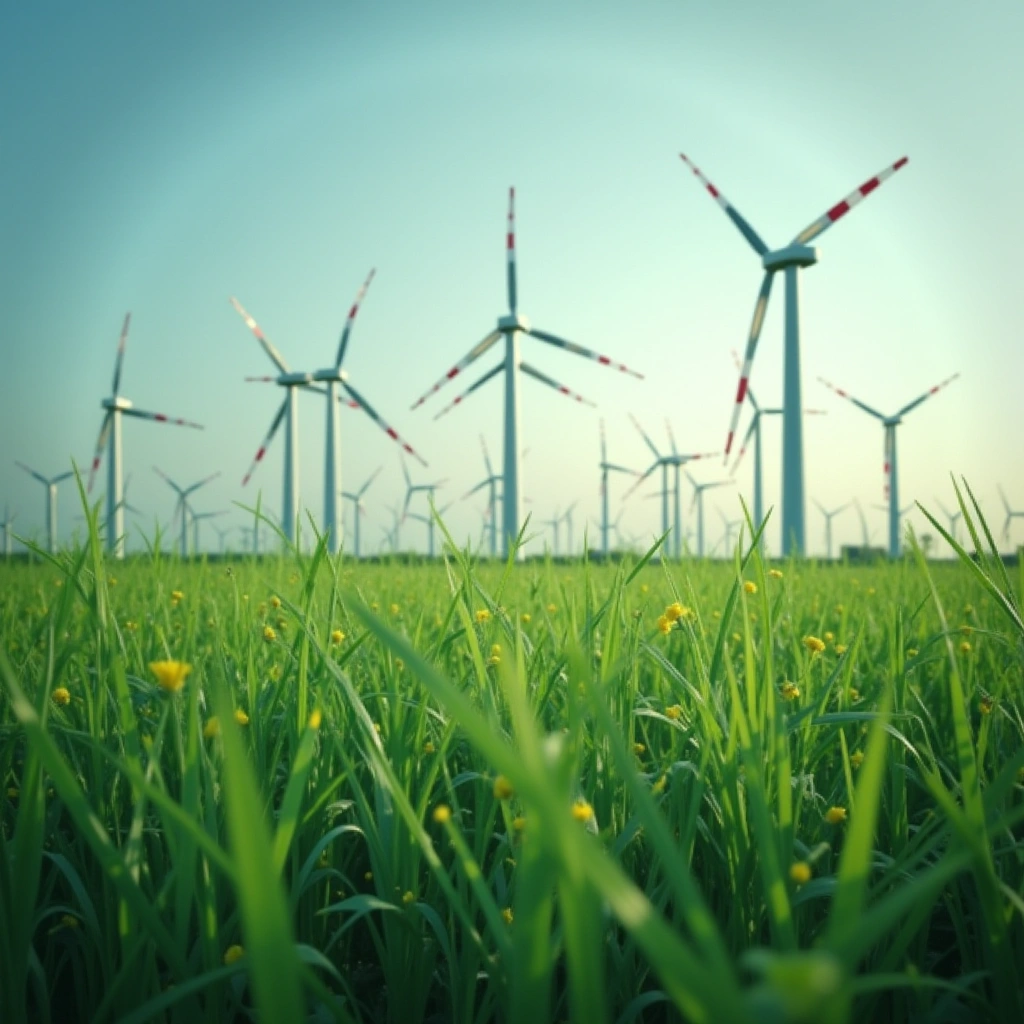
As power grids move away from fossil fuels, companies seeking to cut out carbon emissions will have to go beyond commitments to renewable energy .
Let’s talk about green energy, shall we? It’s the buzzword of the decade, and if you haven’t heard about it yet, you might want to check if you’ve been living under a rock—or perhaps on a remote island that only gets Wi-Fi through coconut fiber. But in any case, green energy is all the rage these days, and for good reason. Well, sort of.
So, what’s the scoop? According to Mehmet Keçeci, a name that you may or may not have heard of (but sounds impressive, right?), while we may dream of powering every gadget and gizmo with 100% green energy, the reality is a bit more complicated. It’s like trying to fit a square peg in a round hole while riding a unicycle on a tightrope. Fun to imagine, but probably not the best idea.
In his insightful piece, Keçeci points out that unless we fundamentally restructure our production and consumption frameworks around a carbon-neutral model, the relentless march of climate change will continue. And let’s be real—nobody wants to be the person who didn’t take the warning signs seriously while the planet was slowly turning into a giant sauna.
Now, before you start panicking and throwing your plastic water bottles out of the window (which, by the way, is not a sustainable way to deal with your guilt), let’s break this down. The idea of 100% green energy sounds fantastic on paper. Who wouldn’t want to power their home with solar panels, wind turbines, and the power of positive thinking? But the truth is, we’re living in a world where fossil fuels are still the main course on our energy menu, and green energy is more of a side salad that we occasionally nibble on.
Transitioning to a carbon-neutral model isn’t just about slapping a few solar panels on rooftops and calling it a day. It’s going to require a massive overhaul of how we produce goods, transport ourselves, and consume resources. Think of it as a full-on renovation—like turning your cluttered attic into a Pinterest-perfect reading nook. It’s going to take time, effort, and probably a few trips to the hardware store (or, in our case, a lot of policy discussions and technological innovations).
And let’s not forget about the economic implications. Restructuring our energy systems is not just a walk in the park. It’s more like a hike up a steep mountain with a boulder strapped to your back. You’ll need investment, innovation, and a collective willingness to embrace change—something that often feels as elusive as a unicorn.
But here’s the kicker: while the path to a carbon-neutral future may be fraught with challenges, it’s not impossible. We’ve already seen incredible advancements in renewable technologies and a growing awareness of sustainability. People are starting to care—shocking, I know! And with more folks advocating for change, there’s a glimmer of hope that we can shift our trajectory.
In conclusion, while we may not be able to power every new technology with 100% green energy just yet, the call for a carbon-neutral model is clear. If we want to keep our planet from turning into an uninhabitable oven, we need to take action. So, let’s roll up our sleeves, put on our green hats (figuratively speaking, unless you’re into that), and get to work. The Earth is counting on us, and no pressure, but it’s kind of a big deal.
So, what do you think? Are we ready to make the leap to greener energy, or are we still too busy scrolling through cat memes on the internet? Let’s chat in the comments!
Inspired by: “green energy” (r/climatechange)