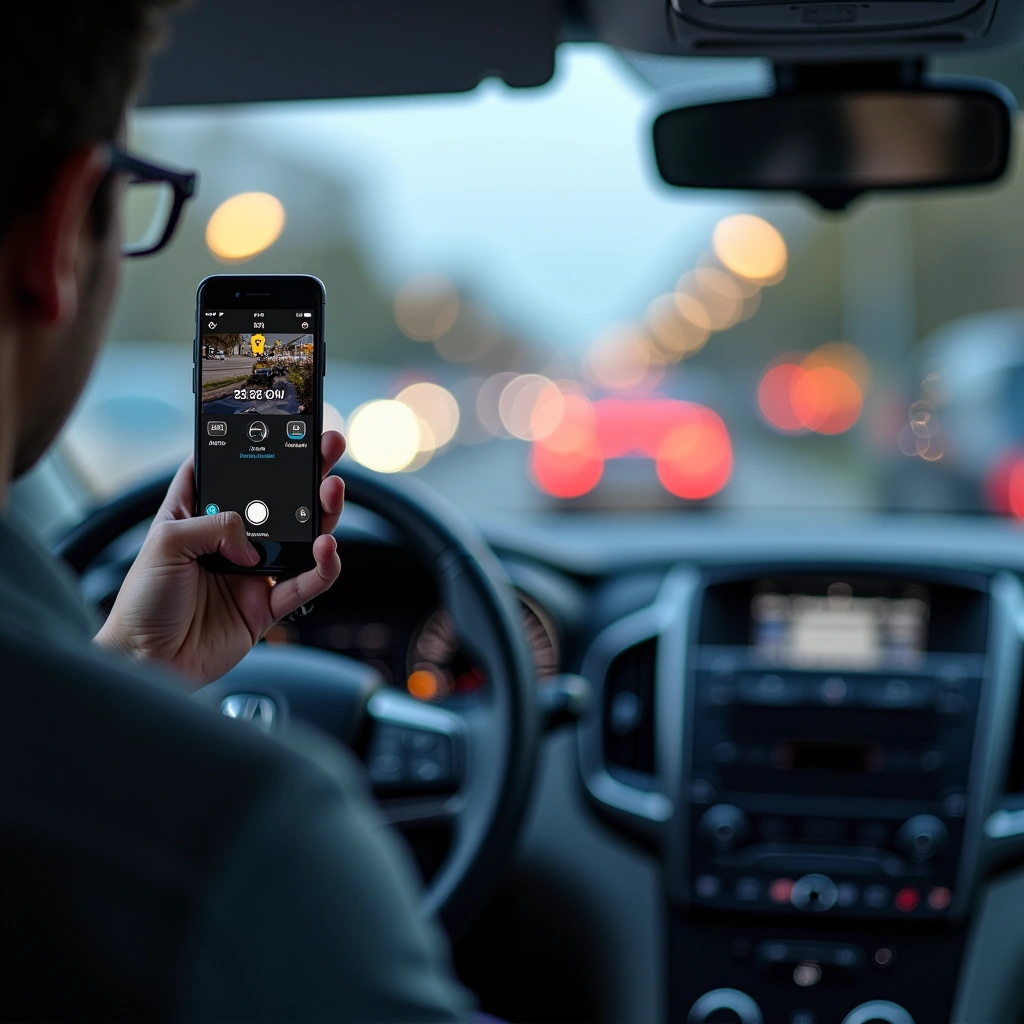
So, let’s talk about something that’s been making waves recently: the idea of turning 350,000 Uber and Lyft cars into rolling surveillance cameras. Yes, you read that right. If you thought your Uber driver was just there to get you from point A to B, think again! They might just be your new neighborhood watch, but with a much larger GPS footprint.
According to a Flock presentation … request, the license plate reader giant planned to enlist roughly 350,000 Uber, Lyft, and delivery vehicles as roaming data collectors for its nationwide surveillance network….
Now, before we dive into the nitty-gritty, let’s take a moment to appreciate the sheer audacity of this plan. I mean, who doesn’t want their ride to double as a surveillance vehicle? It’s like getting two services for the price of one—except instead of a free upgrade to a better car, you get a side of Big Brother watching your every move. How generous!
But here’s the kicker: the motivation behind this initiative. Proponents argue that having a fleet of surveillance vehicles could significantly reduce crime rates in urban areas. Imagine, if you will, a criminal trying to pull off a heist while surrounded by a fleet of Uber cars capturing every angle of their not-so-masterful plan. It’s like a real-life episode of Cops, but without the catchy theme music.
However, let’s not ignore the elephant in the room: privacy concerns. Because, of course, who doesn’t want to be tracked by their ride-sharing service? It’s not like we’re already sharing our locations, ride histories, and possibly our deepest secrets with an app that’s just a swipe away. But hey, what’s a little more data mining among friends?
Critics of this plan are raising valid points. Imagine hopping into a car that’s not just a mode of transportation but also a spying machine. Your every conversation could be recorded, your every move monitored, all in the name of ‘public safety.’ It’s like living in a dystopian novel, but without the cool plot twists and heroic protagonists. Just you, your Uber driver, and a camera that’s probably more interested in your snack choices than your safety.
And let’s be real for a moment. How effective can this really be? Do we honestly believe that having a few more cameras on the streets is going to deter crime? If that was the case, we should’ve solved all crime problems ages ago with all those security cameras in convenience stores. Spoiler alert: we haven’t.
Plus, there’s the question of how this data would be used. Would it be stored indefinitely, or would it disappear faster than your last slice of pizza at a party? And who gets access to it? The police? The government? Your nosy neighbor who’s always too curious about your weekend plans? It’s a slippery slope, folks.
In conclusion, while the idea of turning Uber and Lyft vehicles into surveillance cameras might sound like a novel approach to reducing crime, it raises significant privacy concerns that we can’t simply brush aside. So, the next time you hop into a ride-sharing vehicle, just remember: you might be getting more than you bargained for. Buckle up, because the future of public safety might just be a camera away—but at what cost?
And if nothing else, at least you’ll have a great story to tell your friends about that time your Uber driver was actually a spy. Who knew the rideshare game could be so thrilling?
Inspired by: “Flock Planned to Turn 350,000 Uber and Lyft Cars Into Rolling Surveillance Cameras” (r/technology)