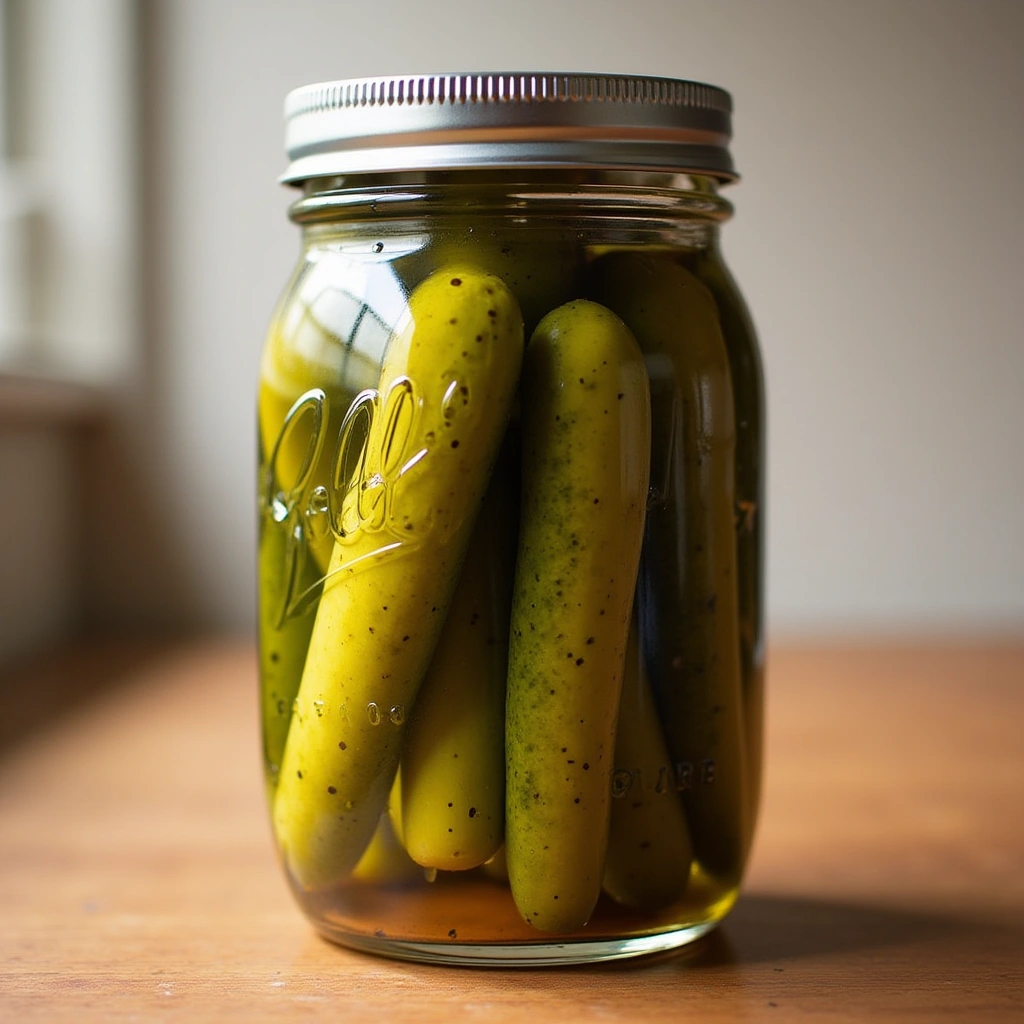
Various canned goods preserved through appertization. Pasteur used this same exact science of microbial destruction through heat but tweaked it to protect the delicate nature of liquids like milk. While Appert boiled his jars for hours at 212 degrees fahrenheit, Pasteur heated milk for just fifteen seconds at 161 degrees fahrenheit. His method applied just enough energy to destroy dangerous pathogens without curdling the milk. While canning, salting, pickling, and dehydration successfully kept food from spoiling quickly, none of them could preserve food in its pure, natural state.
Ah, the noble pickle jar. A vessel of crunchy goodness, brimming with tangy delight, just waiting to elevate your sandwich game or to fill that late-night snack void. But, as many of us have painfully discovered, it can also be a fortress of frustration. You know the scenario: you’re craving a pickle—no, not just any pickle, but the one that’s been taunting you from the fridge for the last week. You can practically taste it, but alas, the jar remains sealed tighter than a vault at Fort Knox.
Let’s take a moment to appreciate the sheer audacity of these jars. They’re designed to keep pickles fresh and delicious, sure, but they’re also engineered to test our patience and resolve. You’ve probably tried every trick in the book: rinsing it under hot water, using a grippy thing (because apparently, that’s a technical term now), or even resorting to the age-old method of banging it against the sink.
Now, let’s be honest here—what’s the deal with these jars? Are they made with some kind of super glue? Did the manufacturers decide that the only way to keep pickles safe was to create an impenetrable barrier? Maybe they just want to see how far we’re willing to go for a snack. It’s like a game show where the prize is deliciousness and the only requirement is a bit of dexterity and a lot of perseverance.
And don’t get me started on the grip strength required. You’d think that after all those hours at the gym, I’d be able to twist the lid off with ease. But no, my hands have decided they’re on strike. I mean, come on! What do they think they are—delicate flowers? I’m convinced that jars are secretly working against us. And let’s not forget about the embarrassment factor. You’re standing there, wrestling with a jar, and if someone walks in, it’s like you’ve suddenly become a circus act. “Look at that person! They’re really struggling with that pickle jar!”
If you’ve ever been in this pickle predicament (pun intended), you know that it’s not just about the jar—it’s a test of willpower. It’s a moment that can make or break your snack time. And when you finally succeed, the feeling of victory is almost as sweet as the pickles themselves. You pop that lid, and it’s like you’ve won the lottery.
But let’s be real—there’s always that moment of doubt. Did I just twist it the wrong way? Is there a secret technique I’m missing? Should I be consulting a jar-opening expert?
So, the next time you find yourself in a battle with a jar, remember that you’re not alone. We’re all in this together, united in our quest for that elusive pickle. And if all else fails, there’s always the option of asking a friend for help. Just make sure they’re not as weak-handed as you are—otherwise, you might be looking at a pickle-less evening.
In conclusion, the jar is a symbol of life’s little challenges. Sometimes, it’s the small things that can really test our patience. But with a little determination (and perhaps a few choice words), we can conquer even the most stubborn of jars. So, go forth, my fellow pickle enthusiasts, and may your jars be ever so slightly less infuriating!
Inspired by: “Can not open this jar” (r/mildlyinfuriating)