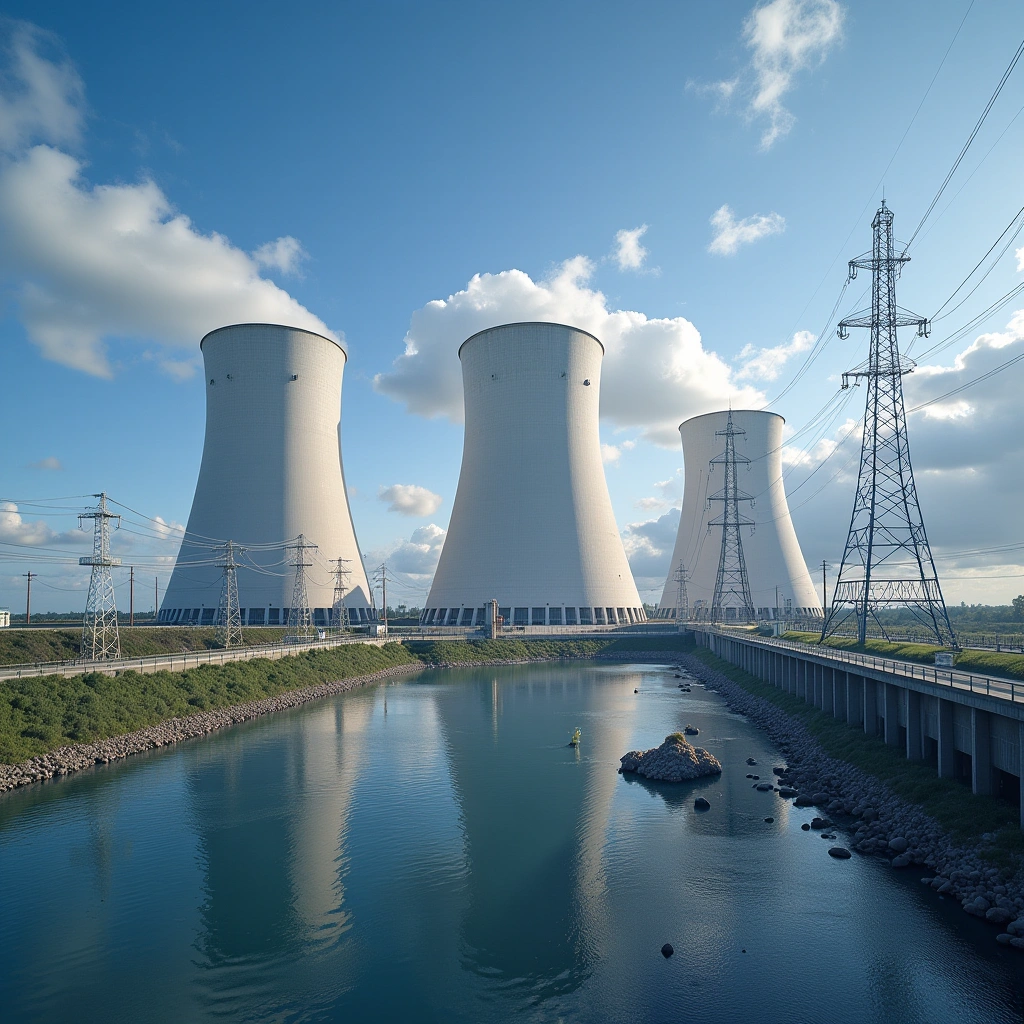
In a world where international relations can sometimes feel like a high-stakes game of Jenga, the latest development in the nuclear energy sector has us all holding our breath (and perhaps our sides) as the U.S., Japan, and South Korea join forces on Small Modular Reactors (SMRs). Yes, you heard that right—three countries that are usually too busy bickering over trade deals and cultural differences are now teaming up to tackle the nuclear energy landscape. Cue the dramatic music!
India has announced plans to support … entry into the global race for SMR technology, joining countries like the United States, Russia, and China….
Now, before you start picturing a superhero team-up with capes and all, let’s break down what SMRs actually are. These are smaller, factory-built nuclear reactors that promise to be safer, cheaper, and more flexible than their larger counterparts. Think of them as the compact cars of the nuclear world: they take up less space, can be used in various settings, and, let’s be honest, they’re probably easier to park.
So why the sudden interest in SMRs? Well, as the world grapples with climate change, the demand for clean energy sources has never been higher. Nuclear energy, often viewed as the black sheep of the energy family, is making a comeback. With SMRs, countries can produce power more efficiently and with less risk of catastrophic failures (because let’s face it, nobody wants a Chernobyl 2.0).
The collaboration between the U.S., Japan, and South Korea is particularly interesting. Historically, these nations have had their fair share of disagreements—like an awkward family reunion where everyone has something to say but nobody wants to start the argument. However, they seem to have put their differences aside for the greater good, which is quite refreshing. Who knew that nuclear energy could be the glue that binds nations together?
This partnership is not just about building reactors; it’s a strategic move in the global nuclear race. With countries like China and Russia also ramping up their nuclear capabilities, the U.S., Japan, and South Korea are essentially saying, “Hey, we’re here too!” It’s like the three musketeers of the nuclear world, ready to take on any villain that threatens their energy independence.
But here’s where it gets even more interesting: SMRs could be a game changer for energy security in the region. With tensions simmering in the Korean Peninsula and the ever-looming threat of climate change, having a reliable and safe energy source is crucial. Imagine a world where these countries can rely on each other for energy needs instead of, you know, yelling at each other over Twitter.
Of course, it’s not all sunshine and rainbows. There are concerns about safety, waste management, and the potential for nuclear materials to fall into the wrong hands. It’s like trying to convince your parents that you’re responsible enough to handle a pet when you can barely keep a cactus alive. But with rigorous safety standards and international cooperation, these concerns might just be manageable.
In conclusion, the collaboration between the U.S., Japan, and South Korea on SMRs is a fascinating development in the energy sector. It’s a bit like watching a reality show where the contestants actually work together instead of throwing each other under the bus. As these nations move forward with their plans, we can only hope they’ll continue to put their heads together and make the world a little greener—preferably without any explosions.
So, here’s to the nuclear trio! May their reactors be small, their energy be clean, and their diplomatic relations be even cleaner. Now, if only they could tackle world hunger while they’re at it, we’d really be onto something.
Inspired by: “The Global Nuclear Race Is Heating Up as US, Japan, and South Korea Team Up on SMRs” (r/technology)