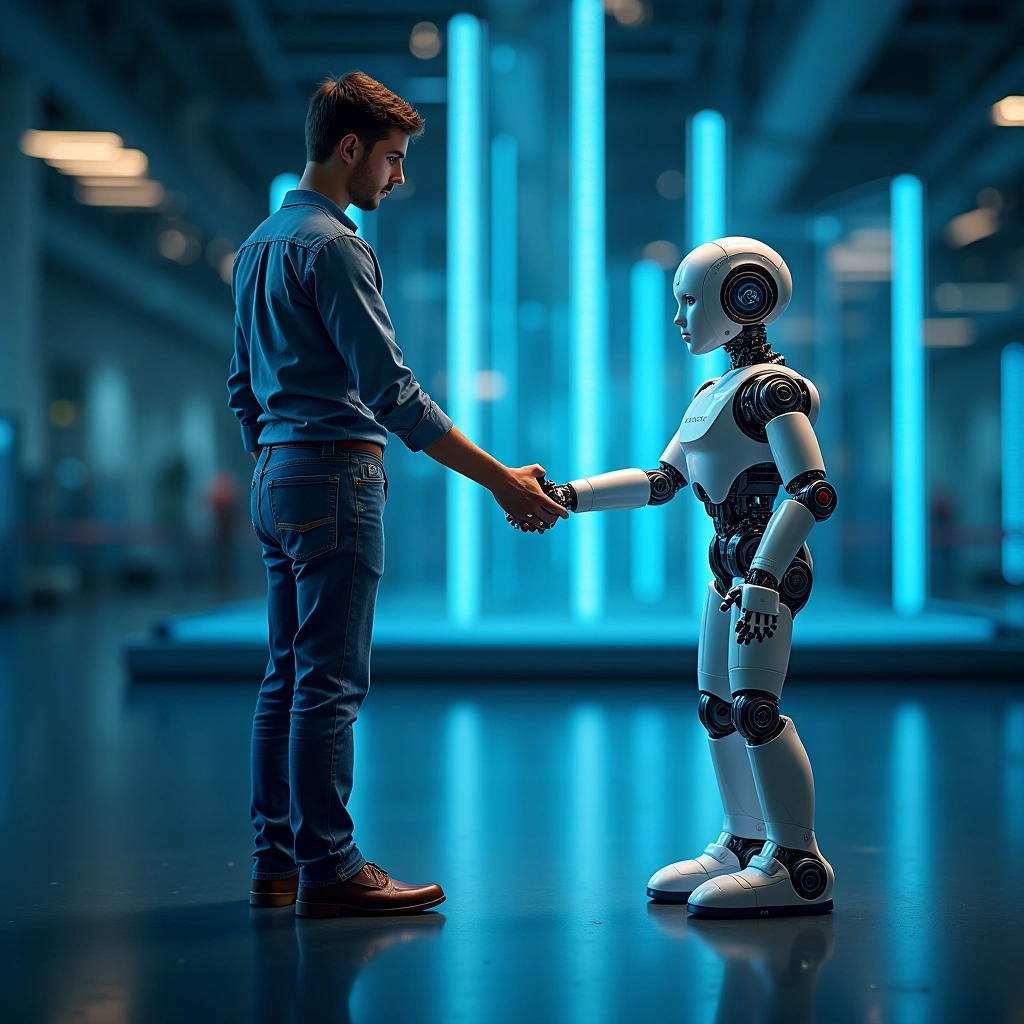
Hey there, fellow humans and tech enthusiasts! Let’s grab a virtual coffee and dive into a topic that’s hotter than a laptop on your lap in July: the labor market impacts of Artificial Intelligence (AI). As we stand on the brink of a new era, many are left wondering if AI will be our new best friend or our worst enemy. Spoiler alert: it’s probably both!
First off, let’s address the elephant in the room. AI is here, and it’s not just a fancy term thrown around at tech conventions. It’s a reality that’s reshaping industries faster than you can say “machine learning.” From chatbots that can convince your grandma they’re her long-lost cousin to algorithms that can analyze data quicker than you can finish your morning coffee, AI is making waves. But what does it mean for the labor market? Let’s break it down.
According to some early evidence—because who doesn’t love a good statistic?—jobs that involve repetitive tasks are in serious trouble. Think about it: if a robot can assemble a car or sort your laundry, why would a company pay a human to do it? The numbers are showing us that roles in manufacturing and certain service industries are likely to see job losses. But before you start crying into your unemployment application, let’s flip the script.
While AI might be taking some jobs, it’s also creating new ones. In fact, a study showed that for every job lost to AI, two new ones are created in tech-related fields. So, if you’ve ever wanted to be a “data whisperer” or a “robot psychologist” (yes, those are real jobs), now’s your chance! The key here is adaptation. Just like how we had to learn to use email instead of carrier pigeons, we must evolve with technology.
Now, let’s talk about the skills gap. It’s like trying to put a square peg in a round hole. Employers are looking for tech-savvy individuals who can work alongside AI, but many workers don’t have the necessary skills. This is where education and training come into play. If schools and businesses can collaborate to upskill the workforce, we might just have a fighting chance against our robot overlords.
But wait, there’s more! The gig economy is booming, and AI is a major player in this game. Freelancing, remote work, and short-term contracts are on the rise, giving people the flexibility to work when and where they want. It’s like the wild west out there, but with fewer cowboys and more laptops. The downside? Job security is about as stable as a Jenga tower after a few too many rounds.
So, what’s the bottom line? The labor market is changing, and it’s going to be a bumpy ride. AI has the potential to make our lives easier, but it’s also going to challenge the way we think about work. Embrace the change, learn new skills, and who knows? You might end up managing a team of adorable robots before you know it!
In conclusion, the impacts of AI on the labor market are profound, complex, and a bit scary. But remember, change is the only constant in life. So let’s adapt, learn, and maybe even have a little fun along the way. After all, if we can’t laugh at our impending robot future, what’s the point?