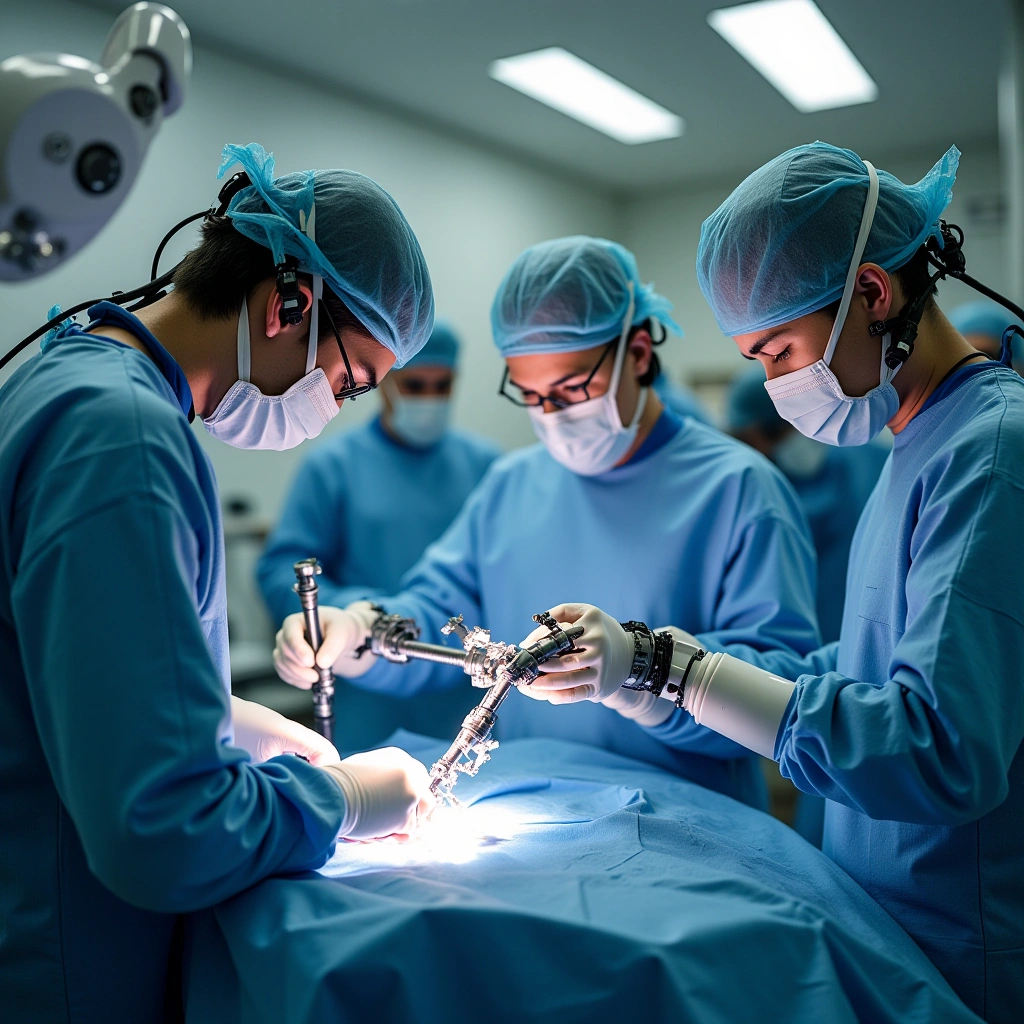
In a move that feels like it’s been ripped straight from a sci-fi movie, teleoperated humanoid robots have successfully completed their first-ever live surgery. Yes, you heard that right. If you thought your last visit to the doctor was a little robotic, just wait until you meet your next surgeon—who may very well be a robot!
The proof-of-concept experiment is a first step toward introducing humanoid robots in the operating room, researchers said. These robots could first assist during procedures then later perform surgeries while teleoperated by surgeons.
Now, before you start imagining a metallic hand reaching into your abdomen while a voice that sounds suspiciously like Siri gives you post-operative instructions, let’s break down what this actually means for the future of medicine.
First off, let’s talk about teleoperation. This is not just a fancy term for remote control. It’s a sophisticated system that allows a surgeon to operate a robot from a distance, using advanced technology to manipulate the robot’s movements as if they were right there in the operating room. Picture a video game where instead of saving a princess, you’re saving a life. And just like in video games, there’s a learning curve—good luck to the surgeon who accidentally presses the wrong button and sends the robot’s arm flying into the surgical lights!
The recent surgery, which was conducted with the utmost precision (let’s hope), marks a significant leap in surgical technology. Traditionally, surgeries require a surgeon to be physically present in the operating room, wielding scalpels and making incisions with their own hands. But with humanoid robots, we’re opening up a whole new world of possibilities.
Imagine surgeons performing complex operations while lounging on a beach in Bali. Okay, maybe that’s a stretch, but the idea of having skilled professionals able to assist in surgeries remotely could mean that patients in remote locations have access to top-tier expertise, no matter where they are.
But let’s not ignore the elephant in the room (or the robot in the operating theater, if you will). There are some serious concerns that come with allowing robots to take the reins in such a critical field. For one, what happens if the Wi-Fi goes out mid-surgery? “Sorry, Mr. Johnson, we seem to have lost connection. Can you please hold still while we reset the router?”
And then there’s the question of trust. Would you really want a robot operating on you? Sure, robots don’t get tired or distracted, but they also don’t have the warm, fuzzy bedside manner that we humans have perfected. Let’s be honest; when you’re lying on an operating table, you want someone who can at least offer a reassuring smile, not a blank stare.
Nonetheless, the advantages are hard to ignore. With robots, we could see greater precision in surgeries, fewer complications, and potentially even lower recovery times. Plus, they don’t need coffee breaks or bathroom breaks, which means less downtime in the operating room.
In conclusion, while the thought of a humanoid robot performing surgery may give you the heebie-jeebies, it’s a significant step forward in the medical field. As technology continues to evolve, we may find ourselves in a future where surgeries are not only safer but also more accessible. So, the next time you hear a faint whirring noise during a procedure, just remember: it’s not a ghost; it’s just your new robot surgeon trying to figure out how to operate the scalpel without accidentally launching it into the next room. Welcome to the future, folks!
Inspired by: “Teleoperated humanoid robots complete first-ever live surgery” (r/technology)