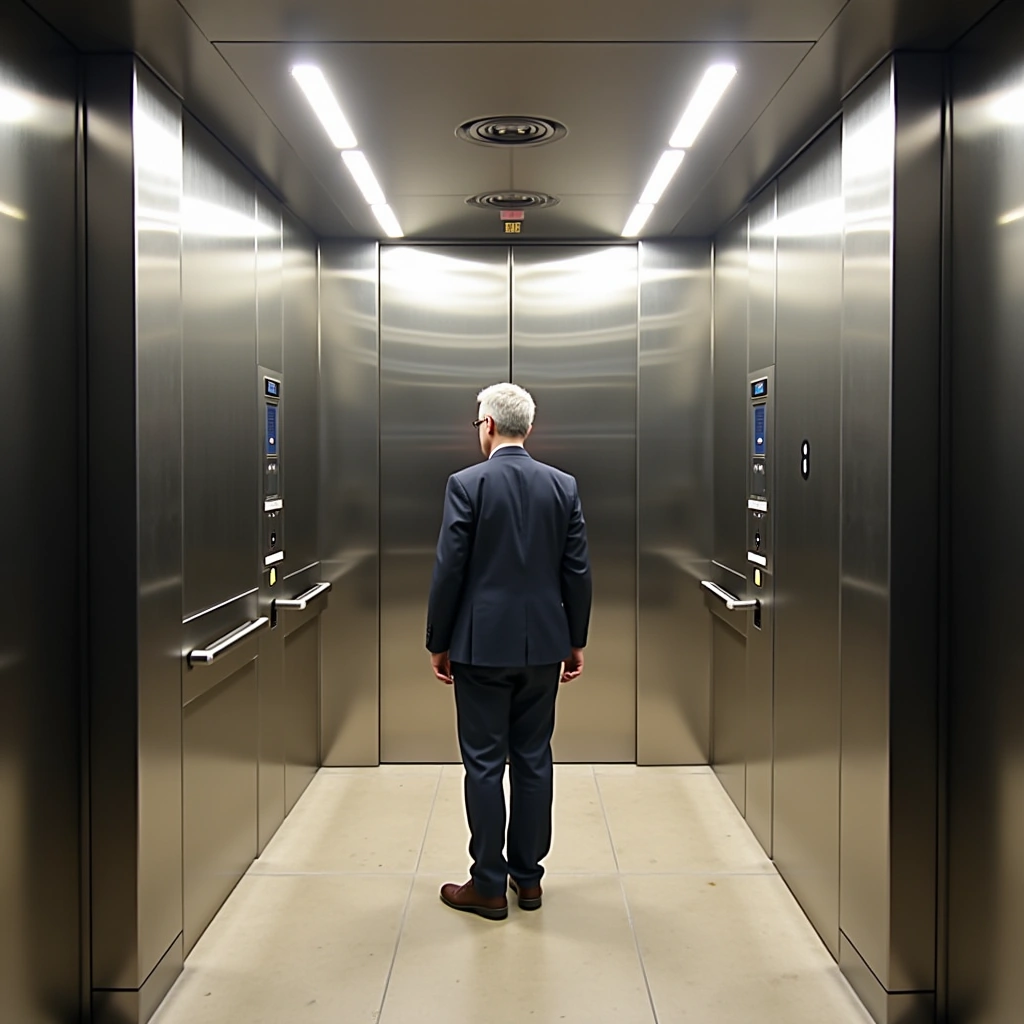
Have you ever stood in front of an elevator, tapping your foot impatiently, feeling like time has decided to take a coffee break just for you? Well, it turns out mathematicians have unlocked the secrets of this frustrating phenomenon. Yes, folks, they put down their calculus, grabbed their thinking caps, and dove into the world of elevators!
Let’s break it down: we all know the feeling. You push the button, maybe even press it a second time for good measure (like that’s going to summon the elevator faster), and then you wait. And wait. And wait some more. It’s like the elevator went on a vacation to Bali without you.
According to the mathematical wizards, the reason waiting for an elevator feels like an eternity is tied to the concept of queue theory. Yes, there’s a whole theory dedicated to waiting in line! Who knew? It’s almost as if someone looked at a line of people and thought, “You know what this needs? A PhD!”
Queue theory examines how entities (like elevators) manage waiting customers (like you, the poor soul stuck in a boring elevator lobby). The researchers found that the more people waiting, the longer your wait time feels. It’s a delightful little psychological trick our brains play on us. The more people there are, the more impatient we become, which creates a self-fulfilling prophecy of doom where the elevator seems to be taking its sweet time.
Let’s not forget the design of the elevator itself. Have you noticed how some buildings have elevators that are as fast as a cheetah on espresso, while others seem to crawl like a tortoise with a bad leg? The speed of the elevator can drastically affect our perception of time. If you’re in a slow elevator, it doesn’t matter if you just watched a three-hour movie; waiting for that door to open feels like you’re stuck in the world’s longest episode of a boring soap opera.
Now, let’s add to the mix the psychological effects of anticipation. Research suggests that when we think something is going to take a long time, it actually feels longer. So next time you find yourself waiting for an elevator, remember: it’s not just your imagination; it’s science! And maybe, just maybe, you should consider taking the stairs. They might be a bit of a workout, but at least you won’t have to wait!
In conclusion, while mathematicians have cracked the code on why waiting for elevators feels like an eternity, the real question is: are you willing to brave the stairs or continue your patience-testing elevator saga? Either way, embrace the wait; it might just give you time to ponder life’s greatest mysteries—like why your favorite snacks disappear so quickly.
So next time you’re standing there, staring at that elevator button, just remember: it’s not you; it’s the math!