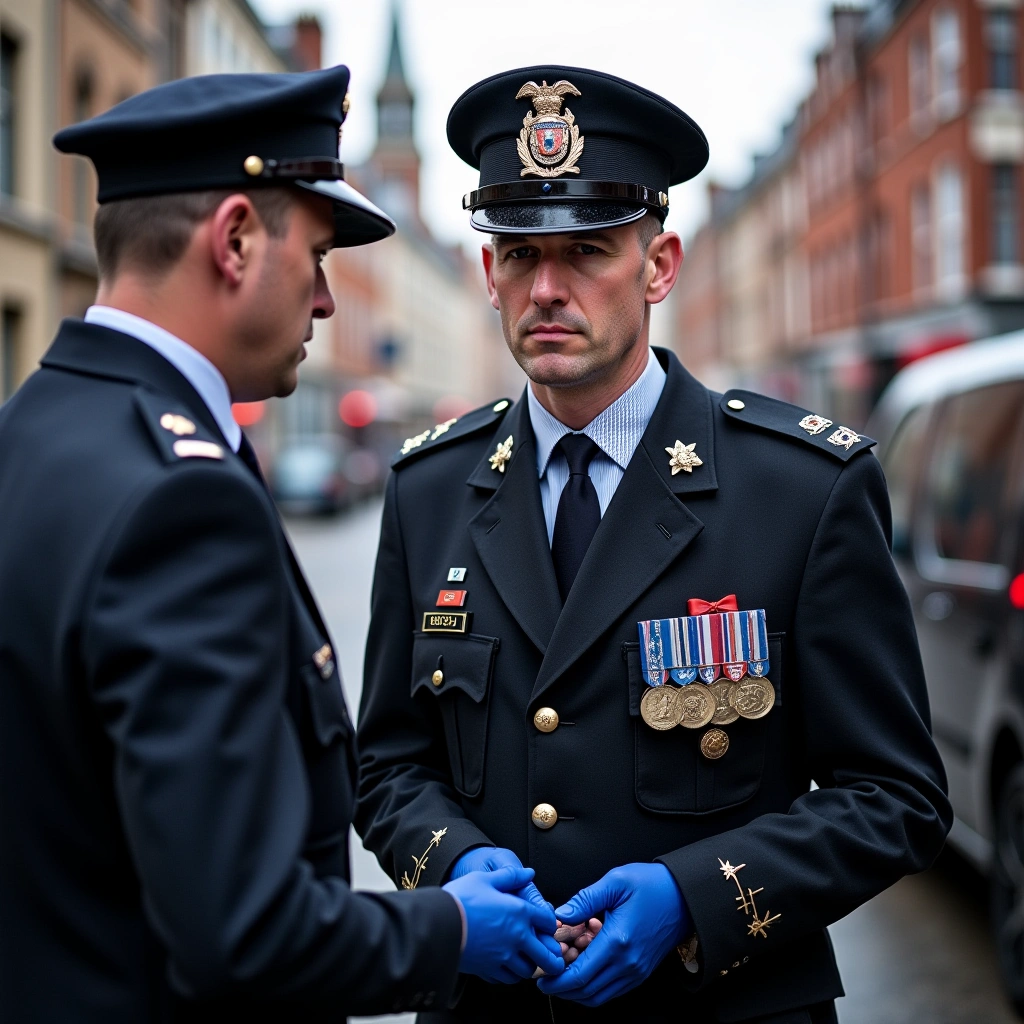
Under the Nato SOFA, the US retains primary jurisdiction for offences committed by service members on duty or involving other US armed forces members. The UK can prosecute in other circumstances but often defers to US military courts.
In a plot twist that could give even the most seasoned crime drama writers a run for their money, recent documents from the UK’s Ministry of Defence have revealed that Cambridgeshire police decided to play a game of hot potato with the investigation into an American fighter pilot, Capt. Jacob Wulfson. Now, before you dismiss this as just another case of jurisdictional confusion, let’s dig a little deeper into the murky waters of international law and military justice.
So, what’s the deal? Capt. Wulfson stands accused of some truly heinous acts against a British woman named Sarah Steele, who claims that he drugged, raped, and strangled her in his Cambridge flat. Quite the list of allegations, right? You’d think that this would be a straightforward case for the local authorities, but apparently, the UK police had other plans. Instead of keeping the investigation on home turf, they decided to hand it over to the US military police. Because why not? Who doesn’t love a good old-fashioned game of jurisdictional tag?
Now, Wulfson was ultimately prosecuted in a military tribunal on a US airbase. Let’s take a moment to appreciate the irony here: a British woman seeking justice for alleged crimes committed on British soil, only to have her case tried by a jury of military officers who likely have more in common with Wulfson than with her. Spoiler alert: Wulfson was acquitted of aggravated sexual assault but managed to snag a conviction for lesser charges. You know, because an all-male jury of fellow air force officers is definitely the best group to determine the fate of a case involving serious allegations of violence against a woman.
What’s particularly eyebrow-raising about this whole situation is the apparent lack of oversight from UK authorities. According to the MoD documents, there were serious concerns about the appropriateness of allowing the US military to take over the trial. It’s almost as if someone thought, “Hey, let’s just pass this off to our transatlantic friends and see what happens!” Because nothing says justice quite like outsourcing a sensitive case to a different country’s military system.
The implications of this shift are enormous. Not only does it raise questions about the efficacy of international legal cooperation, but it also highlights the potential pitfalls of military jurisdiction over civilian cases. When a crime allegedly committed on British soil is handled by a military tribunal, one can’t help but wonder: are we truly getting justice, or are we just kicking the can down the road?
This is not just about one case; it’s about how we, as a society, handle serious allegations against individuals who wear uniforms from foreign nations. If we’re going to play the game of international legalities, we should at least do it with a rulebook that doesn’t have glaring loopholes.
So, here we are, left to ponder: should the UK police have turned the investigation over to US military police? The answer seems clear as mud. One thing’s for sure, though—if you’re planning on committing a crime, make sure it’s in a jurisdiction where they take these matters seriously. Because as it stands, the odds of getting a fair trial might just depend on which side of the pond you’re on.
Inspired by: “UK police should not have let US force take over airbase trial, MoD documents show” (r/World)