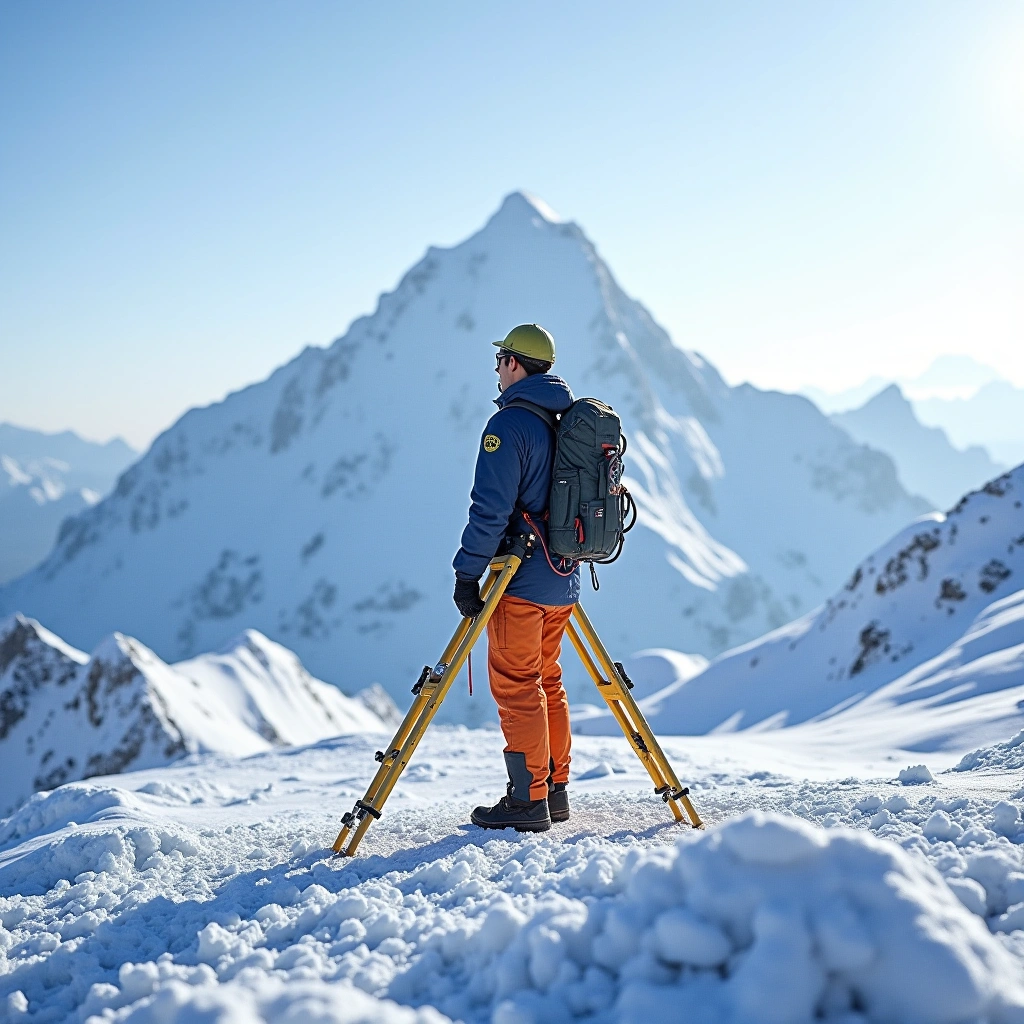
Ah, Mount Everest. The crown jewel of the Himalayas, the summit of all summits, where every year, climbers flock like moths to a flame (or perhaps like penguins to a melting iceberg, but I digress). But did you know that beneath all that snow and glory lies a rather amusing tale about its first official height measurement? Buckle up, my friend, because we’re about to dive into the world of surveyors, numbers, and a touch of conspiracy!
Related reading: The Curious Case
So, picture this: It’s the late 19th century, the world is buzzing with the spirit of exploration, and surveyors are out there measuring everything from the width of rivers to the height of mountains. And then, lo and behold, they measure Mount Everest and get a reading of a suspiciously perfect 29,000 feet. Now, I don’t know about you, but if I were a surveyor and my ruler told me that a mountain was precisely 29,000 feet high, I’d start wondering if my calculator was possessed by a poltergeist.
To avoid the backlash of sounding like a lazy mathematician who just rounded off to the nearest thousand, the surveyors decided to add a little padding. They reported the height as 29,002 feet instead! Genius move, right? It’s like saying, “Hey, we did our math, and it’s definitely not just a guess. We’ve got two extra feet just to be safe.” Talk about a confidence boost!
This little twist in measurement history has sparked debates and laughter among historians and geographers alike. Was it a clever marketing strategy to lend credibility to their findings? Did they think the public would see “29,000” and assume it was just a lofty dream? Or perhaps they were just trying to avoid any awkward conversations at the next surveyor’s convention—“Hey, did you hear about that guy who thought Everest was 29,000 feet? What a joker!”
Now, of course, we know that Everest’s height isn’t exactly a static number. It shifts and jiggles like a bowl of jelly thanks to tectonic movements, snow accumulation, and the occasional existential crisis. As of today, the officially recognized height is 29,032 feet (because why not? Let’s throw in a few more feet for good measure). But back in the 19th century, those two extra feet were a stroke of genius that kept the mountains of doubt at bay.
So, the next time you hear someone mention that Mount Everest stands at a perfect 29,000 feet, give them a wink and say, “Oh honey, you’ve got some catching up to do! It’s all about those extra two feet!” And let’s hope they don’t pull out a measuring tape to settle the debate.
In conclusion, the tale of Everest’s first measurement isn’t just a story of numbers; it’s a charming reminder of human nature. We love our precision, but sometimes a little exaggeration goes a long way. So, here’s to the surveyors who turned a perfect number into a reality check, proving once and for all that even in the world of mountains, it’s the little things that count—like two extra feet!
Inspired by: ““When Mount Everest’s first measurement came out to a suspiciously perfect 29,000 feet, surveyors r…” (r/interestingasfuck)