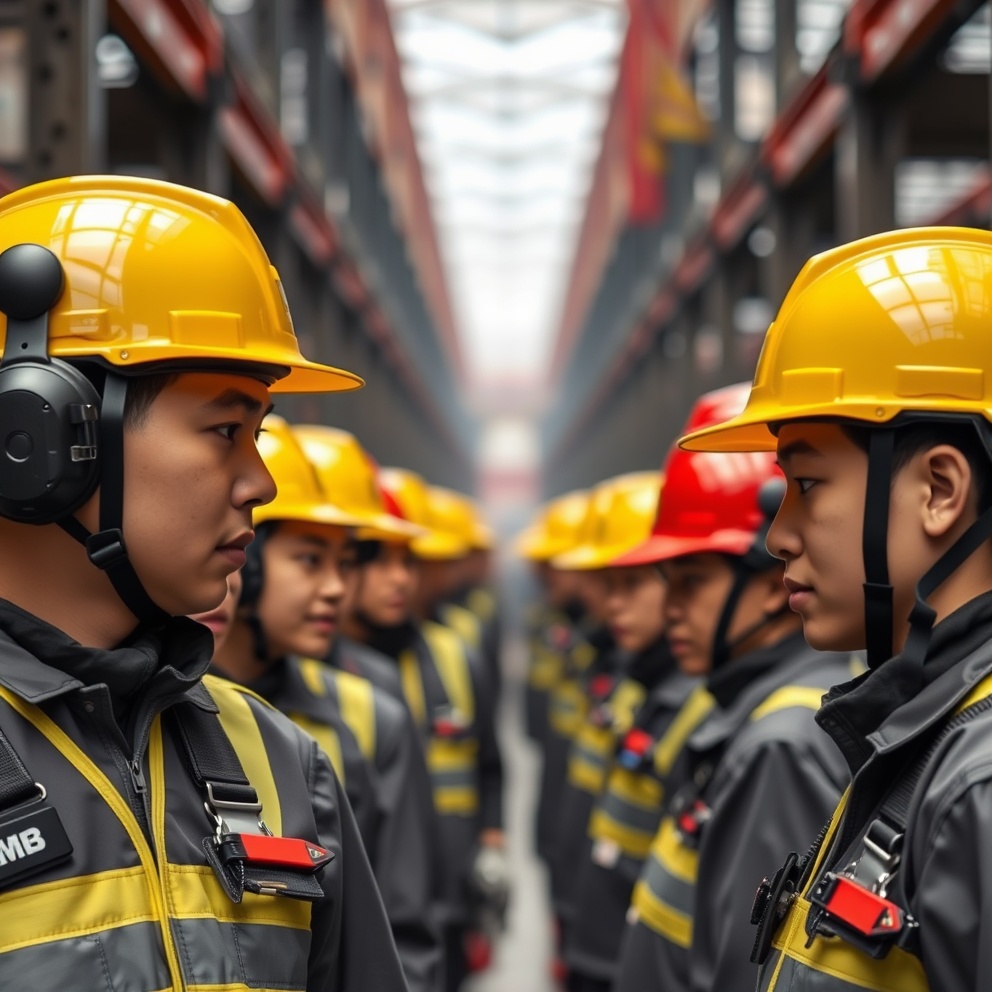
Ah, the age-old debate of who gets to wear the cooler hat. Or in this case, helmet. In China, the distinction between workers and managers is as clear as the colors of their helmets—yellow for the grunts and red for the big shots. So, let’s dive into this colorful hierarchy that could rival a traffic light!
First off, let’s talk about the yellow helmets. They’re like the classic workhorse of the construction site—durable, practical, and probably covered in a bit of dust and sweat. These helmets belong to the everyday workers, the unsung heroes who brave the elements and the occasional falling debris to keep the wheels of industry turning. They’re the ones who are literally building the future, one brick and mortar at a time.
Now, switch gears to the red helmets. These are worn by the managers, the folks who often sit in the air-conditioned office sipping their lattes while occasionally peering out the window to check if the workers have made any progress. Red, a color often associated with authority and power, makes these managers stand out like a ketchup bottle at a gourmet restaurant. But let’s be honest, does wearing a red helmet really make them any more qualified to oversee the construction site? Or are they just playing dress-up?
One might argue that this color-coding is a necessary evil, a way to quickly identify who’s in charge and who’s there to do the heavy lifting. But it also raises questions about the inherent hierarchy in the workplace. Is it really a good idea to reinforce the divide between workers and managers with something as trivial as helmet color? It’s as if we’re saying, “Hey, you in the yellow helmet! Get back to work while I, in my shiny red helmet, make all the important decisions!”
And let’s not even start on the psychological implications of this color scheme. Imagine a worker looking up at their manager, clad in red, feeling a bit like a minion in a cartoon. The red helmet shines down like a beacon of authority, demanding respect and, let’s face it, a bit of fear. It’s like a superhero movie where the villains wear the most ostentatious colors while the heroes are dressed down for practicality. Who decided that a red helmet conveys competence anyway? Maybe the next trend should be rainbow helmets—everyone gets to feel fabulous and important!
In the end, while the color of the helmet might seem trivial, it reflects deeper issues in workplace dynamics. It’s time for a revolution! Let’s swap those helmets around. Workers in red helmets could bring a whole new level of creativity and authority to the table, while managers in yellow helmets could learn a thing or two about the realities of the job. After all, nothing says “I understand your struggles” like wearing the same helmet as the people you oversee.
So next time you see a yellow helmet working hard under the sun and a red helmet perched comfortably in the shade, remember that it’s not just about the color. It’s about the attitudes, responsibilities, and perceptions that come along with them. And who knows? Maybe one day we’ll all just wear rainbow helmets and celebrate the beautiful chaos of the workplace together!