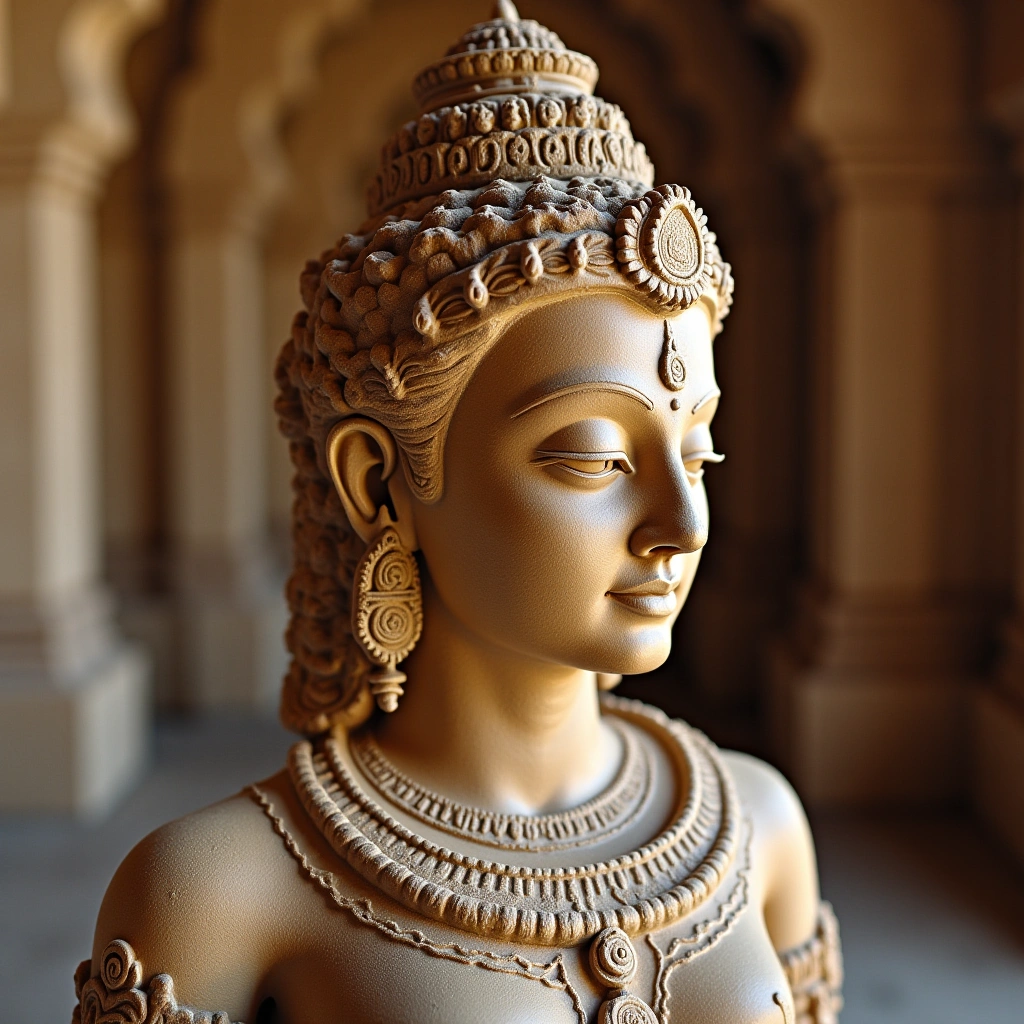
Hey there, fellow history buffs and makeup enthusiasts! Have you ever thought about how beauty rituals have changed over the centuries? Well, buckle up because we’re about to take a wild ride back to the 9th century at the Khajuraho Temple in India, where a stone-carving of a woman applying her makeup is not just a pretty sight, but a snapshot of ancient beauty standards!
First off, let’s talk about Khajuraho. This UNESCO World Heritage site is famous for its stunning temples adorned with intricate sculptures. Built around 950 AD by the Chandela dynasty, these temples are like the Instagram feed of ancient India—full of life, passion, and, let’s be real, some seriously spicy content! Among the many carvings, one particular piece stands out: a woman meticulously applying her makeup. Talk about a beauty guru!
Now, I know what you’re thinking: “Why would someone want to immortalize a makeup session in stone?” Well, my friend, this carving isn’t just about vanity. It reflects the cultural appreciation for beauty and femininity in that era. Back then, makeup wasn’t just a way to look good for a date; it was an art form and a social statement. The way this woman is depicted suggests that looking good was just as important as, say, fighting off invading armies (which was a real thing back then).
Let’s get into the nitty-gritty of the carving itself. The detail is mind-blowing! You can see the delicate curves of her face, the way she holds her makeup tools—probably some ancient version of a beauty blender, or as I like to call it, the “stone sponge.” And don’t even get me started on her hair! It’s like she just walked out of a salon, ready to conquer worlds (or at least her social circle). This is the ultimate #MakeupGoals, if you ask me.
But wait, there’s more! This carving opens up a Pandora’s box of questions about gender roles in ancient India. Was this woman a goddess, a queen, or just a regular gal with a passion for eyeliner? The ambiguity is delicious. It prompts us to think about how women were perceived in society—were they celebrated for their beauty, or was it a double-edged sword? It’s a classic case of, “You can’t win for losing!”
In a world where we often associate beauty with superficiality, this carving challenges that notion. It begs us to consider the deeper implications of beauty standards across cultures and time. So, the next time you’re slapping on some mascara, remember the Khajuraho lady who paved the way for beauty rituals. She was doing it way before it was cool!
In conclusion, the woman applying her makeup at Khajuraho Temple is more than just a work of art; she’s a time capsule that links us to our past. So, let’s raise a brush (or a stone tool) to the women of history who’ve shaped beauty trends and societal norms. And remember, whether you’re rocking a full glam look or just a touch of lip balm, beauty is about confidence—just like that ancient beauty who’s been captivating our hearts for over a millennium!