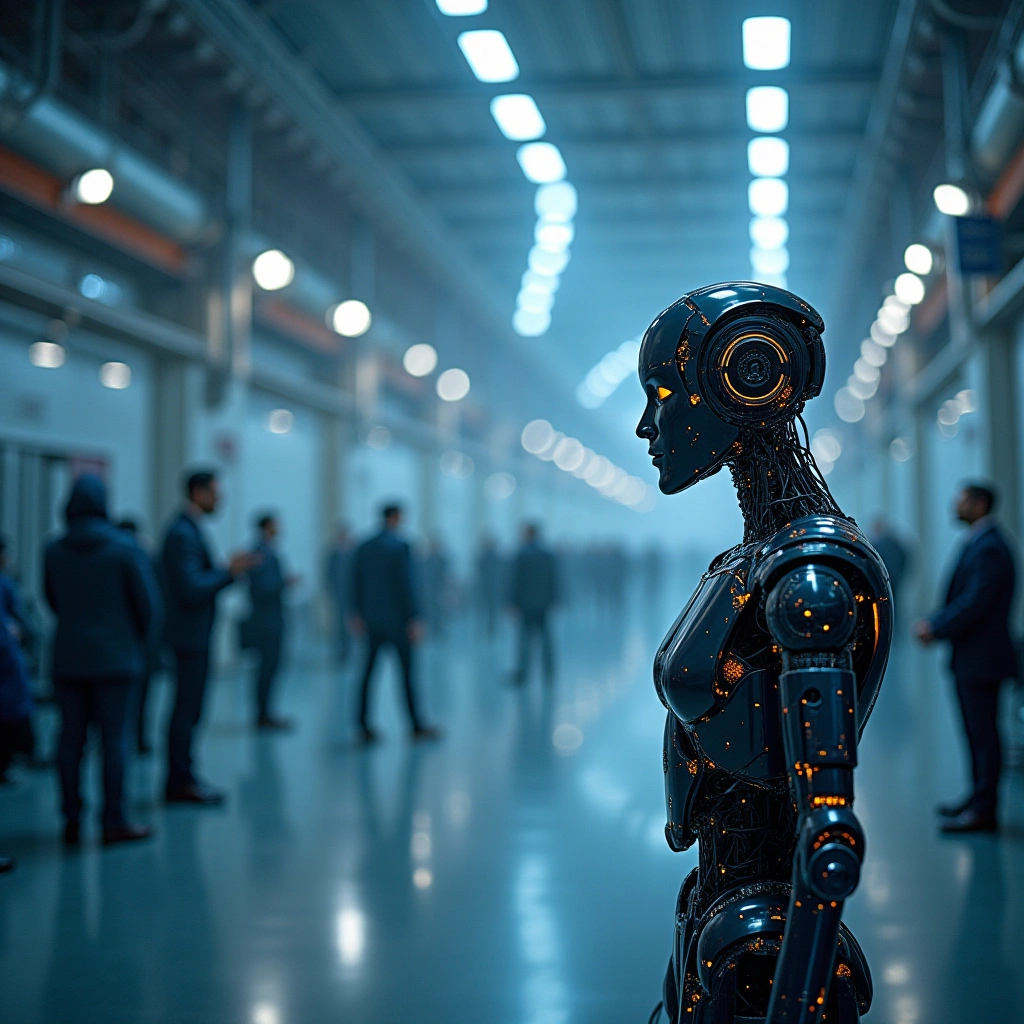
Ah, the AI job apocalypse—a term that sounds like it should come with a dramatic movie trailer voiceover and a bunch of explosions. But let’s be real for a second: the idea that artificial intelligence is going to wipe out human jobs faster than you can say “machine learning” is, frankly, a bit overblown.
What we’re seeing isn’t the prelude to a job apocalypse, but a low-hire, low-fire labor market where unemployment rates for tech workers and everyone else are converging around the Fed’s target rate of 4%. Catastrophizing is a narrative device the hyperscalers deploy to divert capital flows to them and justify their capex. Every new technology in history has gone through a similar arc of creative destruction. I don’t see why AI is any different.
Let’s dive into this topic, shall we?
The AI Conundrum
First off, AI is not some evil overlord bent on world domination. It’s a tool. A fancy one, sure, but still just a tool. Think of it like a really advanced calculator that can also generate cat memes. It can do amazing things, but it still needs a human to guide it, interpret its outputs, and, you know, ensure it doesn’t accidentally launch a nuclear missile because it misinterpreted a command.
The Reality Check
Now, don’t get me wrong—AI is changing the job landscape. Some roles are being automated, and yes, that can be scary. But here’s the kicker: while AI might take over certain tasks, it’s also creating new opportunities that didn’t even exist five years ago.
For instance, have you ever heard of a prompt engineer? No? Well, that’s because it’s a new job title that has emerged thanks to the rise of AI. These are the people who are responsible for crafting the perfect prompts to get the most useful responses from AI. It’s like being a digital whisperer.
The Human Element
One of the biggest reasons the AI job apocalypse is a myth is because human talent is more crucial than ever. We need people who can think critically, solve complex problems, and, let’s face it, bring some good old-fashioned human emotion to the workplace. AI can analyze data faster than you can say “artificial intelligence,” but it can’t replace the creativity and empathy that humans bring to the table.
Imagine a world where AI is doing all the grunt work, and humans are free to focus on innovation, strategy, and collaboration. Sounds utopian, doesn’t it?
The Skills Shift
So, what does this mean for the workforce? It means that we need to adapt. The skills that were once in high demand may not be as relevant in the future. But don’t panic! This is where upskilling and reskilling come into play.
If you’re currently in a job that’s at risk of being automated, it’s time to start learning those skills that AI can’t replicate. Think creativity, emotional intelligence, and complex problem-solving. And if you’re not sure where to start, there are tons of free resources available online.
Conclusion: Embrace the Change
In conclusion, the AI job apocalypse is more myth than reality. Sure, the job market is changing, but that’s nothing new. The key is to embrace the change and adapt.
So, the next time you hear someone lamenting about how AI is going to take all our jobs, just smile knowingly and remind them that we need more human talent than ever before. Because, let’s be honest, AI might be smart, but it still doesn’t know how to make a decent cup of coffee. And that, my friends, is a skill worth keeping around.
Inspired by: “The AI job apocalypse is a myth. We need more human talent than ever before” (r/technology)