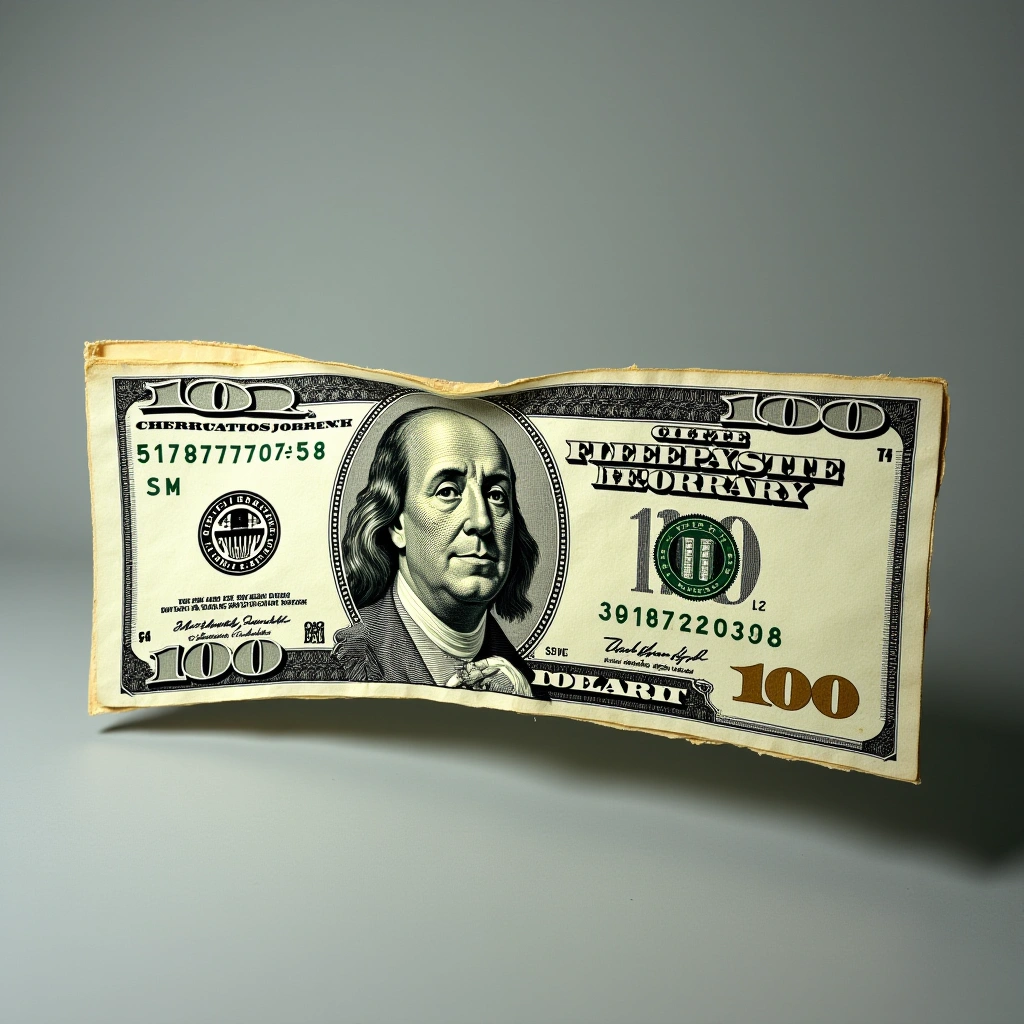
Ah, the $1000 bill! The unicorn of U.S. currency, often rumored about but rarely seen in the wild. You might think it’s just a myth, like Bigfoot or a polite internet troll, but the truth is, it once roamed the financial landscape of America. Let’s take a trip down memory lane and explore the fascinating, often humorous world of this high-denomination bill that was as useful as a chocolate teapot in our digital age.
Related reading: Forgotten Currency
First, let’s set the scene. It’s the early 1900s, and the world is teetering between horse-drawn carriages and the dawn of the automobile. The U.S. economy is booming, and businesses need a way to conduct large transactions without resorting to wheelbarrows full of coins (because who wants to be known as ‘that guy’ at the bank?). Enter the $1000 bill, officially known as the “Grand” (not to be confused with the Grand Canyon, which is also a big deal but not something you can spend).
Originally, these bills were used for large transfers between banks. Imagine the excitement! “Oh, darling, I just transferred a cool thousand bucks—what did you do today?” It was all very glamorous until, you know, the 1960s happened. Back then, technological advances were about as common as finding a vegan at a barbecue. The world was on the brink of the electronic revolution, and suddenly, carrying around a wad of cash that would make Scrooge McDuck jealous was starting to feel a bit…old-fashioned.
By 1969, the U.S. government, in a move that has been described as both “forward-thinking” and “a bit of a buzzkill,” discontinued the $1000 bill. The reasons? Well, they were trying to combat money laundering and other nefarious activities. Plus, with the rise of checks and electronic transfers, the need for such high-denomination bills was dwindling faster than your willpower at an all-you-can-eat buffet.
But wait! Before you go shedding tears for the lost Grand, let’s talk about what happened next. The $1000 bill became a collector’s item, and today, it’s worth more than your average Friday night takeout order. Seriously, some of these bills can fetch anywhere from $2,000 to $3,000 at auction. So, if you happen to find one in your great-grandmother’s attic next to her collection of ceramic cats, congratulations! You’ve just hit the jackpot.
And let’s not forget the irony! The bill that was once a symbol of financial prowess is now a relic of a time when people thought cash was king. Today, if you tried to use a $1000 bill at the grocery store, you’d probably get a look that says, “Are you trying to pay with Monopoly money?” It really puts into perspective how far we’ve come, doesn’t it?
So, the next time you pull out your debit card or tap your phone to pay for that artisanal avocado toast, spare a thought for the $1000 bill. It’s a reminder of a bygone era, where big bills ruled the roost and electronic transfers were just a twinkle in the tech world’s eye. Just remember, if you ever find yourself with one in your wallet, don’t spend it all in one place—unless that place is an auction house!
Inspired by: “The U.S. once printed a $1000 bill once used for large transfers before electronic transfers were p…” (r/interestingasfuck)