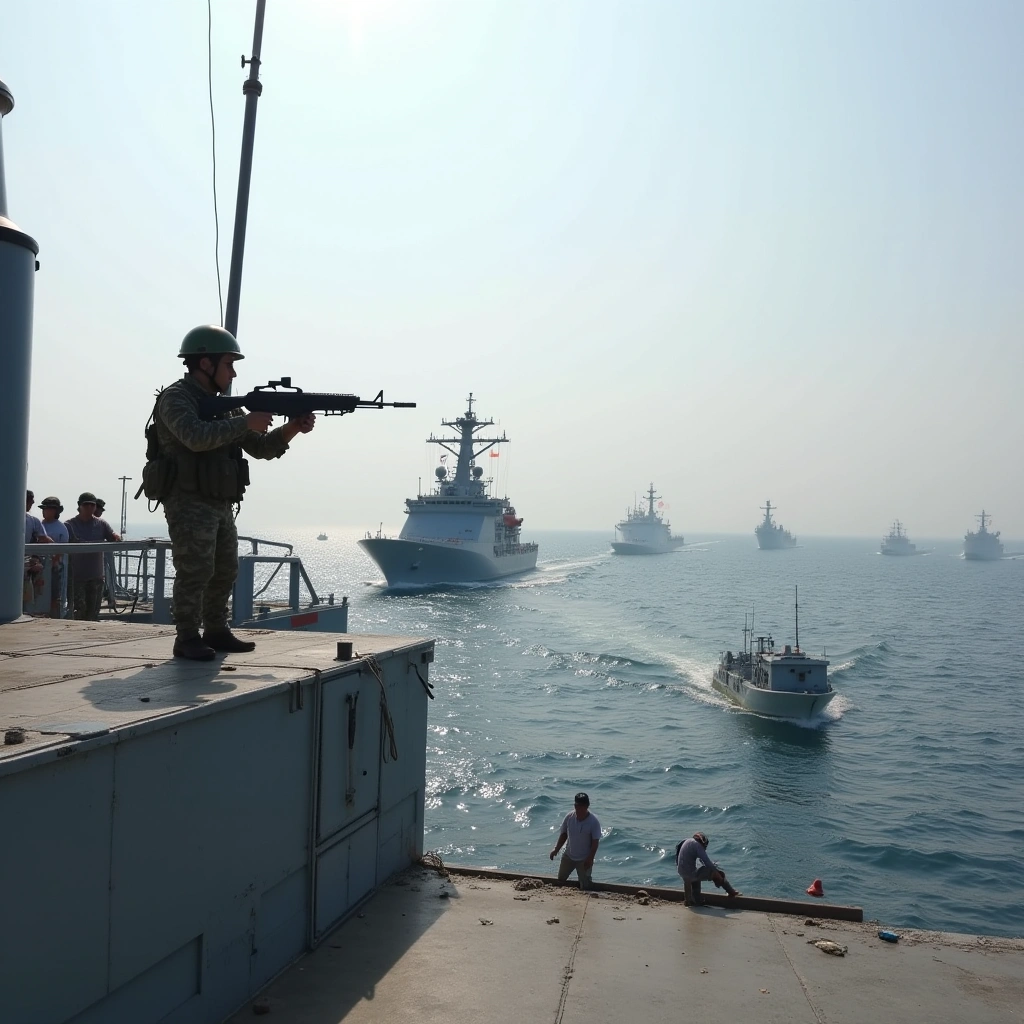
The strategy relies on maintaining robust deterrence against North Korea while preserving neutral economic channels across Eurasia and the Middle East . But there is a catch. Fully aligning with US-led maritime initiatives in the Persian Gulf …
So, South Korea is at it again, trying to navigate the treacherous waters of international politics without getting too wet. Recently, the South Korean president made headlines by announcing that while the country is open to facilitating talks between the US and North Korea, it has firmly ruled out deploying troops in the US’s ongoing conflict with Iran. And honestly, can you blame them?
Let’s break this down a bit. The situation in the Middle East, particularly around the Strait of Hormuz, is about as stable as a three-legged chair at a family reunion. The Strait is a crucial maritime passage, with a significant chunk of the world’s oil supply traveling through it. So, it’s no surprise that tensions run high, and countries are eyeing each other with a mix of suspicion and a dash of fear.
Now, South Korea’s decision not to send troops is like saying, “Thanks, but no thanks” to a party invite where you know the host is going to serve questionable hors d’oeuvres and play that one song on repeat until 3 AM. They’re smart enough to know that getting involved in someone else’s conflict, especially one as complex as the US-Iran situation, is a recipe for disaster. Plus, who wants to be the new kid on the block that everyone blames when things go south?
Instead, South Korea is positioning itself as a mediator, which is a role that’s both noble and a bit risky. It’s like being the friend who has to break up a fight between two people who are way too invested in their opinions about pineapple on pizza. You want to help, but you also don’t want to get punched in the face.
In the grand scheme of things, South Korea’s decision reflects a broader strategy of cautious engagement. They’re trying to maintain good relations with the US while also keeping a close eye on North Korea, which is like walking a tightrope over a pit of angry crocodiles. You’ve got to keep your balance, or you’ll end up in a world of hurt.
So, what does this mean for the future? Well, it’s likely that South Korea will continue to play the role of the diplomatic peacemaker, trying to facilitate discussions between the US and North Korea while steering clear of the military quagmire in the Middle East. It’s a delicate dance, and one that requires a lot of finesse.
In conclusion, South Korea is smart to avoid the pitfalls of troop deployment in the Hormuz situation. Instead, they’re opting for a strategy that emphasizes dialogue over conflict, which is probably the wisest choice when the alternative involves packing your bags for a potentially messy military engagement. So, here’s to South Korea—may they continue to balance on that tightrope with grace and a touch of humor, because let’s face it, the world could use a little more of that right now.
Inspired by: “South Korea weighs Hormuz role but rules out troop deployment” (r/World)