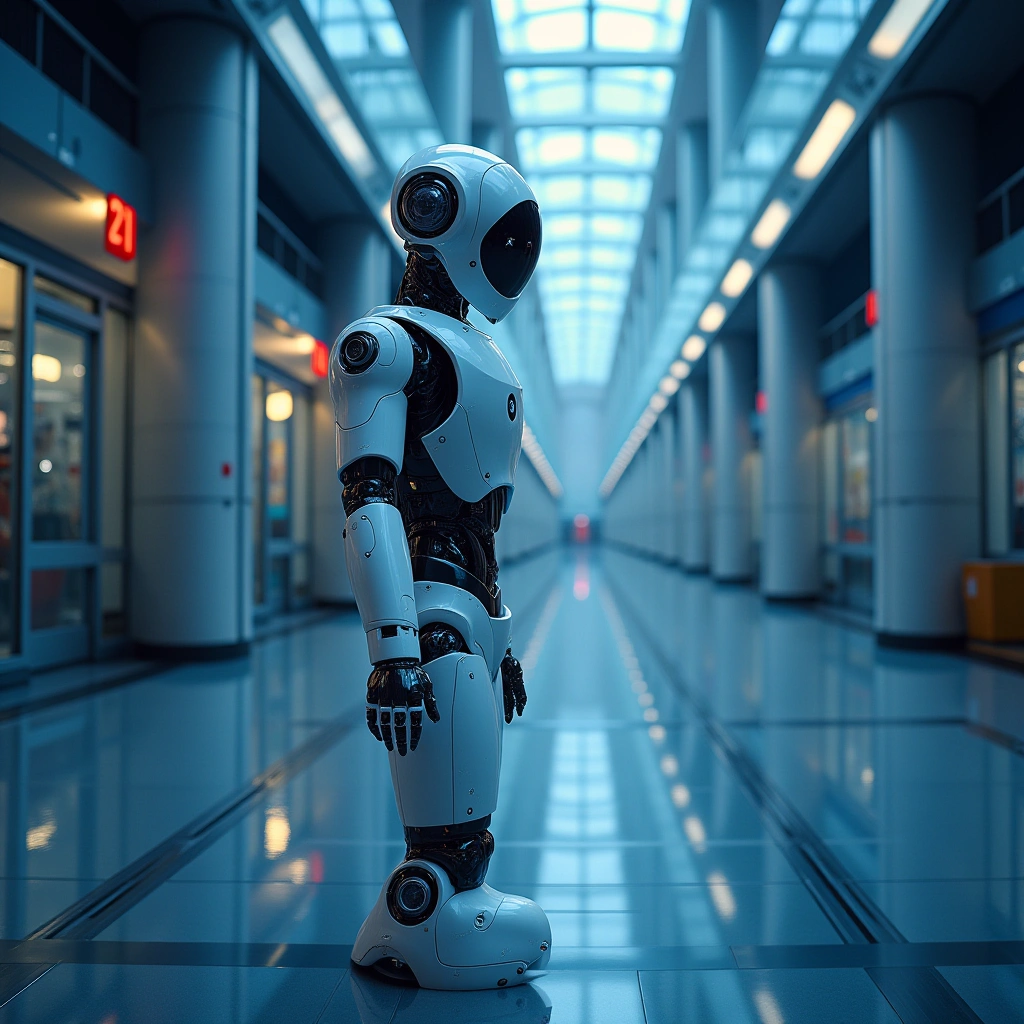
In a move that has sent waves of excitement and panic through the markets, a South Korean official recently proposed the idea of a ‘citizen dividend’ funded by the profits of artificial intelligence. Yes, you heard that right! This means that the money generated from AI advancements could potentially be redistributed to everyday citizens. Imagine getting a check in the mail saying, ‘This is from the robots!’ How cool (and slightly unsettling) is that?
Now, before we all start dreaming about our new AI-funded lifestyles—complete with robot butlers serving us coffee—it’s important to unpack what this means and why the markets are not exactly throwing a techno rave over it.
First off, let’s address the elephant in the room: the idea of a ‘citizen dividend’ isn’t exactly new. Think of it as the government playing Santa Claus with a budget sourced from the tech industry’s naughty list. It’s akin to saying, ‘Hey, we know robots might take your jobs, so here’s a little something to soften the blow.’ But let’s be real; can you imagine a world where we all get checks for simply existing? It sounds like a utopian dream or a dystopian nightmare, depending on how you feel about robots taking over the world.
Now, the markets are spooked. Why? Because in the wild west of AI, there’s a lot of uncertainty. Investors don’t like uncertainty. They like clear skies, predictable profits, and the comforting embrace of their favorite stock charts. The suggestion that profits from AI should be funneled back into the community could rattle the very foundations of capitalism as we know it. After all, if companies are expected to share their spoils, what incentive do they have to innovate? It’s like telling a kid they can only eat half the candy they just won at the fair—cue the tantrums!
But let’s consider the flip side. With the rapid advancement of AI, we are witnessing a seismic shift in job markets and economic landscapes. Millions of jobs are at risk of being automated. The idea of a citizen dividend could serve as a safety net for those displaced workers. It’s like a warm hug from society saying, ‘We’ve got your back, buddy!’ But then again, are we really ready to depend on a bunch of circuits and algorithms to fund our lives? Talk about an existential crisis!
Moreover, there’s a philosophical debate brewing here. Should we reward individuals merely for being alive in an age where machines do a lot of the heavy lifting? Shouldn’t we incentivize hard work and creativity instead? Or is it time to rethink our definition of contribution to society? After all, if a computer can do your job, maybe it’s time to find a new hobby—like competitive knitting or interpretive dance.
In conclusion, while the idea of a citizen dividend from AI profits sounds like a futuristic fairy tale, it raises more questions than answers. Should we embrace this brave new world or cling to our traditional notions of work and reward? One thing’s for sure: we’re in for a wild ride as we navigate the intersection of technology, economics, and humanity. So, buckle up, folks! The future is here, and it’s powered by artificial intelligence, with a side of economic redistribution. What could possibly go wrong?