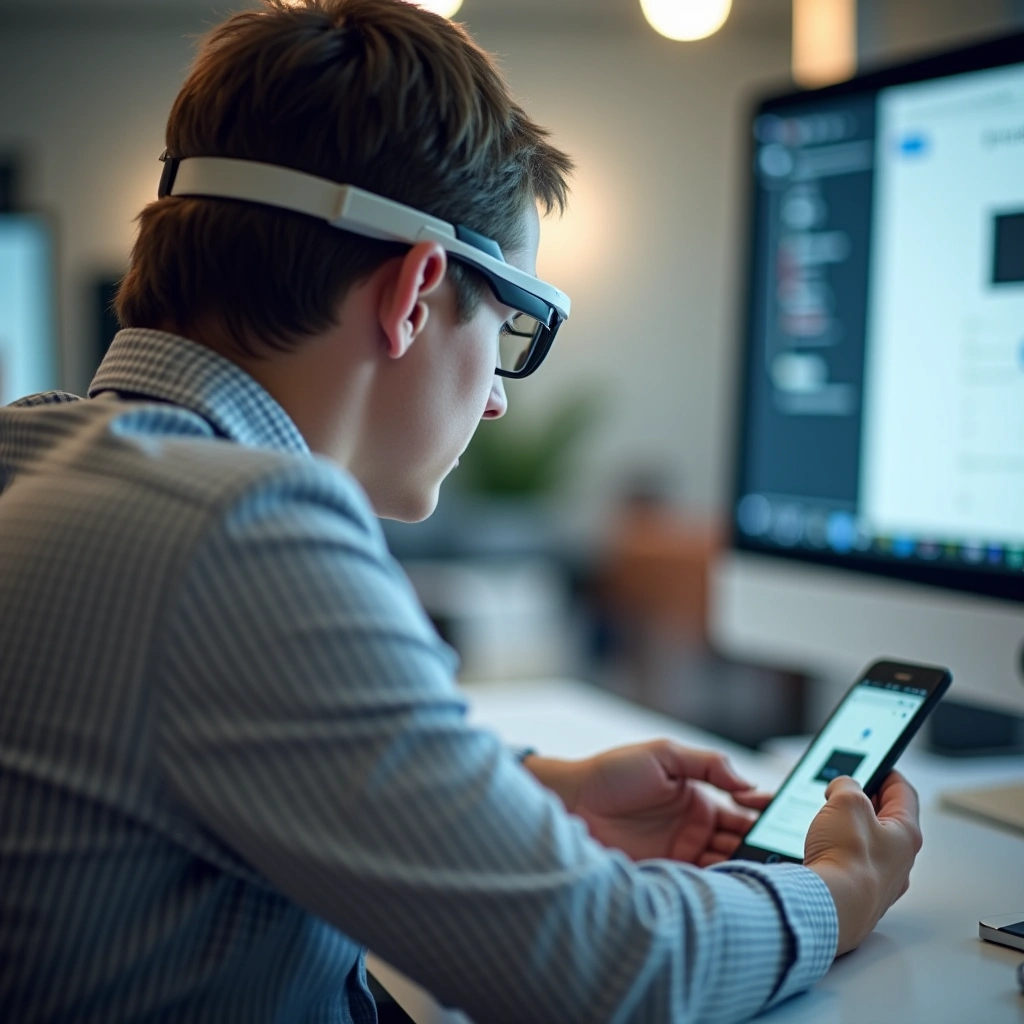
Ah, smart glasses. The futuristic accessory we all thought we’d be wearing by now, right next to our hoverboards and flying cars. But let’s be real: instead of zipping around in the sky, we’re still trying to figure out how to make our smartphones work without crashing. Now, in a twist that may surprise some, a company called Even Realities is betting that smart glasses without a camera could actually boost productivity instead of just recording our every move.
Smart glasses are eyewear that includes electronic components and can do more than just correct your vision or protect your eyes. As you can imagine, that covers a wide array of devices that can do completely different things. It’s a complicated enough category that I wrote an entire guide to the different kinds of smart glasses. To keep it short, we can sort smart glasses into a few specific types, with some overlap. AI smart glasses like the Ray-Ban Meta usually have speakers, microphones, and cameras built into the frames and can provide instant access to an AI assistant to answer questions and perform tasks. They can also usually play music and take calls, too. Waveguide smart glasses are AI glasses with displays integrated into the lenses that display visual information. Most, like the Meta Ray-Ban Display and Even Realities G2, have a variety of uses like displaying notifications, live captioning and translating speech, and even providing navigation directions. Some are much more focused on a specific task, like the Captify Pro, which is built entirely around captioning and translating. That display-equipped sub-category is still evolving, though, and has a lot of wrinkles to iron out in features and usability. Then there are prism display smart glasses like the Viture Beast and X by XReal a01+, which are often called AR smart glasses. They use bulky prism lenses to project a larger, more colorful, and higher-resolution image into your eyes, giving the effect of sitting in a huge theater. This lets you watch a movie, play a game, or even work as if you had a big monitor or TV in front of you, even when you’re sitting in a coffee shop or on a plane. These usually aren’t AI-powered or even wirelessly connect to anything, and basically work like USB-C monitors you put on your face. I’ve found them very useful, though, and they’re a regular part of my daily gear. There are some rarer types of smart glasses as well, like Chamelo’s Music Shield and Dusk glasses. They use liquid-crystal lenses to provide an adjustable tint, switching from transparent to sunglasses mode with a tap or via an app. The Chamelo Aura goes a step further by using multiple tinted liquid-crystal films to let you cycle through different lens colors. Some prism display smart glasses use similar technology to darken their exterior lenses and block out distractions. While they have strong connections to computers and video games, blue-light-blocking glasses aren’t actually smart glasses. They don’t have any electronics inside and simply rely on lens coatings to reduce exposure to blue light and reduce eye strain. They can be soothing but are not smart in the vein we’re talking about here.
Let’s unpack that, shall we?
First off, the idea of smart glasses without a camera might sound like a half-baked concept from a sci-fi movie where the robots have decided to stop spying on us for our own good. But think about it: how many times have you been in a meeting, and someone whips out their phone to take a picture of the whiteboard? You know, the one that has all the important notes that should probably be written down instead of immortalized in pixelated glory? With camera-less smart glasses, we might finally get to focus on what’s important—like actually listening to what’s being said instead of worrying about whether we’re about to be featured in someone’s Instagram story.
Even Realities seems to be onto something here. They argue that by removing the camera, the glasses could reduce distractions and the constant pressure to document every moment. Imagine walking into a meeting where everyone isn’t glued to their devices, trying to capture the perfect angle of the boss’s PowerPoint presentation. Instead, you could be wearing glasses that help you take notes, track tasks, or even manage your calendar—all while looking like a stylish tech-savvy human instead of a secret agent trying to gather intel.
But here’s the kicker: without a camera, these smart glasses can pivot away from being perceived as surveillance tools and instead be seen as productivity enhancers. It’s like the glasses are saying, “Hey, I’m not here to invade privacy; I’m here to enhance your work life!” Plus, let’s face it, no one wants to be that person who gets caught taking selfies during a serious meeting.
Now, let’s not ignore the elephant in the room: the tech industry has been obsessed with cameras in wearables. It’s as if they believe that if it doesn’t have a camera, it’s not worth our time. But maybe it’s time to rethink that strategy. After all, having a camera on your glasses doesn’t automatically make you smarter or more productive. It just makes you a potential meme waiting to happen.
So, while Even Realities is taking a leap of faith with their camera-less smart glasses, they might just be onto a trend that could redefine how we view wearable technology. Instead of being fun gadgets to show off, these glasses could actually be tools that help us focus, collaborate, and, dare I say, be more human in our interactions.
In conclusion, while the world may be clamoring for more cameras and selfies, there’s a quiet revolution brewing with smart glasses that prioritize productivity over recording. And who knows? Maybe one day we’ll look back at this era of camera-obsessed tech and chuckle at how far we’ve come. Until then, let’s keep an eye on Even Realities and their quest to make our work lives a little more efficient—and a lot less invasive.
Inspired by: “Smart glasses without a camera? Even Realities bets productivity beats recording everyone” (r/technology)