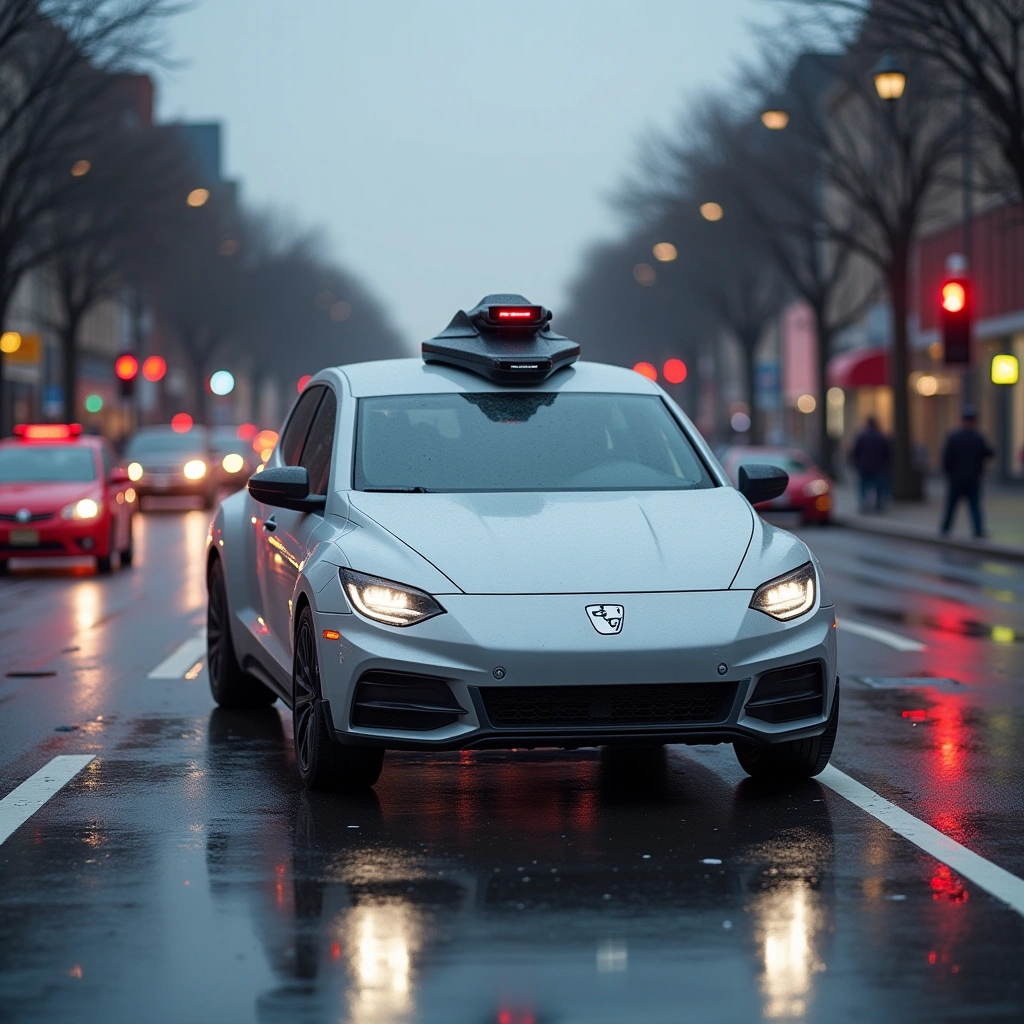
Ah, self-driving cars. The futuristic marvels that promised us a world where we could kick back, relax, and let our vehicles do all the heavy lifting. But it turns out, these autonomous chariots are not just taking us to the grocery store—they’re also getting in the way of first responders. Yep, you heard that right. While we were busy dreaming of a world with robot chauffeurs, it seems they might also be playing the role of the annoying party crasher at emergency scenes.
According to Morrison, NHTSA has tracked a clear pattern of AVs driving straight into active emergency scenes, blocking ambulances and fire trucks, and failing to respond properly to flashing lights, fire, or traffic cones.
So, what’s the deal? According to recent reports, self-driving cars are interfering with first responders when they rush to the scene of an emergency. You know, those heroic folks in uniforms who show up when things go south—think firefighters, paramedics, and police officers. They’re the ones who are supposed to be saving the day, not having to navigate a minefield of confused Teslas and Waymos.
Imagine this: a fire breaks out, and the fire truck is speeding down the road, sirens blaring, ready to tackle the flames. But wait! What’s that in the distance? A self-driving car, blissfully unaware of the chaos around it, decides now is the perfect time to stop for a nice, leisurely scan of its surroundings.
The problem lies in the fact that many of these autonomous vehicles are programmed to prioritize safety above all else. And while that sounds like a solid plan, it doesn’t always mesh well with the urgency of emergency situations. Instead of weaving through traffic like a professional stunt driver, these cars might just come to a complete stop, leading to a gridlock that would make even the most patient among us scream into the void.
Now, let’s give credit where credit is due: self-driving technology is still in its infancy. But the fact that they are causing headaches for first responders is a bit of a red flag. The feds, understandably, are not thrilled about this development. After all, if your self-driving car is making it harder for an ambulance to reach someone who needs help, that’s a problem bigger than your average traffic jam.
So, what’s being done about it? Well, officials are now urging tech companies to rethink their algorithms and design. They want these vehicles to be a little less stubborn and a lot more aware of their surroundings—especially when those surroundings include flashing lights and the sounds of sirens.
In the meantime, we might have to brace ourselves for some awkward moments ahead. Picture a self-driving car trying to navigate around a fire truck while the firefighters are waving their arms like they’re directing a marching band. It’s not exactly the smoothest sight.
As we continue to embrace this brave new world of autonomous vehicles, let’s hope they learn a thing or two about cooperation. Because if we can’t trust our cars to step aside for first responders, what’s next? Will they start demanding snacks on long road trips?
In conclusion, while self-driving cars have the potential to revolutionize transportation, they also need to understand their role in the grand scheme of things. So, here’s to hoping that the next software update comes with a side of common sense. Until then, let’s keep our fingers crossed for those first responders—and maybe keep a few extra snacks in the car, just in case.
Inspired by: “Self-Driving Cars Are Interfering With First Responders. Feds Aren’t Happy” (r/technology)