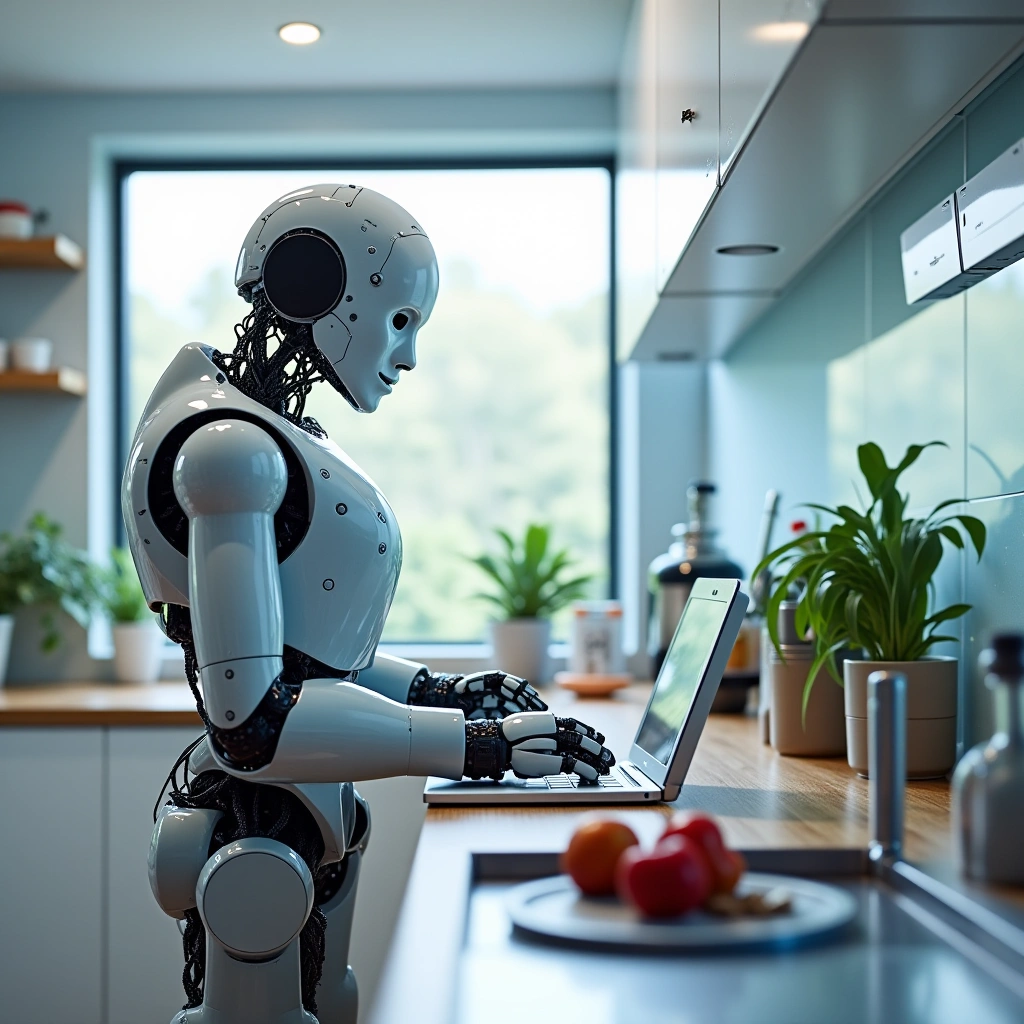
Have you ever watched a robot attempt to perform a simple household task and thought, “Well, that’s just adorable!”? If so, you’re not alone. While robots have been trying to make our lives easier for decades, they often seem to struggle with the basics—like folding laundry without turning it into a fabric origami disaster. But fear not! Thanks to the wonders of technology and a sprinkle of virtual reality magic, robots are now learning household tasks in realistic virtual environments. Yes, you heard that right. Virtual worlds where robots can practice making a sandwich without the risk of creating a kitchen catastrophe!
But it could be years before these machines are fully up to the task. Most of them have to be remotely guided. When Neo speaks, it’s the technician’s voice you hear. Neo can walk through the dining room and kitchen on its own, but the technician has to guide its hands via a virtual reality headset and two wireless joysticks. 1X hopes these robots will soon operate in homes autonomously.
Imagine this: a robot in a virtual kitchen, meticulously learning how to chop vegetables, measure ingredients, and even wash dishes—all without the hassle of cleaning up spilled flour or dodging a rogue carrot. This new approach allows engineers and developers to create complex simulations where robots can learn and refine their skills without the constraints and dangers of the real world. It’s like a video game, but instead of saving a princess, the goal is to save us from our own messy homes.
So, how does this work? Well, researchers create detailed virtual environments that closely mimic our actual homes. These environments are packed with realistic physics and interactive objects, allowing the robots to practice tasks repeatedly. It’s akin to giving a toddler a play kitchen but with more wires and fewer chances of them trying to eat the plastic food. The robots learn through trial and error, adjusting their movements and strategies based on the feedback they receive from their virtual surroundings.
As they navigate this digital playground, robots gain valuable insights into how to interact with the physical world. They can learn to recognize different objects, understand their properties, and even predict the consequences of their actions. For instance, when a robot tries to pick up a glass and accidentally knocks it over, it can learn that maybe, just maybe, it should be a bit gentler next time. Who knew robots could also have a clumsy phase?
But the implications of this technology stretch far beyond just making us laugh at our robotic friends’ foibles. With advancements in AI and machine learning, these robots could one day become invaluable household assistants. Imagine a future where your robot vacuum is not only mapping out your living room but also preparing dinner while you binge-watch your favorite show. Sounds dreamy, right? Just make sure it doesn’t decide to serve you a salad made of socks.
Of course, there are still hurdles to overcome. The transition from virtual training to real-world application is no small feat. Robots need to adapt to the unpredictability of our homes, where a chair could be in one place today and a dog toy in another. Plus, there’s the age-old question of whether we really want robots handling our food. After all, who wants a robot slicing tomatoes if it can’t even slice a loaf of bread without turning it into toast?
In conclusion, while we may not be ready to hand over the keys to our kitchens just yet, the developments in training robots within virtual environments are promising. They’re on the path to mastering household tasks, one virtual carrot at a time. And who knows? One day, we might just find ourselves in a world where the only thing we have to worry about is whether our robotic chef can keep up with our ever-changing dietary preferences. Until then, let’s keep enjoying the show as these machines learn from their virtual mishaps. Who knew watching robots learn could be so entertaining?
Inspired by: “Robots learn household tasks inside realistic virtual environments” (r/technology)