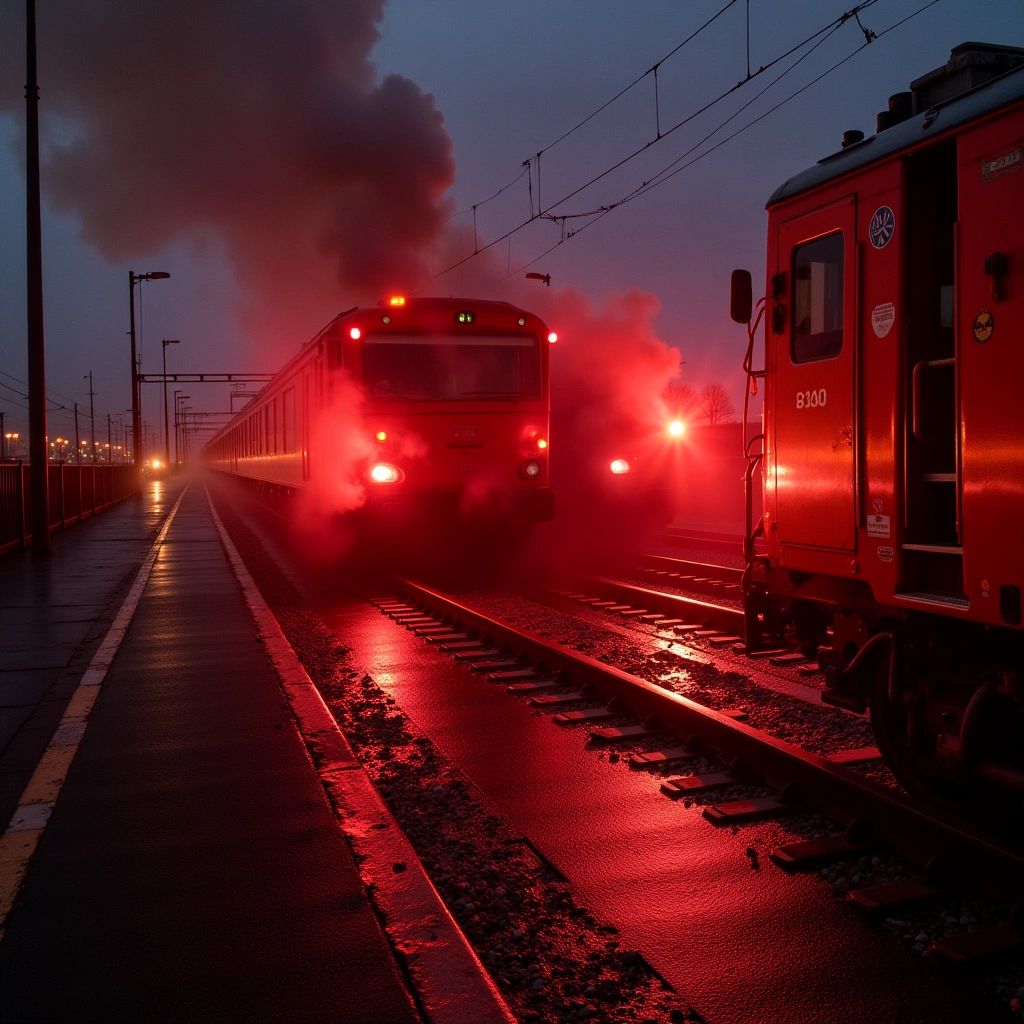
The Bedford rail crash on June 19, 2026, killed driver Shaun Burton and injured over 160 people when his train rear-ended a stationary service on the Midland Main Line. Investigators found the leading train stopped due to a faulty Automatic Warning System (AWS), while Burton’s train passed a red signal and accelerated to 76mph before braking just seconds before impact. The disaster sparked intense scrutiny over why the Train Protection and Warning System (TPWS) was not installed on this "low risk" route and revealed that the signal in question had rarely displayed red prior to the collision.
Ah, the classic story of a train speeding through a red light, which sounds like the setup for a bad joke, but unfortunately, it’s a grim reality. In June, the Bedford rail crash claimed the life of the train driver, Shaun Burton, and left many questioning how such a tragedy could occur. Spoiler alert: it turns out that ignoring red lights doesn’t just lead to traffic tickets—it can also lead to catastrophic accidents.
According to investigators, Shaun was given a friendly little automated warning after he passed a red signal. Now, you’d think that would be the cue to hit the brakes, right? Well, in a plot twist that’s not exactly the climax we want to see, Shaun decided that accelerating was the better option. Because, obviously, when you see a red light, the logical response is to step on the gas.
As the train barreled down the track at 58 mph, Shaun presumably thought, “What’s the worst that could happen?” Spoiler alert again: a lot. The train eventually collided with a stationary train ahead, and sadly, Shaun didn’t survive to tell the tale.
The official report has raised eyebrows and sparked conversations about the safety systems in place on the rail line. Survivors of the crash have been vocal about the need for new safety measures, because let’s face it, ignoring red lights isn’t exactly a hallmark of responsible driving. They’re calling for advancements in technology to ensure that such warnings don’t get ignored in the future. And honestly, who could argue with that?
Now, I know what you might be thinking: “How could someone ignore a red light?” It’s a fair question. But let’s not forget that humans are notoriously bad at making rational decisions when faced with stress or panic. Maybe Shaun thought he could make it through the signal like a contestant on a game show trying to win the grand prize. Unfortunately, this wasn’t a game, and the stakes were far too high.
As we dive deeper into this investigation, it’s clear that the implications stretch beyond just one tragic incident. It raises questions about training, technology, and how we can prevent future disasters on our railways. Perhaps it’s time for an upgrade in the warning systems, or maybe we need to re-evaluate how we train our drivers to react in high-pressure situations.
In the end, this incident is a stark reminder that in the world of trains, as in life, some signals are meant to be taken seriously. Let’s hope that moving forward, we can learn from this tragedy and implement the changes necessary to keep our railways safe. Because nobody wants to be that person who speeds through a red light—especially not when the consequences can be so dire.
So, here’s to all the train drivers out there: may your signals always be green, and may you always remember that red means stop, not go faster. Stay safe out there!
Inspired by: “Bedford rail crash: train sped up after red light warning, say investigators” (r/News)