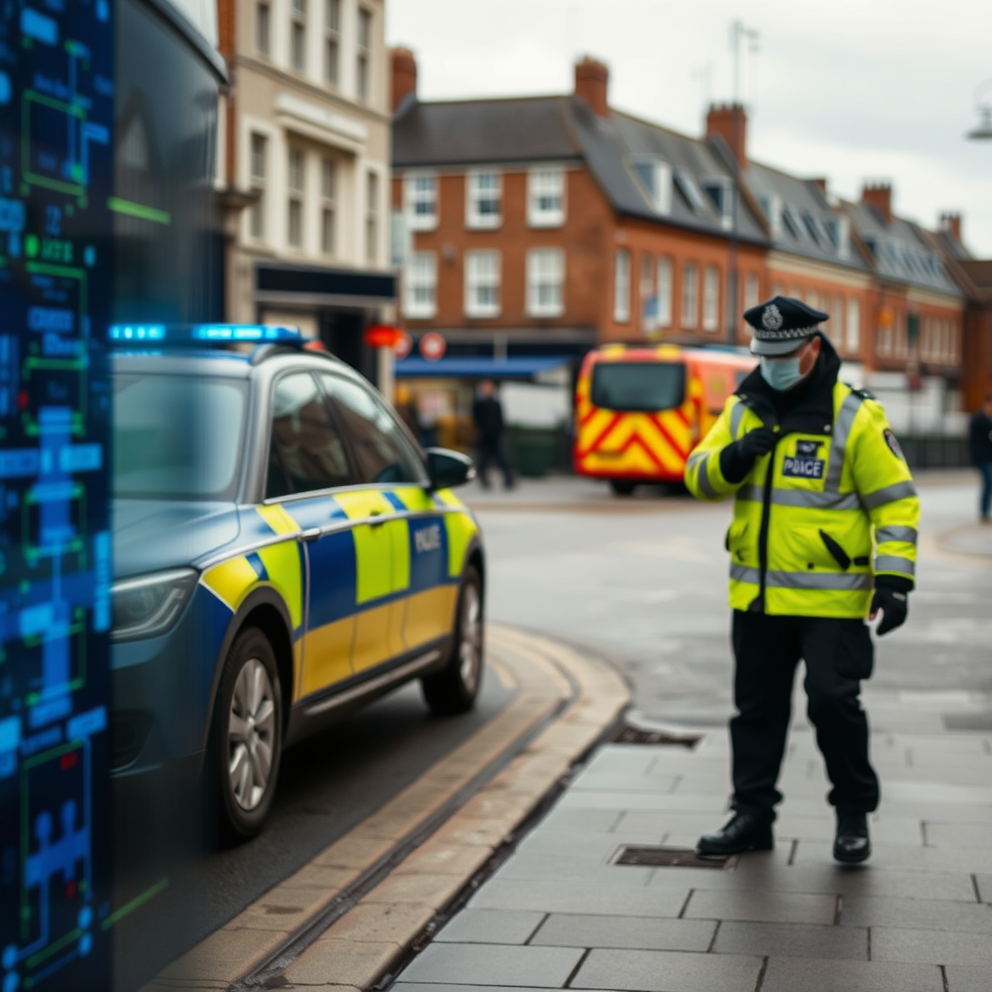
Ah, the British police—those fine folks who keep the peace, drink tea, and have the occasional run-in with a rogue biscuit. But now, they’re stepping into the tech world with a shiny new toy: a sprawling crime-prediction machine. Sounds fancy, right? But before you start imagining a scene out of a sci-fi movie where the police are arresting people for crimes they haven’t even committed yet, let’s unpack this a bit.
Among at least 23 separate models the force created were algorithms to identify the risk that people would commit burglary, fail to turn up in court, go missing, or become a victim of domestic abuse.
So, what exactly is this crime-prediction machine? Well, it’s essentially an algorithm designed to analyze data from various sources—think crime statistics, neighborhood demographics, and maybe even the number of seagulls in the area (okay, maybe not that last one). The idea is to predict where crime is likely to occur, allowing police to deploy resources more effectively. In theory, it sounds like a brilliant plan. In practice, however, it’s a bit more complicated.
You see, one of the major issues with these predictive models is that they can sometimes be as trustworthy as a cat in a room full of laser pointers. The results might not always be accurate, leading to some questionable policing decisions. Imagine being flagged as a potential troublemaker because your neighborhood has a higher rate of, say, jaywalking. Suddenly, you’re under the watchful eye of the law for just trying to cross the street.
The irony here is thick enough to spread on toast. The very technology designed to enhance public safety could inadvertently lead to increased scrutiny of innocent citizens. It’s like that time your friend tried to cook a gourmet meal but ended up burning water. The intention was good, but the execution? Not so much.
Moreover, there are ethical concerns lurking in the shadows like a suspicious character in a dark alley. The data used to train these algorithms can be biased, reflecting societal inequalities. If certain neighborhoods are over-policed, the algorithm might flag them as high-risk areas, perpetuating a cycle of mistrust and tension. It’s like trying to solve a Rubik’s cube while blindfolded—good luck with that.
Despite these hiccups, the British police are not giving up on their high-tech aspirations. They’re pushing forward, hoping to refine their methods and make the whole predictive process more reliable. It’s like trying to teach an old dog new tricks: sometimes it works, and sometimes you just end up with a confused pup.
In conclusion, while the idea of a crime-prediction machine sounds like a great leap into the future, it comes with a hefty side of skepticism. As we move forward, it’s crucial that we balance innovation with accountability. After all, no one wants to live in a world where you’re under surveillance for having the audacity to walk your dog at night. So here’s to hoping that the British police can crack the code on this tech conundrum—before it leads to more crimes of algorithmic injustice.
Inspired by: “British Police Built a Sprawling Crime-Prediction Machine. Some Results Couldn’t Be Trusted” (r/technology)