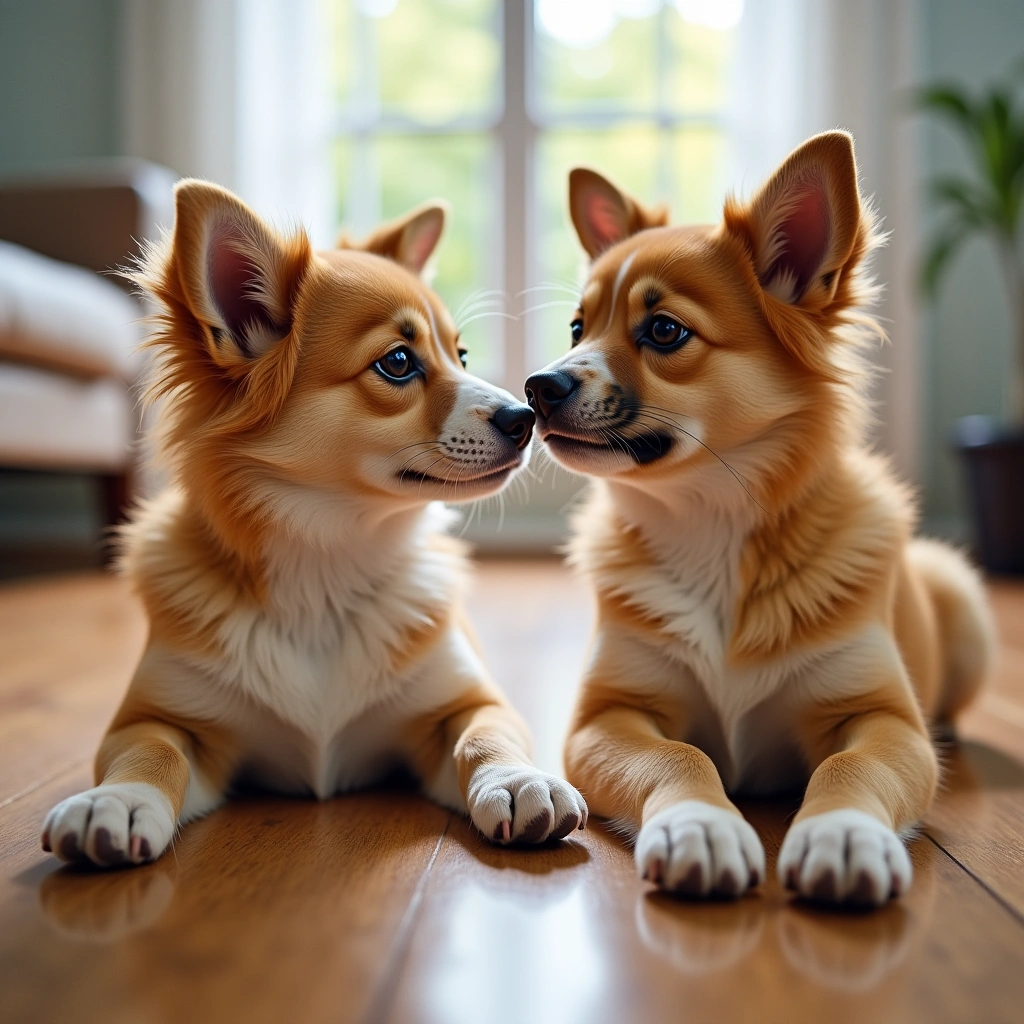
Have you ever noticed how your dog seems to know when you’re feeling down? One moment you’re binge-watching a series and the next, tears are streaming down your face like you’re auditioning for a sad movie. And there’s your loyal pup, sitting right next to you, head tilted, offering that comforting gaze that says, “I don’t know what’s wrong, but I’m here for you.” Turns out, this isn’t just a coincidence! Recent fMRI scans have revealed that dogs can detect our emotions, distinguishing between happiness, fear, anger, and sadness based on distinct brain activity patterns in their furry little heads.
Dogs are quirky, playful, clumsy balls of joy wrapped in fur with wiggly little butts. They can sense our emotions, have become our social companions and their unconditional love can teach us so much about our own lives.
Now, let’s take a moment to appreciate the scientific marvel that is a dog’s brain. While our brains are busy trying to remember where we left our keys (hint: they’re probably in the fridge), dogs are processing our emotional states with impressive accuracy. Researchers used fMRI scans to observe how dogs’ brains respond to different human emotions. They found that dogs have specialized areas in their brains that light up when they sense our feelings. Yes, that’s right—while we’re busy trying to figure out if we should order pizza or sushi, our dogs are busy deciphering our complex emotional state.
You might be wondering how this works. You see, dogs are masters of non-verbal communication. They read our body language, facial expressions, and even the tone of our voices. So, when you’re feeling sad, your dog picks up on those subtle cues. It’s like they have a sixth sense, except instead of seeing dead people, they see your emotional turmoil. And in their minds, they’re probably thinking, “What’s the deal? Is it time for extra treats or a comforting paw on the lap?”
But it’s not just sadness that they can detect. Happiness? Oh, they’re all over that! When you’re jumping around like a kid who just found out it’s a snow day, your dog is right there, matching your enthusiasm. They can sense your excitement and will likely join in on the fun—tail wagging, barking, and maybe even a little happy dance of their own.
On the flip side, when fear creeps in (like that time you heard a strange noise in the middle of the night), your dog can sense it too. They might become protective, staying close by your side, ready to defend you against that terrifying shadow that’s probably just a coat hanging on the door. Honestly, they could win an Oscar for Best Supporting Role in your emotional drama.
Now, let’s not forget about those moments of anger. Your dog might not understand why you’re upset over a lost sock or that time the neighbor’s cat took a stroll through your garden, but they can definitely feel the tension in the air. You might notice them trying to diffuse the situation with some well-timed puppy eyes or a goofy bark, as if to say, “Hey, let’s not take this too seriously! How about we go play instead?”
So, what does this all mean? It means that our dogs are not just adorable companions; they are emotional barometers, picking up on our vibes and responding with their own brand of empathy. Next time you’re feeling down, take a moment to appreciate your four-legged friend who’s right there, ready to lend a paw (or a slobbery kiss) to lift your spirits. And if you’re ever in need of a good laugh, just remember: while you’re trying to sort out your emotions, your dog is probably thinking about how to score a treat.
In conclusion, our furry friends are more in tune with us than we might realize. So, the next time you’re feeling a bit blue, just remember that your dog is probably the best therapist you’ll ever have—no appointment necessary, and they don’t charge by the hour (though they might expect a few belly rubs in return). Now, if only they could help us with our human problems, like figuring out how to get out of awkward conversations or deciding what to have for dinner. But hey, one step at a time, right?
Inspired by: “Dogs can tell if you’re scared or sad | fMRI scans show happiness, fear, anger, and sadness have di…” (r/technology)