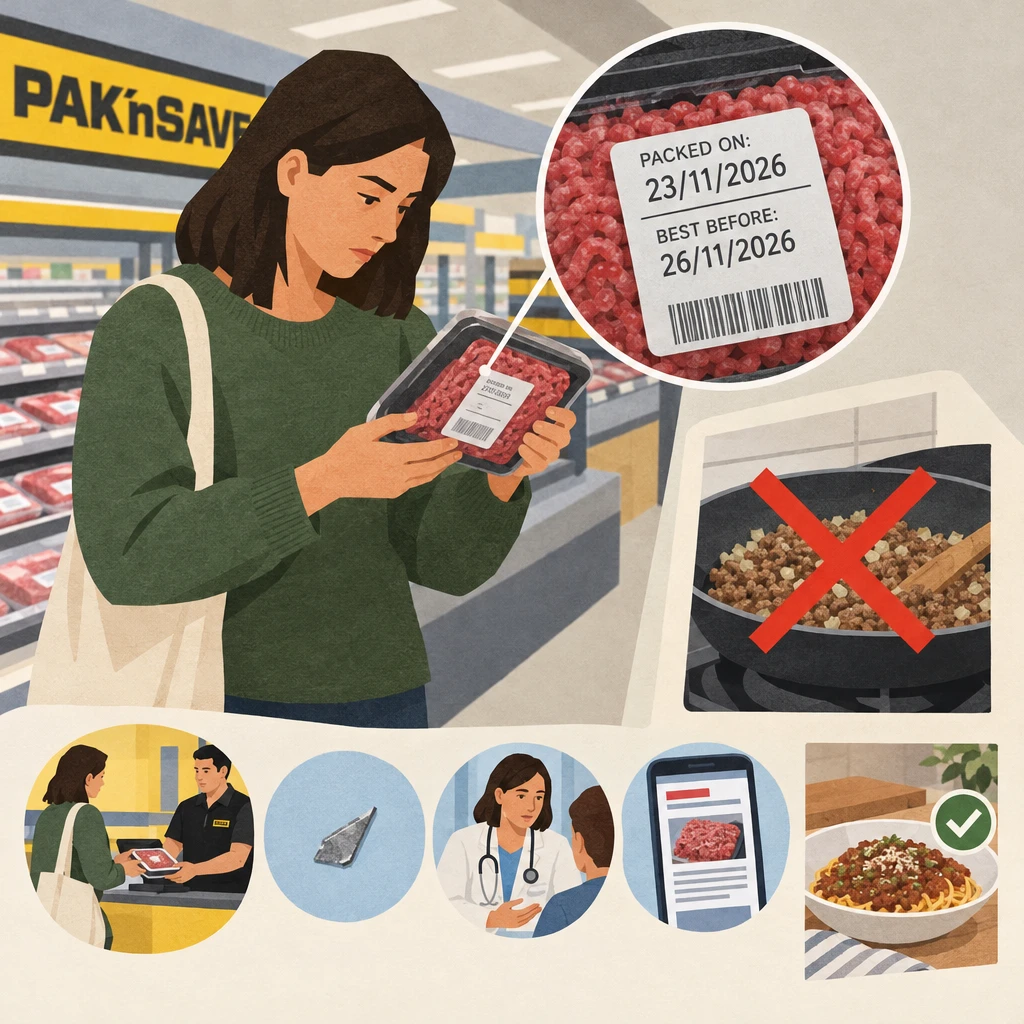
A recall was also issued for beef mince sold at Pak’nSave Highland Park in Auckland as it may contain metal pieces , the Ministry for Primary Industries said on its website.
If you were planning a bolognese this week, you might want to pause before you start browning the onions. Pak’nSave Highland Park in Auckland is recalling its made-in-store beef mince because it may contain small pieces of metal. Nobody enjoys finding out that their dinner ingredients came with hardware, so let’s walk through what’s happening, what to check, and what to do next.
The recall covers beef mince with a “packed on” date of November 23, 2026 and a “best before” date of November 26, 2026. Those two dates are the key details. If your packet doesn’t match them, this particular recall probably doesn’t apply to you. If it does match, the advice is simple: don’t cook it or eat it. Shoppers are being asked to return the affected product for a refund, or dispose of it safely.
The story was picked up by several major New Zealand outlets, including Stuff, the NZ Herald and RNZ. They all reported the same core facts, which is reassuring, because it means the details are consistent across sources. When the same information shows up in multiple places, it’s a good sign that you’re getting the real story rather than a rumour that’s been passed around the group chat.
Now, let’s talk about why a recall like this matters. Mince is one of the most common items in a New Zealand kitchen. It shows up in burgers, meatballs, pies, tacos and everything in between. Because it’s ground up and mixed, a small contaminant can be harder to spot than it would be in a whole cut of meat. That’s exactly why retailers and food safety authorities tend to act quickly when there’s any concern about foreign objects.
So what should you do if you bought mince from Pak’nSave Highland Park recently? Start by checking the packaging. Look for the packed on and best before dates listed above. If you find a match, put the packet aside and don’t cook with it. You can take it back to the store for a refund, or dispose of it. If you’ve already cooked with it and eaten a meal, and you notice anything unusual, or you feel unwell, speak to a doctor or call your local health service. Don’t wait to see whether symptoms develop on their own.
If you do come across a small piece of metal in your food, the instinct is to chew it and push through. Please don’t. Stop eating, take the item out of your mouth, and keep it so you can show it to someone if needed. If you have any pain, bleeding or difficulty swallowing, get medical advice promptly. Nobody wants to turn a Tuesday night dinner into an emergency room visit.
It’s also worth remembering that a recall is actually the system working. Someone spotted a possible problem, it was flagged, and the product is being pulled from shelves. Yes, it’s annoying to have to check your fridge and freezer and maybe throw out a few hundred grams of perfectly good looking mince. But it’s far better than the alternative, which is hoping nobody notices.
This is also a good reminder to get into the habit of checking dates on packaged meat, especially for store-prepared products. It takes five seconds, and it’s one of the easiest ways to stay on top of food recalls. Keep an eye on news updates too, since recall details can sometimes be expanded or clarified after the first announcements.
In the meantime, if your mince doesn’t match the dates in the notice, you can get on with your dinner plans. Just maybe give the packet a quick once-over before it hits the frying pan. Your future self, and your teeth, will thank you.
Inspired by: “Pak’nSave beef mince recalled over risk of metal pieces” (r/News)