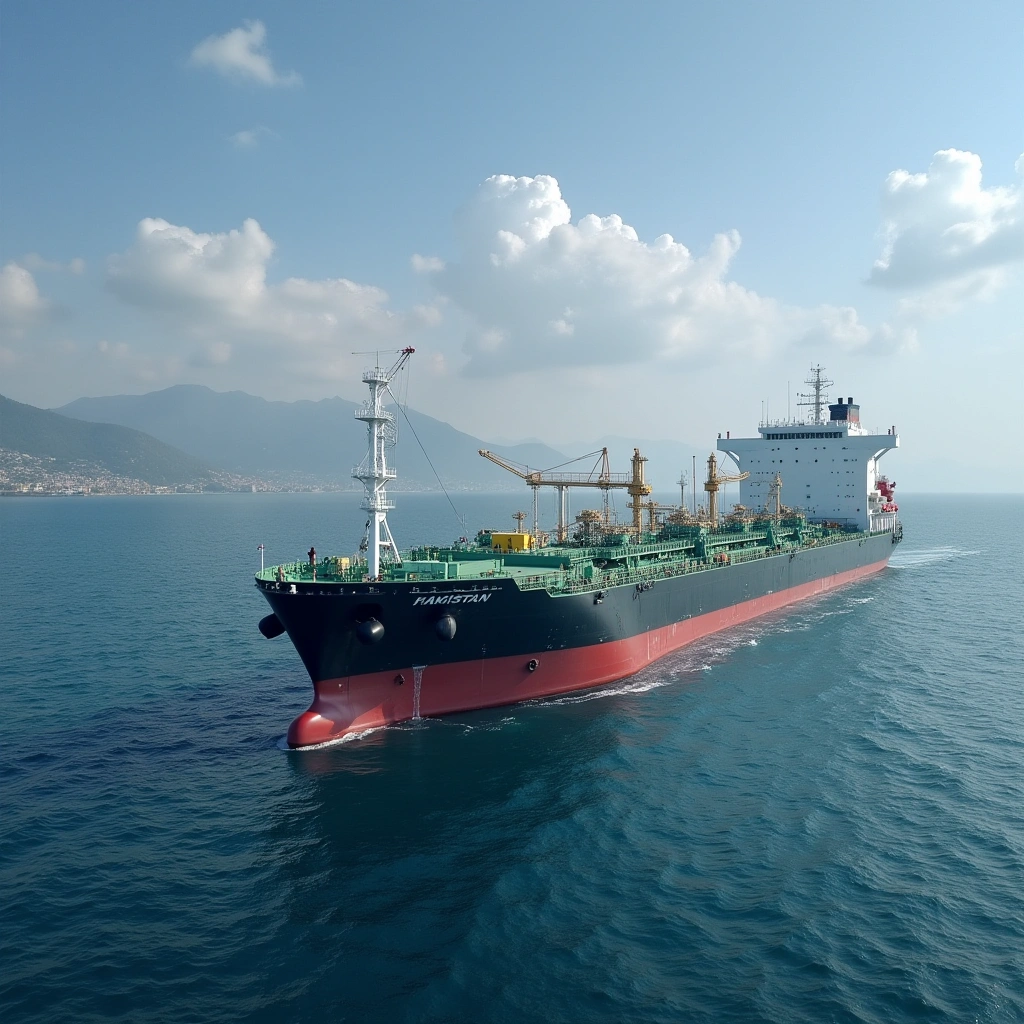
Pakistan’s energy crisis stems from a heavy reliance on Qatari LNG, which has been disrupted by the US-Iran war and the closure of the Strait of Hormuz. Facing astronomical spot prices (up to $27/MMBtu), the government rejected emergency cargo purchases to preserve foreign exchange, risking severe evening power blackouts as solar generation drops. The long-term solution hinges on battery energy storage systems, which can store excess daytime solar power to meet evening peak demand, thereby reducing the need for expensive and unreliable LNG imports.
So, let’s talk about Pakistan’s latest energy escapade. The country recently decided to reject yet another expensive shipment of liquefied natural gas (LNG). Yes, you heard that right. They’re turning down LNG, which is basically like refusing a free pizza because you’re on a diet—except in this case, the pizza costs a fortune and is arguably necessary for survival.
Now, before you start imagining government officials in a meeting room, dramatically tossing out LNG contracts like confetti, let’s unpack what this means. Pakistan has been struggling with energy shortages for a while now, and it seems that the latest LNG prices just didn’t sit well with the budget. You can almost hear the collective sigh of relief from the finance ministers as they realized they could save a few bucks—at least until the lights go out, of course.
But fear not, dear readers! In a bold move that can only be described as a mix of optimistic and slightly desperate, the Pakistani government is pinning its hopes on battery systems to save the grid during non-solar hours. Yes, batteries! The same things that power your remote control and occasionally explode in your smoke detector.
Now, you might be wondering how batteries can possibly save a country’s energy grid. Well, the idea is to store energy generated during the day from solar power (which Pakistan has in abundance) and then release it during the night when the sun decides to take a break. It sounds brilliant in theory—like a superhero sidekick swooping in to save the day after the main hero has already done the hard work.
However, this is where the plot thickens. Implementing these battery systems isn’t exactly a walk in the park. There are questions about the cost, efficiency, and whether the technology will actually work on a large scale. It’s one thing to charge your smartphone overnight and quite another to charge an entire country. I mean, have you seen how long it takes to charge an electric car? And that’s just one vehicle!
Despite the challenges, the Pakistani government seems determined to make this work. They’re investing in renewable energy and battery technology with the hope that it will not only stabilize the grid but also reduce reliance on imported fossil fuels. Because, let’s face it, relying on LNG shipments is like playing energy roulette—sometimes you win, and sometimes you’re left in the dark, quite literally.
So, what does the future hold for Pakistan’s energy landscape? Will the battery systems be the game-changer everyone is hoping for, or will they turn out to be another overhyped tech fad? Only time will tell. In the meantime, let’s keep our fingers crossed and our power banks charged. After all, it’s always good to have a backup plan—especially when your main source of energy is a bit iffy.
In conclusion, Pakistan is navigating through a challenging energy crisis, and while rejecting costly LNG shipments might seem like a smart move, the reliance on battery systems is a gamble. Here’s hoping that their energy strategy doesn’t end up like that last slice of pizza—left out too long and ultimately discarded. Stay tuned for more updates on this energy saga!
Inspired by: “As Pakistan rejects another expensive LNG shipment, the government hopes battery systems will save…” (r/climatechange)