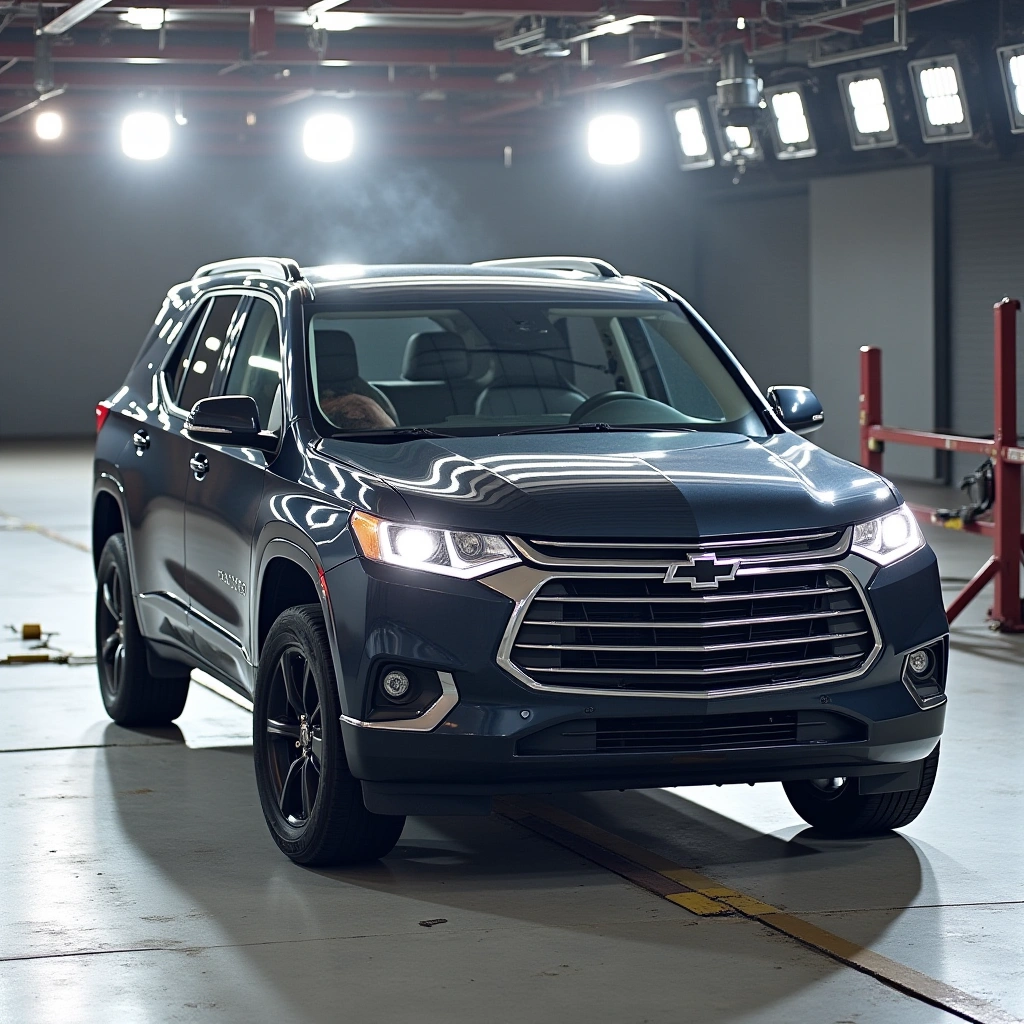
Ah, the Chevy Blazer. A name that evokes nostalgia for many of us who grew up in the ’90s, taking family road trips in a vehicle that was all about style—let’s be honest, mostly style—and not so much about safety. Fast forward to today, and we have the new Chevy Blazer, a sleek machine that not only looks good but also comes packed with safety features that would make your mom proud.
… The front end of the new Blazer absorbed most of the impact, keeping the cabin intact, which would have allowed a real-life driver to walk away with only minor “bumps and bruises,” according to an IIHS press release.
Recently, a crash test comparison between the old and new Chevy Blazer made its way around the internet, and let me tell you, it was a wake-up call. If you’ve ever thought that your old car was a tank, think again. Watching the crash test footage is like comparing a medieval knight in rusty armor to a superhero in a high-tech suit. Spoiler alert: the superhero wins.
Let’s dive into the differences. The old Chevy Blazer, a beloved classic, was built like a brick house—if that house was made of bricks from your neighbor’s questionable DIY project. Sure, it had a sturdy frame, but when it came to modern safety features, it was about as advanced as a flip phone. No airbags, no crumple zones, and seatbelts that were more of a suggestion than a requirement. If you were involved in a crash, your best bet was to hope that the other car was made of marshmallows.
Now, enter the new Chevy Blazer, a vehicle that’s practically a space shuttle in comparison. With a robust suite of safety features, including multiple airbags, lane departure warnings, and automatic emergency braking, this car is ready to protect you like a bubble-wrapped life coach. The crash test results are staggering—while the old Blazer crumpled like a soda can, the new model held up like a champion, making it clear that safety has come a long way since the days of grunge music and dial-up internet.
But why has safety improved so much? Well, the automotive industry has made it a priority to protect passengers, and it shows. New materials, advanced engineering, and a better understanding of crash dynamics have all played a role. Plus, let’s not forget that nowadays, cars come equipped with more sensors than a NASA rover. These features not only help prevent accidents but also make driving a lot less stressful—because let’s face it, we all know that one driver who thinks they’re auditioning for Fast and Furious.
In conclusion, if you’re still holding onto that old Chevy Blazer like it’s a family heirloom, maybe it’s time to reconsider. While it might have been a great ride in its heyday, the new model is a testament to the leaps and bounds we’ve made in automotive safety. So, unless you enjoy the thrill of a near-death experience every time you hit the road, it might be worth trading in that vintage ride for something that won’t leave you praying to the car gods in the event of a fender bender.
So here’s to the new Chevy Blazer—may it keep us safe while we navigate our chaotic lives, all while looking good in the process. Cheers to progress and to not having to use a seatbelt as a last resort for survival!
Inspired by: “Old vs. New Chevy Blazer Crash Test Shows How Much Safety Has Improved Since the ’90s” (r/technology)