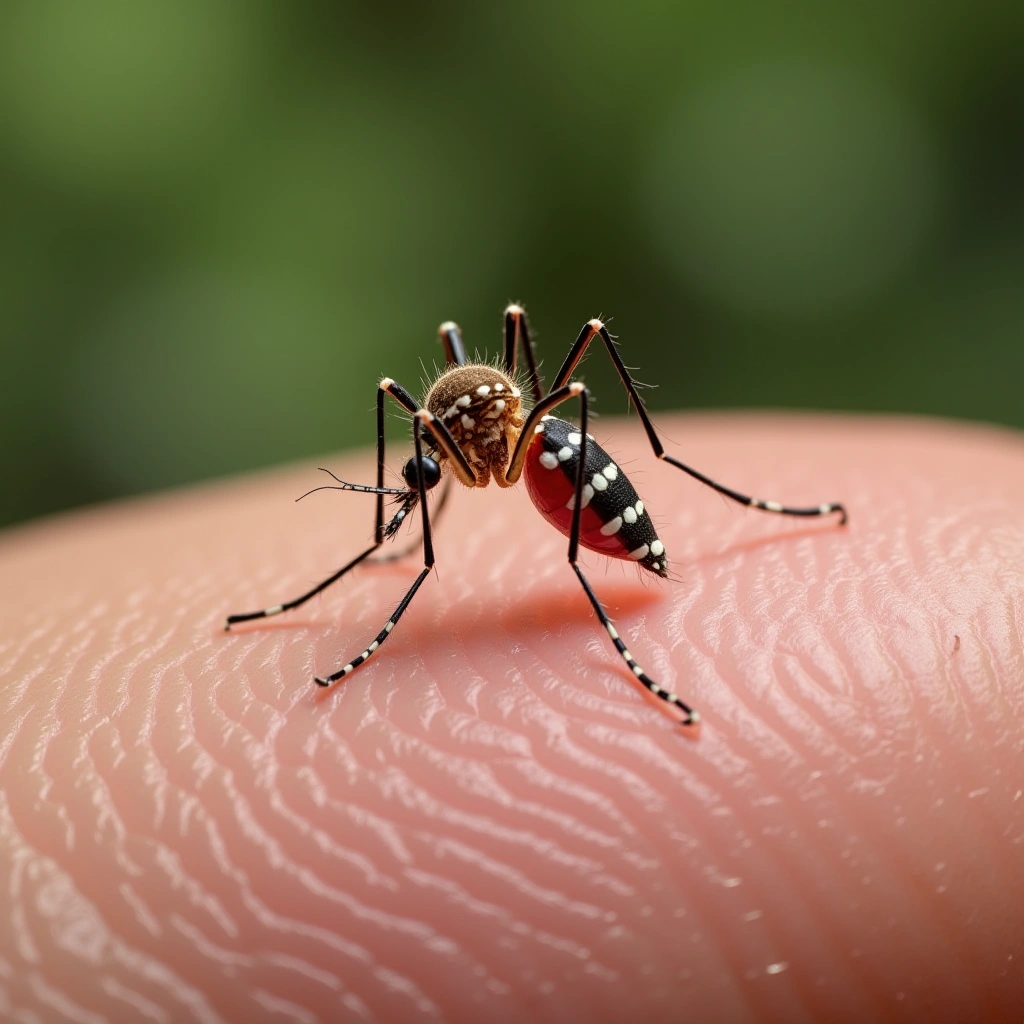
“How Buruli ulcer is spread to people has baffled scientists and public health experts for decades,” said Professor Tim Stinear, Head of Bacterial Pathogenomics Lab and Director of WHO Collaborating Centre for Mycobacterium ulcerans. “So now that mystery is solved with our five-year study revealing that mosquitoes transmit M. ulcerans in southeastern Australia, making mosquito bite prevention and mosquito control obvious forms of prevention.”
Ah, mosquitoes. Nature’s tiny, buzzing ninjas that seem to have a special knack for ruining our outdoor fun and, apparently, causing some serious health issues. If you thought these pesky insects were just annoying, think again! Recent developments have revealed that they play a significant role in the transmission of Buruli ulcers, a flesh-eating infection that’s been on the rise in certain parts of Melbourne.
So, what’s the deal with Buruli ulcers? Well, in the last five years, there has been a staggering 350% increase in cases. Yes, you heard that right—a whopping increase! Last year alone, there were 426 reported cases, up from just 32 cases 15 years ago. That’s some serious math that no one wants to be part of. The disease is caused by a bacteria that can melt skin cells and fat, leading to some rather unfortunate outcomes. One resident from Brunswick described it as having “a hole about the size of a 50¢ piece on my foot full of yellow pus.” Yikes!
Now, here’s where it gets interesting. A recent trial has shown that controlling the mosquito population can reduce their numbers by a whopping 80%. That’s great news, right? Fewer mosquitoes buzzing around means fewer chances of getting bitten and, consequently, fewer chances of contracting Buruli ulcers. It sounds almost like a fairy tale solution! But hold your horses—because while this is a step in the right direction, it’s not the silver bullet we might hope for.
You see, the issue is a bit more complicated. The transmission of Buruli ulcers involves not just mosquitoes, but also possums and humans. Yes, those adorable, furry creatures that we all secretly love (or maybe just tolerate). The mosquitoes act as the middlemen in this unfortunate chain of events, transferring the bacteria from possums to humans. So while reducing the mosquito population is undoubtedly beneficial, it’s only addressing part of the problem.
Consider this: of the four players in this little drama—the bacteria, mosquitoes, possums, and humans—only one can be effectively controlled. And that’s the mosquitoes. So, what about the possums? They’re the original carriers of the bacteria, after all. If we really want to tackle this issue head-on, we might want to think about managing the possum population too.
It seems that a targeted program to reduce the number of possums in the affected areas could be more effective than simply reducing mosquitoes. After all, if you can’t get rid of the source of the problem, how can you expect to solve it? While researchers have described the growth of Buruli ulcers as “astounding” and “remarkable,” it’s crucial to consider all our options while we still can.
In conclusion, while mosquito control is a fantastic start in the battle against Buruli ulcers, it’s not the end of the road. We need a multi-faceted approach to effectively manage this issue, and that includes looking at the possum population as well. So, next time you swat a mosquito, remember: it’s not just about your outdoor barbecue—it’s about public health, too. Let’s hope we can find a way to keep both the mosquitoes and the possums in check, because the last thing we need is more holes in our feet.
Stay safe, stay informed, and maybe invest in some mosquito repellent. You never know when those little bloodsuckers might decide to crash your party!
Inspired by: “Mosquito control helps with Buruli ulcers – but is it enough?” (r/melbourne)