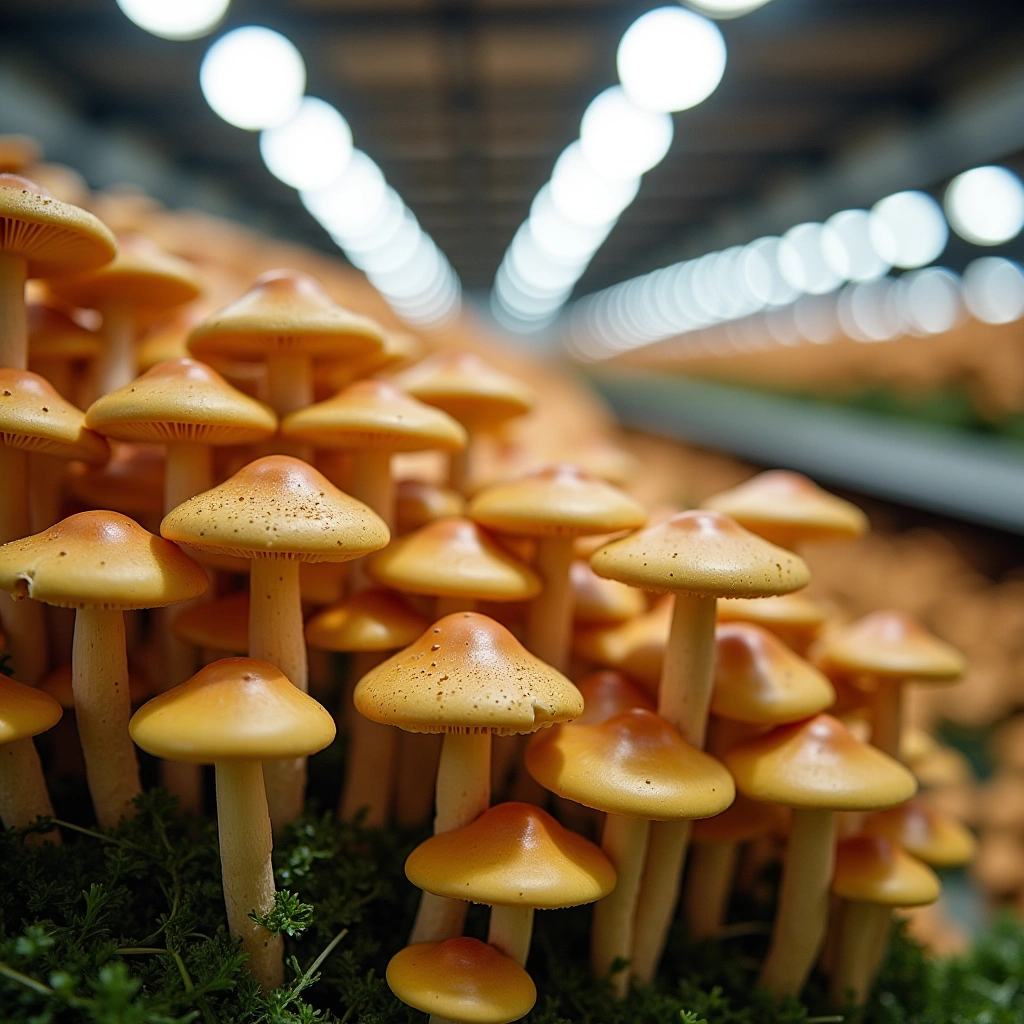
Hey there, fellow fungi fanatics! Have you ever wondered what it takes to cultivate those delightful little mushrooms we toss on pizza or blend into a fancy risotto? Well, buckle up because we’re diving into the magical world of indoor mushroom farms. Spoiler alert: it’s a lot more exciting than watching paint dry!
Related reading: Fungi Frontier
First things first, let’s talk about the real MVPs of this operation: mushrooms! These little guys are like the hipsters of the vegetable world. They grow in the dark, thrive on waste (seriously, they love decomposing stuff), and some can even make you see things that aren’t there. But we’re not here to discuss the psychedelic kind today; we’re talking about the edible, delicious, and sometimes downright funky mushrooms you can find in indoor farms.
Now, picture this: a sprawling indoor facility, the air thick with humidity, and the soft glow of LED lights illuminating rows upon rows of mushroom-filled shelves. It’s like a high-tech spa retreat for fungi! But instead of cucumber slices on their eyes, these mushrooms are getting pampered with the perfect temperature, moisture, and nutrients. Who knew mushrooms could live their best life?
So, how does one become a modern-day mushroom mogul? It all starts with the choice of substrate. No, not a fancy word for “thing that mushrooms grow on,” but the actual material that provides nutrients. From straw to sawdust, the substrate is like a five-star buffet for our fungal friends. Once the substrate is prepped, it’s time to inoculate it with mushroom spawn. Think of this as the fairy dust that kicks off the magic show!
After inoculation, our little mushroom babies need some TLC (that’s Tender Loving Care, for those of you who aren’t fluent in farm lingo). This involves regulating humidity, temperature, and even light exposure. Some might say it’s like raising a teenager—lots of patience and a careful eye on their moods!
Now, let’s get to the juicy part (pun intended). The beauty of indoor mushroom farming is that it’s not dependent on the whims of Mother Nature. Rain? Who needs it! Drought? Not on our watch! It’s farming 2.0, where the only thing that matters is the temperature control and a sprinkle of science. And believe me, it’s not just a hobby; it’s a booming business! With the increasing demand for organic produce, more and more folks are cashing in on this fungi phenomenon.
But wait, there’s more! Have you ever heard of microgreens? They’re like the tiny, trendy cousins of mushrooms in the indoor farm world. They’re also getting in on the action, growing side by side with our mushroom pals. Talk about a match made in culinary heaven! Together, they can elevate your dishes to gourmet levels without the need for a Michelin-starred chef.
However, not everyone is on board with this indoor farming revolution. Some traditionalists argue that the best mushrooms are those grown outdoors, kissed by the sun and nourished by the earth. But let’s be honest, if we relied solely on outdoor farming, we’d be stuck eating whatever mushrooms nature decided to grace us with—good luck with that!
So, whether you’re a mushroom lover or just a curious onlooker, indoor mushroom farms are here to stay. They’re redefining the way we think about food production and sustainability. Plus, who doesn’t want to see a magical mushroom kingdom thriving in their own backyard (or basement)? Next time you bite into that delicious mushroom risotto, just remember the fascinating journey it took to get to your plate. And maybe, just maybe, give a little nod to the humble indoor mushroom farm that made it all possible!
Inspired by: “This is what an indoor mushroom farm looks like” (r/interestingasfuck)