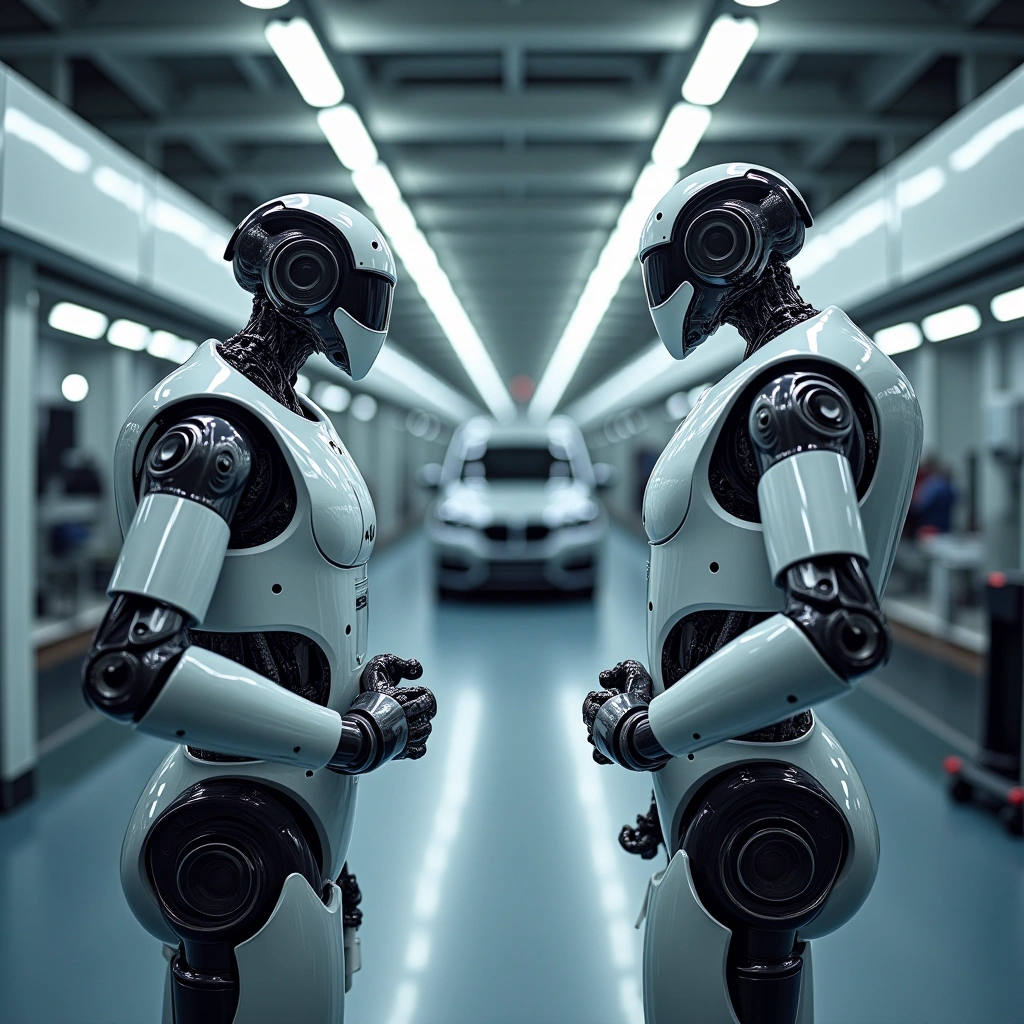
In an age where technology is advancing faster than your grandma can say, “What’s a smartphone?” humanoid robots are stepping out of our sci-fi movies and into the real world—specifically, the BMW assembly line. Yes, you heard it right! These nifty mechanical beings have helped produce over 30,000 BMW vehicles, and now they’re gearing up (pun intended) for some new tasks. Let’s dive into this fascinating evolution of the automotive industry, shall we?
The robots' jobs at BMW will be to feed parts to manufacturing tools and to carry out pick-and-place tasks for battery assembly.
First off, let’s give a round of applause to the robots. They’ve been tirelessly working alongside humans, doing the heavy lifting—literally. Imagine if your job involved assembling luxury cars while also avoiding a meltdown because someone stole your lunch from the fridge. Yeah, robots don’t have that problem. They just focus on screwing in bolts and not screwing up their lunch breaks.
Now, you might be wondering: what exactly are these humanoid robots doing? Well, they’re not just standing around looking pretty (though they do have a certain charm). These robots are involved in various tasks, from welding to painting and even quality control. They’ve become the unsung heroes of the assembly line, performing repetitive tasks with precision that would make even the most skilled human worker green with envy.
But wait, there’s more! BMW is not just content with letting these robots stick to the assembly line. Oh no, they’re expanding their horizons. As the automotive industry evolves, so do the roles of these mechanical marvels. BMW is now exploring new tasks for their robot workforce. Think of them as the Swiss Army knives of the factory—multifunctional and always ready for action.
What could these new tasks be, you ask? Well, while we can’t peek into BMW’s top-secret robot meeting notes (which probably involve a lot of beeping and booping), we can speculate. Perhaps they’ll be taking on customer service roles, answering questions like, “Why is my check engine light on?” Or maybe they’ll even be helping out with vehicle delivery—imagine a robot rolling up to your driveway, handing over the keys with a polite bow. How fancy would that be?
Now, let’s not forget about the implications of this robotic takeover. On one hand, we could be looking at increased efficiency and productivity. Robots don’t need coffee breaks, sick days, or vacation time—unless you count their occasional system updates as a holiday. On the other hand, this leads to the age-old question: what happens to the human workers? Are we all destined to become the world’s most advanced Uber drivers?
The good news is that BMW, like many companies venturing into automation, is committed to finding a balance. They understand that while robots can handle the grunt work, human creativity, problem-solving skills, and emotional intelligence are irreplaceable. So, fear not! Your job as a human will hopefully still be safe for now.
In conclusion, humanoid robots are no longer just a figment of our imagination or a plot twist in a dystopian novel. They’re here, they’re working, and they’re helping BMW churn out vehicles at an impressive rate. As they take on new tasks, one can only wonder: what’s next? Maybe they’ll even start a band. “The Robotic Rides” has a nice ring to it, don’t you think? Until then, let’s keep our fingers crossed that they don’t develop a taste for our jobs—or our sandwiches.
Inspired by: “Humanoid robots have helped build over 30,000 BMW vehicles, and now they’re taking on new tasks.” (r/technology)