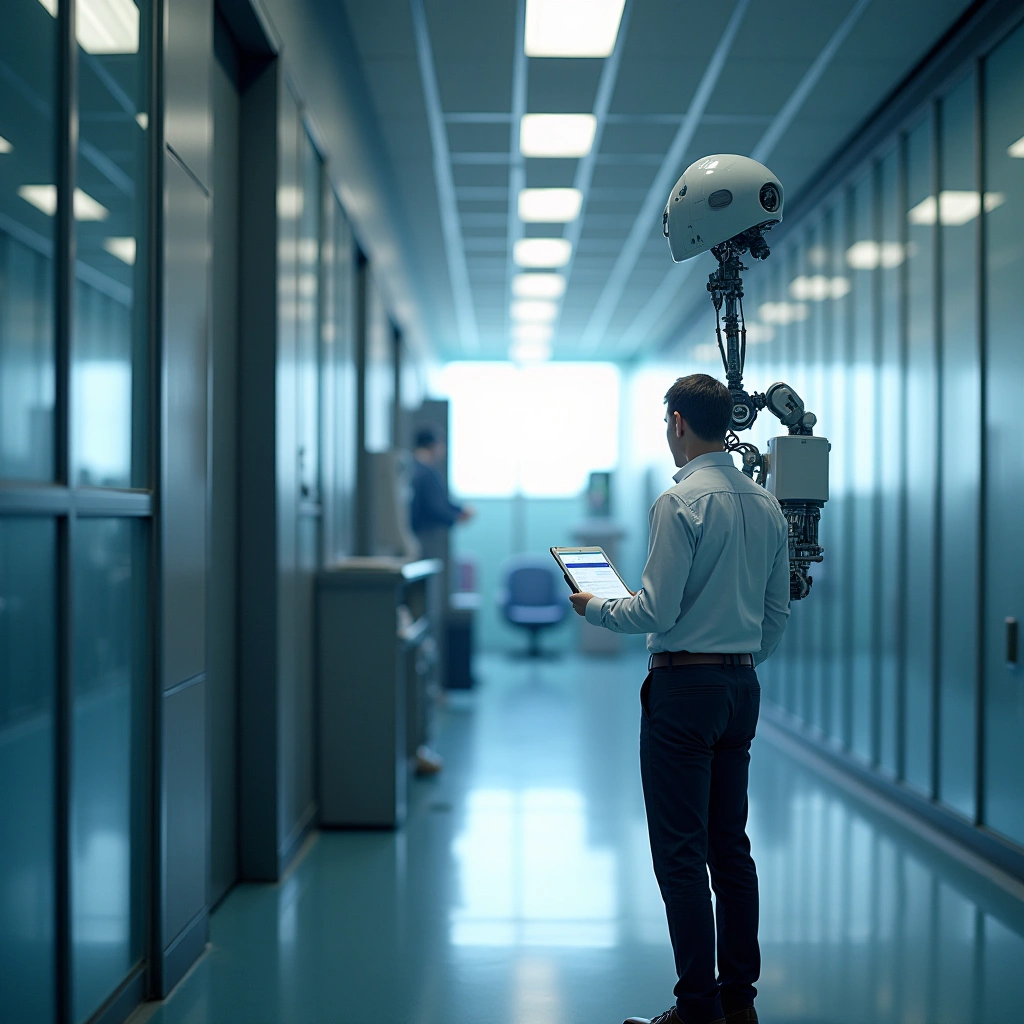
Let’s talk about a topic that’s been buzzing around like a bee on a caffeine high: AI recruitment software. You know, those shiny, high-tech systems that promise to revolutionize hiring by making it faster, cheaper, and—wait for it—more efficient! But hold your horses; it turns out that the reality might not be all rainbows and unicorns.
This technical bug could influence a potential candidate, and might be more awkward answering a second time, or suggest a worse performance compared to a candidate who did not experience the glitch. Moreover, it is unclear, if a question was repeated, whether the first or second answer, or a combination of both, would be factored into the AI system’s final score. A further concern is that, at the time of our testing, there was no facility for a human recruiter to override the scores generated by the AI interview – nor was the human recruiter required to intervene and approve or reject the AI interview score before it was assigned to the candidate’s result.
A recent investigation by Privacy International (PI) pulled back the curtain on two popular AI recruitment platforms, and the findings are about as comforting as a cold shower on a winter morning. The investigation revealed a shocking lack of transparency and fairness for candidates, which begs the question: are we really ready to hand over our hiring processes to robots?
First off, let’s address the elephant in the room. AI recruitment tools are designed to sift through resumes faster than you can say “unemployment rate.” They analyze keywords, experience, and even those cute little buzzwords that make hiring managers swoon. But here’s the kicker: these systems often operate in a black box. You submit your application, and poof! It gets evaluated by an algorithm that’s about as transparent as a brick wall. Candidates often have no idea how their applications are being scored or what criteria are being prioritized. It’s like trying to find your way through a maze blindfolded—good luck with that!
Now, let’s dive into the fairness aspect. The PI investigation found that these AI tools can perpetuate biases that already exist in hiring. For instance, if the training data used to develop these algorithms contains biases—say, favoring candidates from certain schools or backgrounds—the algorithm might just continue that tradition of unfairness. It’s like letting a cat decide who to adopt by only picking the ones that look like its old owners. Not exactly a fair game for the mice, is it?
But wait, there’s more! The reliability of these systems is another cause for concern. Think about it: if the algorithm gets it wrong, who’s held accountable? Spoiler alert: it’s not the robot. This lack of accountability can lead to qualified candidates being overlooked, simply because an algorithm decided they weren’t a good fit based on criteria that even the developers can’t fully explain. It’s akin to being rejected from a club because the bouncer didn’t like your shoes, but you have no idea what the dress code is.
So, what do we do about it? Well, for starters, it might be time to hit the brakes on blindly trusting AI in recruitment. Companies should consider implementing more transparent systems where candidates can understand how their applications are evaluated. After all, if you can’t explain to someone why they didn’t get the job, are you really doing it right?
Furthermore, organizations need to take a long, hard look at the training data they’re using. If the data is biased, the output will likely be biased as well. It’s time to make a concerted effort to ensure that the algorithms are trained on diverse and representative datasets. Think of it as hiring a diverse panel to judge a talent show instead of just one overly critical judge who thinks everything is “just okay.”
In conclusion, while AI recruitment tools have the potential to streamline the hiring process, we must tread carefully. Transparency, fairness, and accountability should be at the forefront of any recruitment strategy that incorporates AI. After all, we’re not trying to create a dystopian future where robots decide our fates, are we? Let’s keep some humanity in human resources, shall we?
So, the next time you’re applying for a job and feel like you’re sending your resume into the void, remember: it might not just be you. It could very well be the robot that’s lost in the maze too. And that’s a comforting thought, isn’t it?
Inspired by: “Humanless Resources? Uncovering AI recruitment software. PI’s investigation into two AI recruitment…” (r/technology)