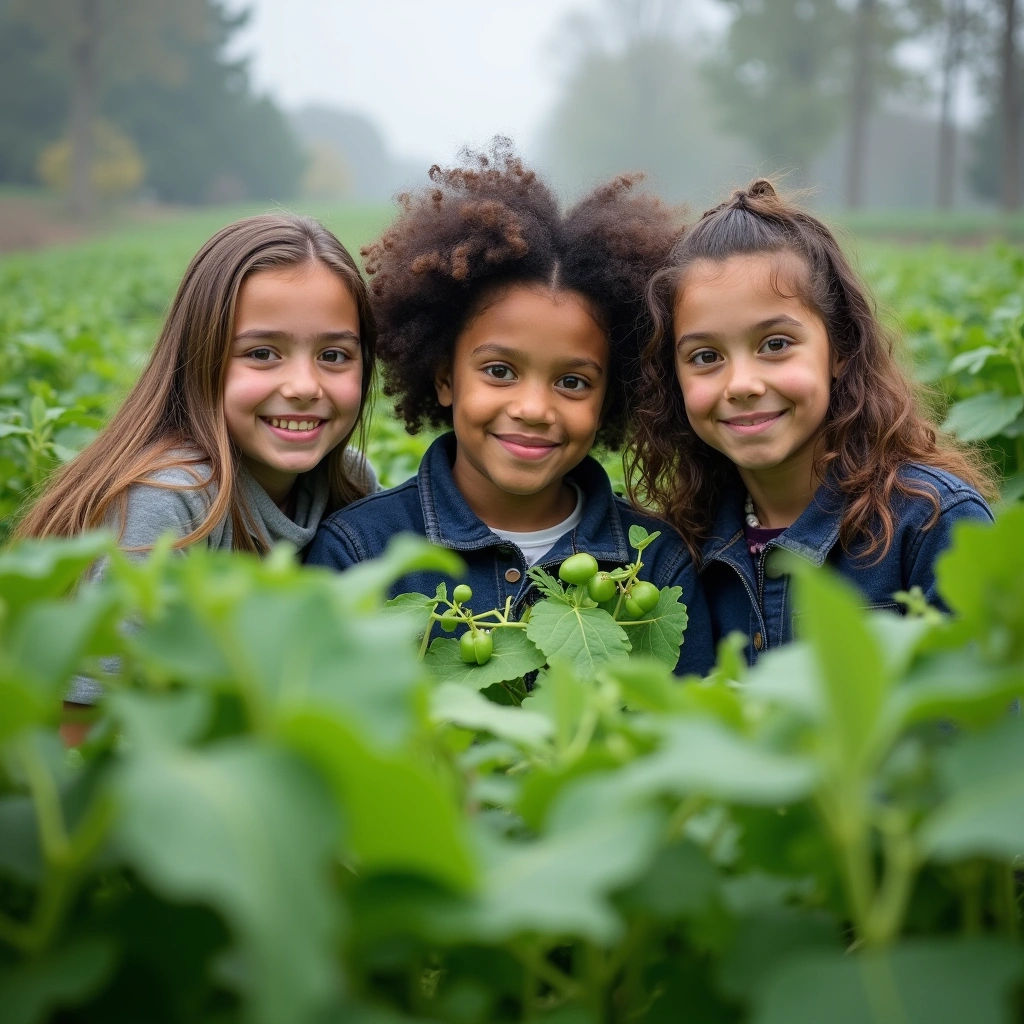
When three teenagers glimpsed what others dismissed as plant disease, they saw a path to solving agriculture's nitrogen problem —and the scientific establishment's skepticism only made them dig deeper.
So, picture this: three schoolgirls in Kinsale, Ireland, out gardening one sunny day, when they stumble upon a pea plant that looks like it’s been through a bad case of acne. Instead of tossing it in the compost heap or calling it a day, they decide to take it to school. Because, you know, what else would you do with a wart-covered plant?
Émer Hickey, the brave soul who discovered this botanical oddity, was just a teen when she and her mother unearthed the plant. When she asked her teacher what was wrong with it, the answer was less than enlightening. “Nothing much, just a bunch of nodules housing some friendly bacteria called rhizobium.” It turns out, these bacteria are like the personal trainers of the plant world, helping legumes like peas get their nitrogen fix in exchange for a little sugar. It’s a beautiful partnership, but there’s a catch: cereal crops like wheat, barley, and rice can’t join the party.
Now, if you were a sensible teenager, you might have shrugged it off and moved on to more pressing matters, like figuring out how to survive high school. But not Émer, Ciara Judge, and Sophie Healy-Thow. The trio had been studying the world food crisis in geography class, and they decided to take this newfound knowledge and run with it—right into a three-year-long scientific endeavor that would make most adults question their career choices.
Equipped with nothing but youthful determination (and maybe a bit of naivety), they turned a spare bedroom into a makeshift laboratory. With homemade incubation racks and hand-labeled samples, they soaked cereal seeds in rhizobium cultures, measuring everything from germination rates to seedling growth. It’s like a science fair project on steroids—if steroids were made of dedication and a sprinkle of teenage rebellion.
Over the course of three years, they tested around 13,000 seeds, logging an astounding 120,000 individual measurements. Honestly, if I had to keep track of that many numbers, I’d probably just start throwing seeds around and calling it a day. But these girls? They were relentless. And their efforts paid off in a big way.
Against all odds, the treated barley and oats germinated up to 50% faster than their untreated counterparts. That’s right, folks—these little seeds were practically racing to grow. Not only did they sprout faster, but they also ended up being stronger, with dry mass increases of up to 74%. It’s like they took a power-up before heading out into the world.
You can imagine the reactions when the girls shared their findings with the scientific community. The adults who had told them it wouldn’t work on cereals were probably left scratching their heads, wondering how three teenagers managed to outsmart them. The project quickly gained recognition, winning the coveted BT Young Scientist of the Year award in 2013, making them the first all-girls team to snag the title. And if that wasn’t enough, they also took home the EU Young Scientist contest. Talk about a glow-up!
So, what’s the takeaway from this story? If you ever find a weird-looking plant, don’t just throw it away. Who knows? You might just stumble upon the next big thing in agricultural science. And remember, sometimes the best ideas come from the most unexpected places—like a spare bedroom filled with seeds, notebooks, and a whole lot of youthful ambition.
In a world where adults often underestimate the power of youth, these three girls have shown us that a little curiosity and a dash of determination can lead to groundbreaking discoveries. So, next time you see a wart on a plant, just think: it could be the start of something incredible!
Inspired by: “How Three Schoolgirls Turned Warty Pea Plants into a Scientific Breakthrough”